Physical Address
304 North Cardinal St.
Dorchester Center, MA 02124
Physical Address
304 North Cardinal St.
Dorchester Center, MA 02124
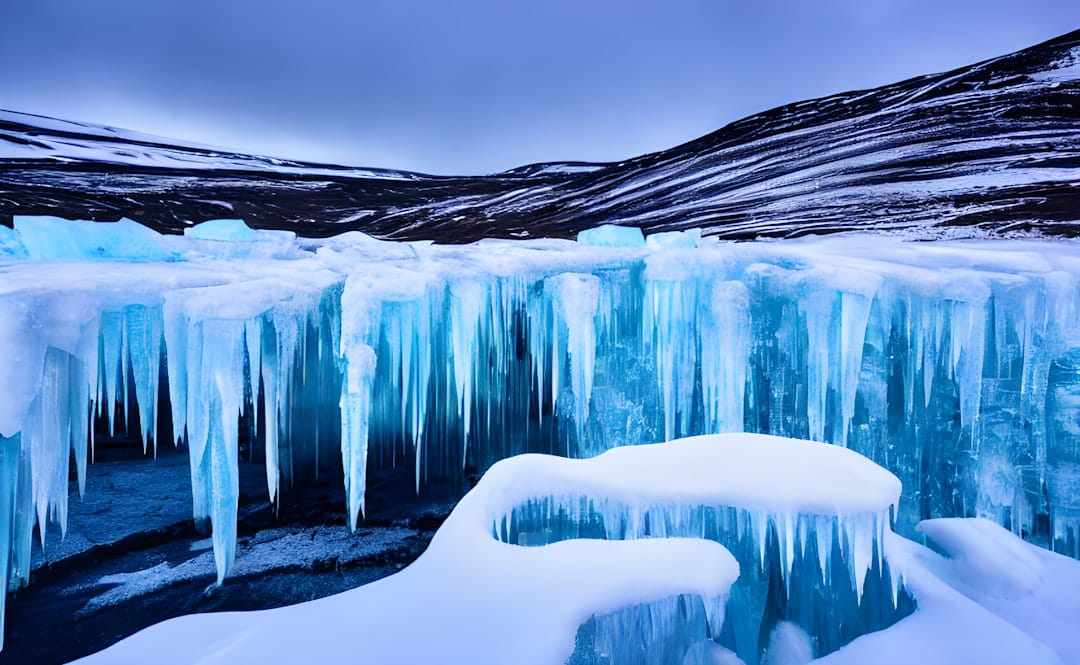
I’m not saying it’s aliens. But I’m also not NOT saying it’s aliens. (It’s never aliens. Usually.)
What I am saying is that there’s a weird little quirk of physics that makes you pause mid‑sip of your iced tea and wonder if the universe is playing a prank on us. Hot water, under the right circumstances, can freeze faster than cold water. Sounds impossible, right? Yet generations of students, teachers, and even Nobel‑laureate physicists have scratched their heads over this very observation.
I first stumbled upon the Mpemba effect while trying to speed up my ice‑cube tray on a particularly impatient summer afternoon. I dumped hot tap water into the tray, shoved it in the freezer, and—lo and behold—my cubes were ready before the ones I’d filled with cold water. I laughed, assumed I’d imagined it, and went back to scrolling. But the idea lingered, like a half‑remembered dream, and I found myself diving down a rabbit hole that’s been open for over half a century.
In 1963, a teenager named Erasto Mpemba was making ice cream at Magamba Secondary School in Tanzania. He noticed that when he poured the hot milk mixture into the freezing chamber, it seemed to solidify sooner than the cooler batches his classmates were preparing. Curious, he asked his physics teacher why this might be happening.
The teacher’s response? Classic academic gatekeeping. He brushed it off as “confusion” on Mpemba’s part, suggesting the boy had simply misread the thermometer. Most of us would have shrugged and accepted the authority’s word. But Mpemba didn’t. He kept testing, jotting down observations, and refusing to let the anomaly fade.
Fast forward to 1969. A visiting professor from the University of Dar es Salaam, Denis Osborne, stopped by the school. Mpemba grabbed the chance to demonstrate his odd observation. Osborne, intrigued rather than dismissive, took the experiment back to his lab, ran controlled trials, and confirmed that, yes, under certain conditions, hot water does freeze faster.
Their joint paper appeared in Physics Education under the delightfully tentative title “Cool?” – complete with a question mark. It was a modest publication, but it planted a seed that would sprout into decades of debate, experimentation, and, frankly, a lot of head‑scratching.
So, if the effect is real, why haven’t we nailed down a single, tidy explanation after more than sixty years? The short answer: freezing water is a surprisingly messy business, and the Mpemba effect sits at the intersection of several physical phenomena that can each tip the scales.
First up, evaporation. Hot water loses mass more quickly as steam escapes, leaving less liquid to freeze. Less mass means less heat to remove, which can speed things up. But experiments that seal the container to prevent evaporation still show the effect, so evaporation alone can’t be the whole story.
Next, convection. In a hot container, the water at the bottom heats up, becomes less dense, and rises, creating vigorous currents that transport heat to the surface more efficiently than the gentle diffusion you see in cold water. This enhanced heat loss can accelerate cooling, especially when the freezer’s air is moving.
Then there’s supercooling. Cold water is prone to dropping below its freezing point without turning into ice—a metastable state that delays crystallization. Hot water, having fewer microscopic impurities and a different internal structure, tends to nucleate ice sooner, bypassing the supercooling trap.
We also can’t ignore dissolved gases. Heating drives out oxygen and nitrogen, altering the water’s thermal conductivity and changing how ice crystals form. Some researchers argue that this gas‑depletion shifts the freezing point just enough to give hot water an edge.
The Royal Society of Chemistry tried to settle the matter in 2013 with a public competition that attracted a staggering 22,000 entries from amateurs and professionals alike. Despite the flood of ideas, no single explanation emerged victorious. The consensus? The Mpemba effect is likely a cocktail of these factors, with the exact recipe depending on container shape, initial temperature difference, humidity, and even the material of the vessel itself.
And that’s not even the strangest part. Some studies have reported the effect disappearing entirely when the water is degassed or when the container is coated with a hydrophobic layer. It’s as if nature loves to keep us guessing.
You might think this is just a parlor trick for impatient freezer‑raiders, but the Mpemba effect has slipped into some surprising corners of science and industry.
Take ice rink maintenance. Zambonis—the machines that resurface skating rinks—spread a thin layer of hot water over the ice. Why hot? Because it melts the top layer just enough to fill in cuts and grooves, then freezes rapidly into a smoother, harder surface than cold water would produce. Skaters glide faster, and the ice lasts longer.
In cryopreservation labs, understanding how hot and cold solutions freeze helps researchers minimize ice‑crystal damage to cells and tissues. By tweaking temperature protocols, they can improve the viability of everything from sperm samples to organoids destined for transplantation.
Climate modelers also keep an eye on the Mpemba effect when simulating ocean convection. The way heat moves through seawater influences everything from storm formation to the global conveyor belt that regulates our planet’s temperature. Small nuances in freezing behavior can ripple into large‑scale predictions.
And yes, you can try it at home. Fill one ice‑cube tray with hot tap water, another with the same amount of cold water, place them side‑by‑side in the freezer, and check after an hour. Depending on your freezer’s airflow and the tray material, you might just see the hot cubes claim victory. (If they don’t, don’t worry—your freezer might just be too efficient, or too stubborn.)