Physical Address
304 North Cardinal St.
Dorchester Center, MA 02124
Physical Address
304 North Cardinal St.
Dorchester Center, MA 02124
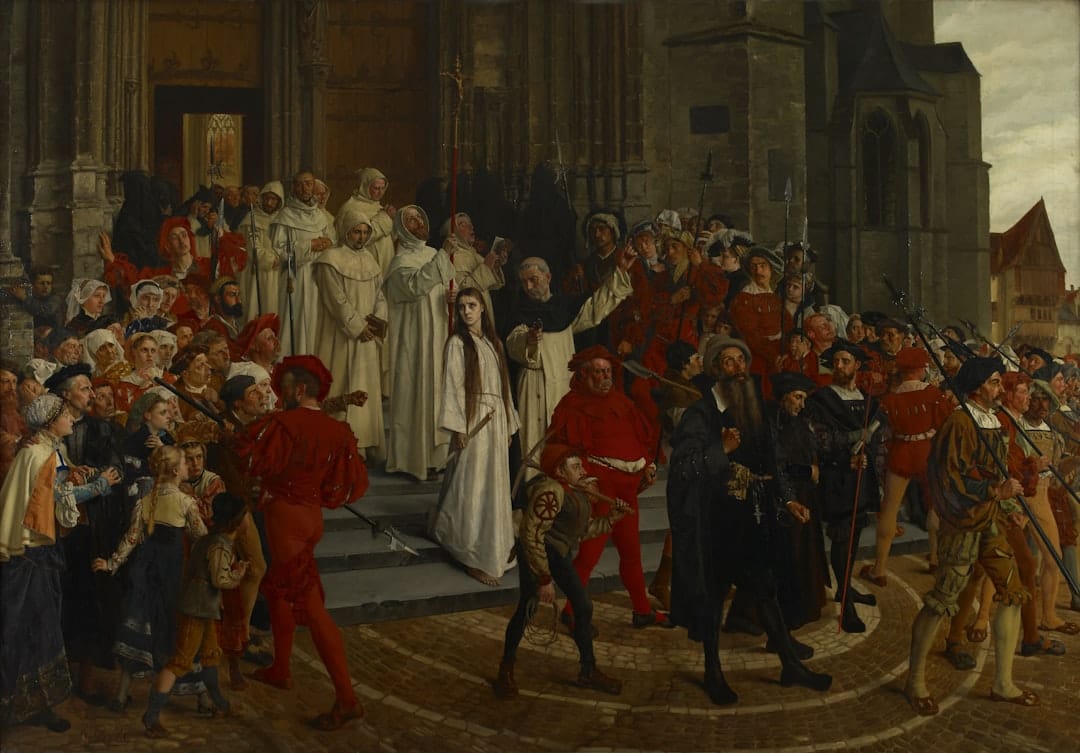
We like to think we’ve got the world figured out. Then something like this comes along.
Picture this: a summer morning in Strasbourg, 1518. The cobblestones are slick with dew, the market stalls are just opening, and a woman steps into the street and starts to dance. Not a polite jig, not a celebratory twirl — she’s moving with a frantic, uncontrollable force that seems to pull her limbs apart. No music plays, yet she can’t stop. Within days, dozens join her. By the end of the month, hundreds are caught in the same inexplicable frenzy. Some collapse from exhaustion. Others die mid‑step, their hearts giving out under the relentless strain. It sounds like a fever dream, but the town records are chillingly clear: this really happened.
What drives a crowd to dance itself to death? Was it madness, miracle, or something far stranger? Let’s step into the cobblestones and find out.
On July 14, 1518, Frau Troffea — a resident of Strasbourg’s crowded Altstadt — stepped onto the street and began to dance. No one knows what sparked it; maybe a sudden cramp, maybe a vision, maybe nothing at all. What we do know is that within a week, thirty‑four others had mirrored her movements, their feet pounding the same rhythm despite bruised soles and begging pleas to stop.
By August, the numbers had swollen to over four hundred. City officials, bewildered and terrified, called in the physicians of the day. Their diagnosis? “Hot blood” — a humoral imbalance thought to cause frenzied behavior. The prescribed cure? More dancing.
Yes, you read that right. The authorities actually built a wooden stage, hired professional musicians, and even paid strongmen to keep the afflicted moving, believing that exhaustion would somehow purge the bad humors. It’s the kind of remedy that makes you wonder if they were trying to cure the plague or simply entertain the masses while it burned out.
Fast forward to today.
Modern minds love a good mystery, and the dancing plague has sparked plenty of theories. One popular suspect is ergot — a fungus that grows on damp rye and produces chemicals eerily similar to LSD. Ingesting ergot can cause hallucinations, convulsions, and a burning sensation known as St. Anthony’s fire.
But here’s where it gets weird: ergot poisoning usually leads to gangrene, seizures, and death within days. The dancers of Strasbourg, however, kept moving for weeks, some surviving the ordeal entirely. If ergot were the culprit, we’d expect far more corpses and far less stamina.
The region was also reeling from famine, disease, and a deep spiritual crisis. The previous years had brought poor harvests, outbreaks of syphilis, and a pervasive sense that the world was teetering on the edge of divine punishment. Extreme psychological stress can manifest in bizarre ways, and many historians now point to mass psychogenic illness (MPI) — also called conversion disorder — as the most plausible explanation.
MPI spreads through suggestion, anxiety, and social contagion. Think of it as a psychological virus: one person’s distress triggers a similar response in others, especially when they share a tightly knit community and a belief that the affliction is real or even sacred.
We’ve seen echoes of this pattern before. The Tanganyika laughter epidemic of 1962 saw schoolchildren burst into uncontrollable giggles that lasted for months. In 2006, a Portuguese soap opera titled “Morangos com Açúcar” triggered a wave of rash‑like symptoms among teen viewers who believed they’d contracted a fictional virus. In each case, no pathogen was found; the outbreak lived in the mind and leapt from person to person.
Now, I know what you’re thinking: could it have been both? Perhaps a toxic ergot exposure primed the population, making them more susceptible to a psychogenic trigger. The truth is, we may never know for sure — but the weight of evidence leans heavily toward the mind, not the mold.
Contemporary chronicles are grim. At the height of the outbreak, reports claim as many as fifteen people died each day — felled by heart attacks, strokes, or sheer exhaustion. Imagine watching a neighbor collapse mid‑step, their face purple, their breath ragged, while the music still blares and the crowd keeps shuffling.
When the dancing finally waned in early September, the survivors were taken to a shrine dedicated to St. Vitus, the patron saint of dancers and epileptics. Pilgrims prayed for relief, and strangely, the compulsion began to lift. By the time autumn arrived, the streets were quiet again, the stage dismantled, the musicians sent home.
Years later, the renowned physician and alchemist Paracelsus passed through Strasbourg. He examined the records and concluded that the event was a “natural disease,” not demonic possession — a remarkably modern stance for the sixteenth century. His note reminds us that even in the grip of the bizarre, rational observers were already seeking natural explanations.
The plague left no lasting monument, no mass grave marked with a plaque. Yet its whisper lingers in the annals of medical oddities, a reminder that the line between body and mind can blur in the most spectacular ways.
Maybe that’s the real lesson here: the mystery matters more than the solution. We love a tidy answer, a clear cause‑and‑effect that we can file away and forget. But phenomena like the dancing plague remind us that human biology is tangled with culture, belief, and fear in ways that still elude our simplest models.
I keep coming back to the image of Frau Troffea, alone on a cobblestone street,