Physical Address
304 North Cardinal St.
Dorchester Center, MA 02124
Physical Address
304 North Cardinal St.
Dorchester Center, MA 02124
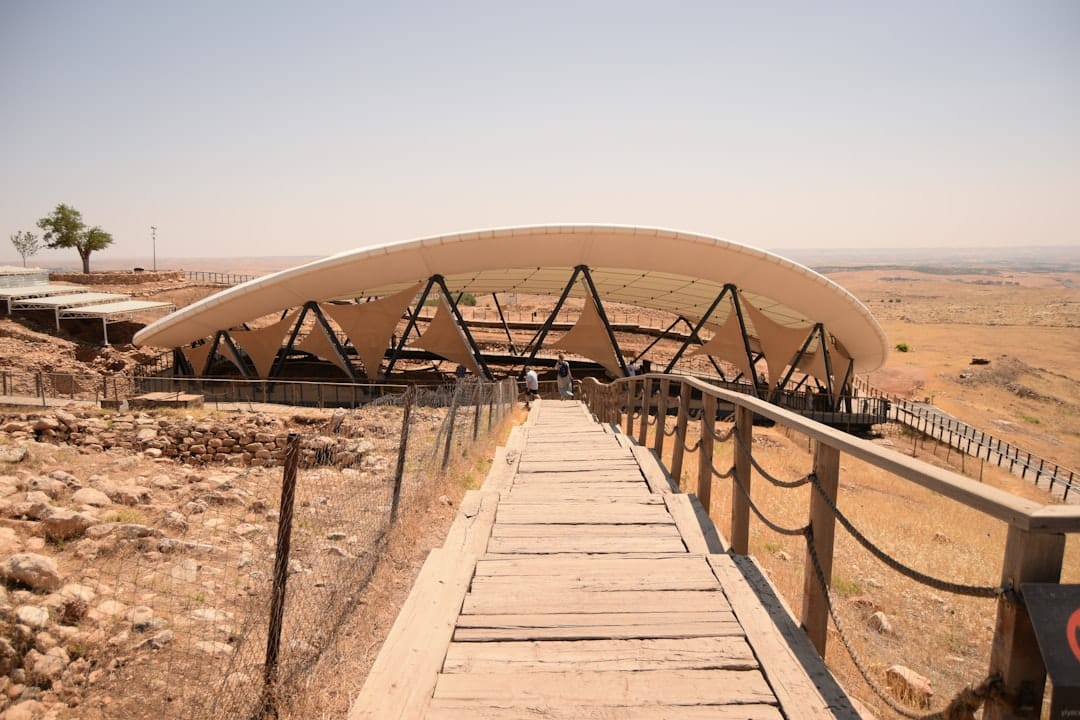
You know those moments where reality feels like it’s glitching? This is one of them. I was scrolling through an old archaeology forum late at night, half‑asleep, when a single line stopped me cold: “A 12,000‑year‑old temple built by hunter‑gatherers.” My brain did a little flip. How could people who still hunted wild goats and gathered wild grasses have hauled 20‑ton limestone pillars into place, carved them with intricate animal reliefs, and then buried the whole thing on purpose? It sounded like a plot twist from a sci‑fi novel, not a footnote in a textbook.
That moment of disbelief is exactly why Göbekli Tepe fascinates me. It isn’t just another ancient ruin; it’s a stubborn piece of evidence that refuses to fit the tidy narrative we’ve been taught about how civilization rose. Every time I read a new paper or watch a documentary about the site, I find myself asking the same question over and over: what if we’ve had the story backward all along?
It all started in 1994, when a Kurdish farmer named Şakir Şensoy was plowing his field near the town of Şanlıurfa in southeastern Turkey. His plow struck something hard—shaped limestone blocks that looked too deliberate to be natural. He reported the find to the local museum, and soon enough, archaeologists from the German Archaeological Institute took notice.
Enter Klaus Schmidt, the German archaeologist who would spend the next two decades of his life uncovering what lay beneath those fields. Schmidt visited the site in 1995 and immediately recognized that these weren’t random stones; they were massive, T‑shaped pillars, some standing up to 5.5 meters tall, arranged in circular enclosures. What struck him most was the evidence that the entire complex had been deliberately buried around 8000 BCE. That act of entombment preserved the monuments like a time capsule, shielding them from millennia of erosion and human activity.
Today, after nearly three decades of work, only about five percent of Göbekli Tepe has been excavated. Ground‑penetrating radar surveys have revealed more than 200 pillars spread across at least twenty distinct circles, each one a potential chapter in a story we’re only beginning to read. Imagine walking across a landscape where every hill hides another temple, waiting for a curious trowel to uncover it.
The implications? They’re staggering.
Let’s put the dates in perspective. Göbekli Tepe was constructed around 9600 BCE. That makes it roughly seven thousand years older than Stonehenge, which didn’t start taking shape until about 3000 BCE. It predates the Egyptian pyramids by six millennia, and it’s a full two thousand years before the earliest known pottery appears in the Near East. In other words, the people who built Göbekli Tepe were doing so before they had learned to farm, before they had shaped clay into vessels, and before they had smelted a single speck of metal.
The pillars themselves are awe‑inspiring. Carved from local limestone, some weigh as much as twenty tons. Their surfaces are decorated with high‑relief depictions of foxes, snakes, vultures, scorpions, and abstract symbols that scholars still debate. Creating these monuments would have required not just skill, but a coordinated labor force capable of quarrying, transporting, and setting massive stones—all using only stone tools.
Here’s where the conventional model of human development starts to crack. Traditional textbooks tell us a linear story: first, humans domesticated plants and animals; then, with a reliable food supply, they settled down; next came social complexity, religion, and finally monumental architecture. Göbekli Tepe flips that sequence on its head. There’s no evidence of domesticated crops or animals at the site. Instead, archaeologists have found massive stone vessels that could have held hundreds of liters of liquid—likely for feasting—and piles of animal bones from gazelle, aurochs, and wild ass. These feasting remains suggest that large groups of people gathered here regularly, perhaps for ritual purposes, and needed to be fed.
How did hunter‑gatherers muster the resources to feed a workforce large enough to build such a complex? Schmidt’s hypothesis, which still fuels debate today, is tantalizing: the act of building the temple itself may have driven the very process of domestication. The site sits just thirty kilometers from Karaca Dağ, a mountain where wild einkorn wheat—the genetic ancestor of modern wheat—still grows today. Some scholars argue that the need to feed large gatherings at Göbekli Tepe encouraged early experimentation with cultivating those wild grains, eventually leading to full‑blown agriculture.
Let that sink in for a moment. The urge to create something sacred might have been the catalyst that pushed humanity toward farming, not the other way around.
If Schmidt’s idea holds water, then the standard model—agriculture → settlement → religion → monuments—needs a serious rewrite. Instead, we might be looking at: religion → monuments → gathering → agriculture. In this scenario, the impulse to construct a sacred space brought people together in numbers that made hunting and gathering insufficient. The solution? Intensify food production, which eventually led to domestication.
Evidence supporting this view continues to mount. Besides the animal bones and stone vessels, researchers have identified phytoliths—microscopic silica bodies from plant cells—inside the fills of the enclosures, hinting at the processing of grains. While not definitive proof of cultivation, it shows that the people at Göbekli Tepe were interacting with plants in ways that go beyond simple gathering.
Of course, not everyone is convinced. Some archaeologists argue that the site could still represent a seasonal gathering spot for already semi‑sedentary groups, or that the labor organization needed for such construction doesn’t necessarily imply full‑blown agriculture. The debate is lively, and that’s what makes Göbekli Tepe so exciting. Every new excavation season adds another layer of nuance, and with only five percent uncovered, we’re likely to see many more surprises.
Scientists are still arguing about this one, and honestly, I love that. It reminds us that history isn’t a static set of facts carved in stone; it’s a living conversation between the past and the present.
Maybe that’s the real lesson here: the mystery matters more than the solution. Standing before those silent, carved pillars—knowing that they were raised by people who never planted a seed in the ground—I feel a strange kinship