Physical Address
304 North Cardinal St.
Dorchester Center, MA 02124
Physical Address
304 North Cardinal St.
Dorchester Center, MA 02124
There’s a particular kind of frustration that comes from knowing something is true but not understanding WHY. You stare at the evidence, turn it over in your mind, and the pieces just refuse to fit the picture you’ve been taught since school. That’s exactly how I felt the first time I read about a stone circle in southeastern Turkey that shouldn’t exist—at least, not according to every textbook on the rise of civilization.
Imagine a farmer, plowing his field in the dusty plains of Şanlıurfa, when his blade hits something hard. Not a rock, not a root, but a neatly cut limestone block, covered in strange carvings. He reports it to the local museum, and suddenly a German archaeologist named Klaus Schmidt drops everything and rushes to the site. What he uncovered would force us to rewrite the story of how humans went from wandering foragers to temple-builders, farmers, and city-dwellers.
What if the very thing we thought came last—organized religion—was actually the spark that lit the fuse for everything else? Göbekli Tepe isn’t just an ancient ruin; it’s a question mark carved in stone, and we’re still scrambling to find the answer.
It was 1994 when a Kurdish shepherd-turned-farmer, whose name rarely appears in the academic papers, noticed oddly shaped stones protruding from the earth near the village of Göbekli Tepe. He thought they might be grave markers or maybe remnants of an old wall. He mentioned his find to the Şanlıurfa Museum, and a curator, recognizing the unusual craftsmanship, contacted the German Archaeological Institute.
Enter Klaus Schmidt, who arrived in 1995 with a team and a healthy dose of skepticism. What he saw stopped him cold: massive T-shaped limestone pillars, some towering five meters high and weighing up to 20 tons, arranged in circular enclosures. The pillars weren’t just rough slabs; they were intricately carved with reliefs of foxes, scorpions, vultures, and enigmatic abstract symbols that look like a forgotten language.
Even more astonishing, the entire complex had been deliberately buried around 8000 BCE. Someone had painstakingly filled the temples with dirt and rubble, sealing them like a time capsule. That act of preservation is why we can still see the carvings today, millennia later. Ground‑penetrating radar surveys have revealed that what we’ve uncovered so far is merely the tip of the iceberg—only about 5% of the site has been excavated, yet we’ve already identified over 200 pillars belonging to at least twenty distinct circles.
And here’s the kicker: the people who built this weren’t farmers with plows and granaries. They were hunter‑gatherers, living off wild game and foraged plants, supposedly lacking the social complexity needed for such a monumental undertaking.
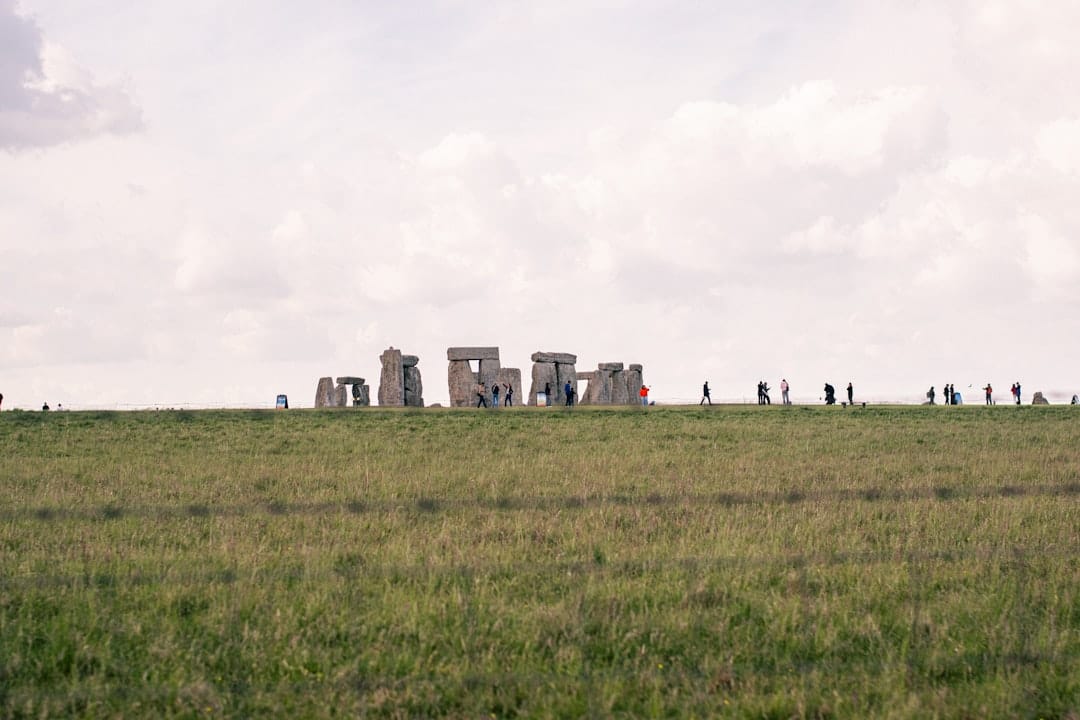
Let’s put the dates in perspective. Göbekli Tepe was constructed around 9600 BCE. That’s roughly 7,000 years before Stonehenge’s first stones were raised, and about 6,000 years before the Great Pyramid of Giza rose from the Nile floodplain. In other words, when Göbekli Tepe was already a bustling ceremonial center, the ancestors of the Egyptians were still chasing mammoths across the Siberian tundra.
Standard narratives of human development tell us that agriculture came first—people domesticated wheat and barley, settled down, produced a surplus, and only then had the luxury to build temples, develop writing, and create complex societies. Göbekli Tepe flips that script on its head. There’s no evidence of domesticated crops or animals at the site. No pottery shards. No metal tools. Just stone tools, massive amounts of labor, and a whole lot of ambition.
Think about the logistics for a moment. Quarrying those 20‑ton pillars from the nearby bedrock, transporting them hundreds of meters, and setting them into precisely cut sockets would require coordination, planning, and a fed workforce. Where did the food come from? Excavations have uncovered enormous stone vessels, likely used for holding liquids during feasts, and tons of animal bones—gazelle, aurochs, wild donkey—suggesting massive communal meals. Somehow, these hunter‑gatherers managed to produce enough surplus to support not just builders, but also priests, artists, and organizers.
It’s the kind of discovery that makes you rethink everything you thought you knew about the “Neolithic Revolution.” If foragers could pull this off, what else are we missing about the capabilities of prehistoric societies?
Klaus Schmidt didn’t just dig up stones; he dug up a hypothesis that still rattles academia. He proposed that Göbekli Tepe represents a reversal of the standard model: instead of agriculture leading to religion and monuments, it was the urge to build sacred spaces that drove people to settle, cooperate, and eventually domesticate plants and animals.
Picture this: scattered bands of hunter‑gatherers, drawn by something ineffable—a shared myth, a celestial event, a powerful shamanic vision—begin to gather at a particular hilltop. They start erecting pillars, carving stories into stone, holding feasts that reinforce group identity. The need to feed these gatherings pushes them to experiment with cultivating wild grains that grow abundantly nearby.
And guess what grows just thirty kilometers away? Karaca Dağ, a mountain whose slopes are carpeted with wild einkorn wheat—the very genetic ancestor of modern domesticated wheat. Genetic studies show that the earliest cultivated einkorn strains match those found on Karaca Dağ, suggesting that the first experiments in farming happened in the shadow of Göbekli Tepe.
If Schmidt is right, then the temple wasn’t a product of a settled farming society; it was the catalyst that created one. The social glue of shared ritual may have provided the motivation to invest in labor‑intensive food production, leading to the domestication of wheat, barley, legumes, and eventually livestock. In this view, religion didn’t emerge from agriculture—it gave birth to it.
Of course, not everyone agrees. Some scholars argue that the evidence for large‑scale, year‑round settlement at Göbekli Tepe is still thin, and that the site might have been a regional pilgrimage destination used seasonally by mobile groups. Others point out that we have yet to find clear signs of domestication *at* the site itself—only in the surrounding landscape. The debate is lively, and the ongoing excavations (which continue under the direction of Turkish archaeologists) promise to keep the conversation going for years to come.