Physical Address
304 North Cardinal St.
Dorchester Center, MA 02124
Physical Address
304 North Cardinal St.
Dorchester Center, MA 02124
I’ve spent an embarrassing amount of time reading about this. No regrets.
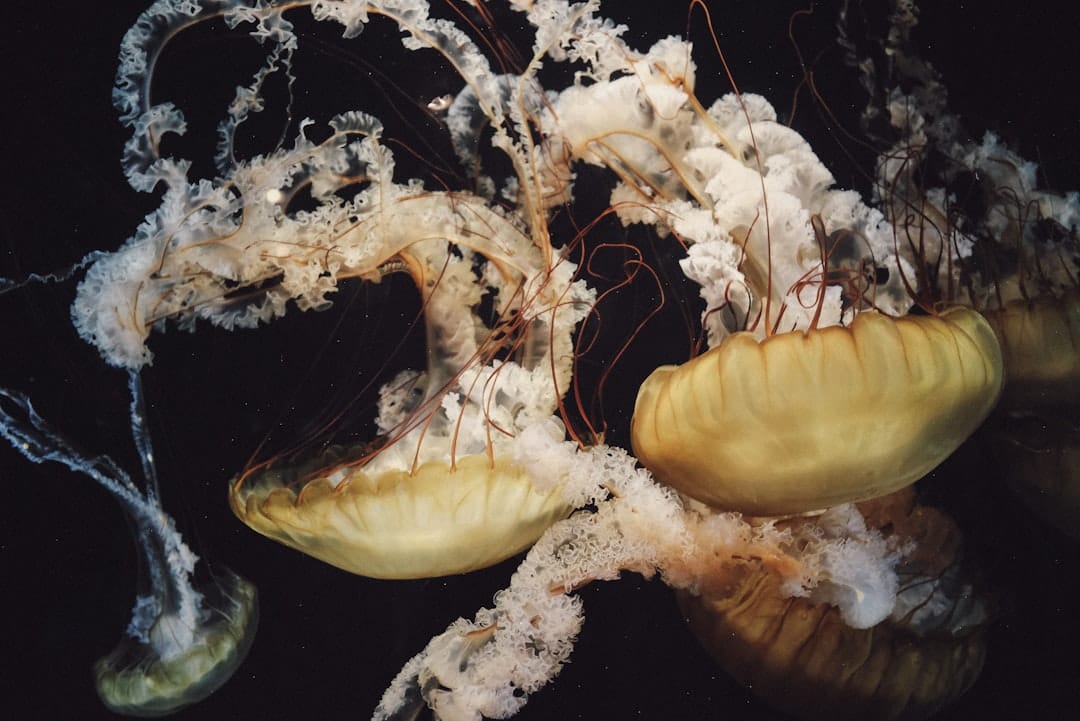
There’s something almost poetic about a creature that can hit the reset button on its own life. Imagine reaching middle age, feeling the weight of years, and then—poof—you’re back to being a baby again, ready to start over. It sounds like the plot of a sci‑fi novel, yet it’s real, and it’s pulsing quietly in the world’s oceans right now. The Turritopsis dohrnii, affectionately dubbed the immortal jellyfish, doesn’t just live a long life; it can literally reverse its aging process when the going gets tough.
I first stumbled upon this oddity while researching invasive species for another article, and I fell down a rabbit hole that made me question everything I thought I knew about aging, death, and what it means to be “alive.” How does a tiny, translucent bell manage to cheat death? And if it can do it, what does that say about the limits we place on ourselves?
It all began in 1988, when a German marine biology student named Christian Sommer was collecting specimens off the coast of Portofino, Italy. He scooped up a few medusae—the adult, bell‑shaped form of the jellyfish—and placed them in a jar for observation. Like any diligent student, he expected them to die off after a day or two; jellyfish are notoriously fragile in captivity.
But the next morning, Sommer found something that made him doubt his own eyes. Instead of lifeless medusae, the jar was filled with tiny polyps, the juvenile stage that normally settles on a substrate and buds off new medusae. The adults had not just died; they had reversed their life cycle, turning back into their earliest form. He teamed up with Giorgio Bavestrello, and together they published the findings in 1992. The scientific community greeted the paper with a healthy dose of skepticism—after all, true biological immortality sounded like myth.
And that’s not even the strangest part.
What made the discovery truly mind‑bending was that the jellyfish weren’t just producing offspring; the exact same individual, with the same genetic makeup, was undergoing a complete metamorphosis from adult back to polyp. It wasn’t a case of asexual reproduction or cloning; it was the original animal hitting a biological “undo” button.
So, how does this cellular time travel happen? The trigger is usually some form of environmental stress—starvation, a sudden temperature shift, physical damage, or even a change in salinity. When conditions deteriorate, the jellyfish’s bell begins to reabsorb its tentacles, the organism settles onto the seafloor, and forms a cyst‑like structure.
Inside that cyst, something extraordinary occurs: the cells start to change their identity. Muscle cells can become nerve cells; nerve cells can turn into epithelial cells; the whole repertoire of specialized cells undergoes a process called transdifferentiation. Unlike stem cell differentiation, which follows a preset developmental path, transdifferentiation rewrites cellular fate directly, all while preserving the original DNA.
Because the genetic blueprint stays intact, the resulting polyp is genetically identical to the medusa that started the process. And here’s the kicker: the cycle can repeat indefinitely. In theory, a Turritopsis dohrnii could bounce between medusa and polyp forever, escaping death by aging altogether—provided it avoids disease, predators, or a catastrophic accident.
Scientists are still arguing about this one. Some contend that lab conditions exaggerate the phenomenon, pointing out that in the wild, the jellyfish rarely gets the chance to reset before being eaten or infected. Others argue that the ability is a genuine survival strategy, a bet‑hedging mechanism that lets the species endure harsh patches of ocean.
If a jellyfish can reset its own cells, what does that mean for us? The answer is both tantalizing and cautionary. Turritopsis dohrnii is currently the only known metazoan—multicellular animal—exhibiting true biological immortality. That makes it a unique model for studying aging at the cellular level.
The transdifferentiation process shares striking similarities with the stem cell reprogramming techniques that earned Shinya Yamanaka the Nobel Prize in 2006. Just as Yamanaka’s four factors can coax adult cells back to a pluripotent state, the jellyfish appears to activate a natural suite of genes that accomplish the same feat—without the need for viral vectors or lab‑induced manipulation.
Researchers are now probing the molecular levers behind this trick. MicroRNA regulation seems to play a pivotal role, acting as a switch that silences adult‑specific genes and reactivates embryonic programs. Telomerase activity—the enzyme that protects chromosome ends—also spikes during the reversal, suggesting that the jellyfish maintains its chromosomal integrity throughout the cycle.
Of course, there’s a dark side. The same pathways that enable cellular rejuvenation can, when misregulated, drive uncontrolled cell growth—cancer. Understanding how Turritopsis balances renewal with restraint could reveal new strategies for regenerative medicine that avoid triggering tumorigenesis.
And let’s not forget the ecological twist. Thanks to global shipping, the immortal jellyfish has become a successful invasive species. Its polyps cling to ship hulls and survive in ballast water, allowing the organism to hitch rides to new ports. Today, you can find Turritopsis dohrnii populations far beyond its original Mediterranean home, from the waters off Japan to the coast of Panama. In a way, humanity has helped spread a creature that may hold the secret to beating aging—while simultaneously grappling with the consequences of our own global footprint.
There’s something profoundly human about refusing to accept ‘we don’t know’ as a final answer.
We stare at the night sky, we dig into the earth, we peer through microscopes, all in the hope that the universe will whisper its secrets back. The immortal jellyfish reminds us that mystery isn’t just a gap to be filled—it’s an invitation to look deeper, to question the very boundaries we’ve drawn between life and death, between the temporary and the eternal.