

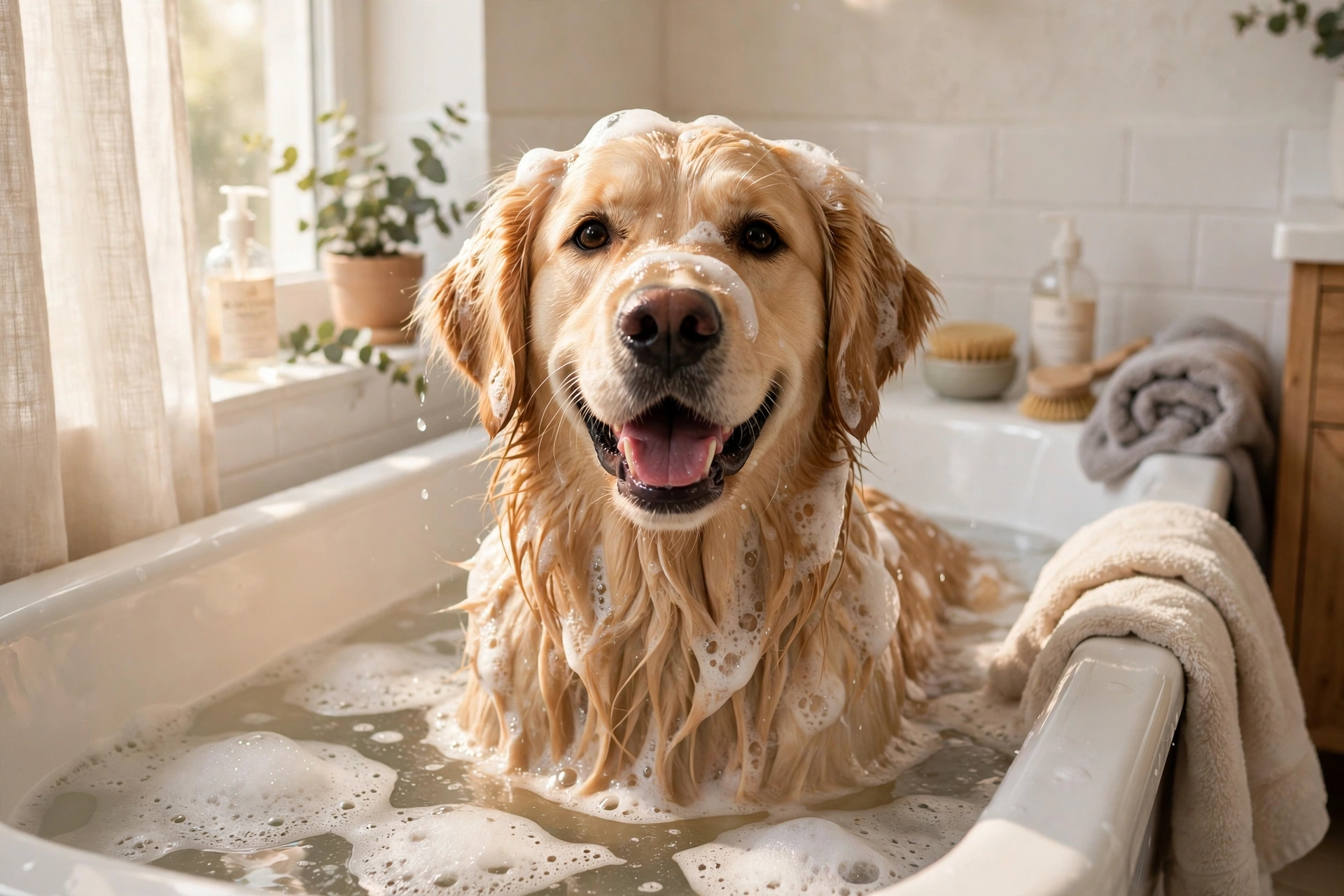
One of the most common questions dog owners ask is also one of the most misunderstood: how often should you bathe your dog? Bathe too rarely, and your dog ends up smelly, itchy, or dealing with skin problems. Bathe too often, and you can strip the natural oils that keep their skin and coat healthy.
The truth is that most owners bathe their dogs more often than necessary — and the right schedule depends less on the calendar and more on your dog’s coat type, lifestyle, and skin health. This guide breaks it all down, with recommendations from veterinarians and the American Kennel Club, so you can build a bath routine that actually fits your dog.
Direct answer: Most healthy adult dogs need a bath every 1 to 3 months. The American Society for the Prevention of Cruelty to Animals (ASPCA) suggests about once every three months for a typical dog. Long-haired, curly, and oily-coated breeds may need bathing every 4 to 6 weeks, while hairless breeds need weekly baths.
How Often Does the Average Dog Need a Bath?
The average healthy dog needs a bath every 1 to 3 months. Surprisingly, some healthy dogs are fine with far fewer baths than that: according to veterinary adviser Dr. Jennifer Coates, writing for PetMD, healthy dogs without skin conditions can be fine with only a bath or two a year, just to control natural doggy odors.
Here’s the general principle: baths are mostly for your benefit, not your dog’s. Dogs’ skin produces natural oils that protect the coat, and frequent shampooing strips those oils away, leading to dryness, flaking, and itchiness. When in doubt, start with less frequent baths and adjust based on how your dog’s coat looks, feels, and smells.
A good rule of thumb is to bathe your dog when they’re visibly dirty, smell noticeably “doggy” even after a good brushing, or have rolled in something unpleasant — not simply because a certain number of weeks have passed.
How Often Should You Bathe Your Dog by Coat Type?
Coat type is the single biggest factor in bathing frequency. Here’s the breakdown most groomers and veterinarians recommend:
| Coat type | Suggested bathing frequency | Examples |
|---|---|---|
| Short, smooth coat | Every 2–3 months | Beagle, Boxer, Labrador Retriever |
| Double coat | Every 6–10 weeks | Golden Retriever, Siberian Husky |
| Long, silky coat | Every 4–6 weeks | Shih Tzu, Maltese, Yorkshire Terrier |
| Curly or non-shedding coat | Every 3–4 weeks | Poodle, Doodle mixes |
| Wiry coat | Every 4–8 weeks | Schnauzer, Wire Fox Terrier |
| Oily coat | Every 2–4 weeks | Basset Hound, Cocker Spaniel |
| Hairless | Weekly | Chinese Crested, Xoloitzcuintli |
These are starting points, not laws. A Labrador who swims every weekend needs baths far more often than a couch-loving Beagle, even though both have short coats.
Why Do Long-Haired and Curly Dogs Need More Frequent Baths?
Long, curly, and silky coats trap dirt, debris, and loose hair between baths. Without regular washing and brushing, the hair tangles and mats — and matted fur pulls on the skin, traps moisture, and can lead to painful skin infections underneath.
The American Kennel Club notes that long-haired and curly-haired breeds generally require more regular bathing to prevent matting, and recommends bathing these dogs at least once every four to six weeks, with regular brushing between baths to keep the coat in good condition.
Brushing matters as much as the bath itself. A Poodle brushed thoroughly several times a week can often stretch the interval between baths, while a neglected curly coat will need washing sooner. Always brush out tangles before a bath — water tightens mats and makes them harder to remove afterward.
Do Hairless Dogs Need Baths More Often?
Yes — paradoxically, dogs without hair need the most frequent bathing. Hairless breeds like the Chinese Crested lack the protective coat that regulates skin oils, so sebum builds up directly on their skin. Without regular washing, they can develop acne, clogged pores, and skin irritation.
According to the American Kennel Club, hairless breeds need to be bathed weekly. Use a gentle, moisturizing dog shampoo, and talk to your veterinarian about sunscreen and skin protection — hairless dogs are also prone to sunburn. When in doubt, ask your vet about a skincare routine suited to your hairless dog.
What Happens If You Bathe Your Dog Too Often?
Over-bathing strips the natural oils (sebum) from your dog’s skin and coat. The consequences are predictable and common:
- Dry, flaky skin — the most immediate sign of over-bathing
- Itchiness and scratching — which can spiral into hot spots and sores
- Dull, brittle coat — the shine disappears as protective oils wash away
- Increased odor — paradoxically, stripping oils can make skin produce more oil in response
Veterinarian Dr. Jamie Whittenburg (DVM) advises that dogs generally should not be bathed with shampoo more than once every two weeks at most, regardless of hair type. That’s a ceiling, not a target — most dogs need far less.
If your dog’s skin feels dry, looks flaky, or your dog is scratching more after baths, stretch the interval between baths and make sure you’re rinsing thoroughly. Leftover shampoo residue is a common hidden cause of post-bath itching.
What About Puppies — How Often Should They Be Bathed?
Puppies should be bathed rarely and gently. Young puppies’ skin is sensitive, and they rarely get dirty enough to need shampoo. Most veterinarians recommend waiting until a puppy is at least 8 weeks old before their first real bath.
For young puppies, follow these steps:
- Wait until 8 weeks before the first full shampoo bath.
- Use a puppy-specific shampoo — formulated to be extra mild and tear-free.
- Keep it short and warm — lukewarm water, quick lather, thorough rinse.
- Dry thoroughly — puppies chill easily; towel dry and keep them warm until fully dry.
- Make it positive — treats and calm praise teach your puppy that baths are nothing to fear.
Between baths, a warm damp cloth is usually enough for the occasional muddy paw. Puppies that are being house-trained don’t need full baths for small accidents — spot cleaning is fine.
Does Lifestyle Change the Bathing Schedule?
Absolutely. Two dogs of the same breed can have completely different bathing needs based on how they live:
- Outdoor, active dogs — dogs that hike, swim, visit dog parks, or roll in dirt need baths whenever they get dirty, sometimes weekly
- Apartment dogs with low activity — can often go the full 2–3 months between baths
- Swimmers — chlorine and saltwater dry out the coat; rinse after every swim, with a full shampoo bath as needed
- Dogs with allergies — some allergic dogs benefit from regular baths with vet-recommended medicated or soothing shampoos, which wash allergens off the skin
- Senior or low-mobility dogs — may need more frequent spot cleaning even if full baths are stressful
The smell test and the touch test are your best guides. If the coat feels oily or gritty, or a brushing doesn’t freshen the smell, it’s bath time.
How to Bathe Your Dog the Right Way
A good technique matters as much as good timing. Follow these steps for a safe, effective bath:
- Brush first. Remove loose hair and tangles before water ever touches the coat — water tightens mats.
- Use lukewarm water. Hot water dries the skin and can be uncomfortable; cold water is a shock. Test on the inside of your wrist.
- Use a dog-specific shampoo. Human shampoos are formulated for a different skin pH and can irritate dogs. Oatmeal-based formulas are a gentle default for most dogs.
- Work from neck to tail. Shampoo the body first, and save the head for last to minimize the chance of soap in the eyes and ears.
- Rinse twice as long as you lathered. Shampoo residue causes itching and dull coat — this is the step most people rush.
- Protect the ears. Avoid getting water in the ear canals, which can set up ear infections. After the bath, gently dry the outer ears. (See our ear cleaning guide for what to do if ears do get wet.)
- Dry thoroughly. Towel dry, then let your dog air dry in a warm room or use a dryer on the lowest, coolest setting. Never use high heat.
How Can You Keep Your Dog Fresh Between Baths?
Stretching the time between baths is easier — and healthier — than bathing more often. These habits keep your dog clean without shampoo:
- Brush regularly. Brushing removes dirt, distributes natural oils, and is the single best way to extend the time between baths. Short coats need brushing a few times a week; long and curly coats need it more often.
- Wipe paws after walks. A damp cloth or pet-safe wipe handles muddy paws and the grime that causes excessive paw licking.
- Use waterless or dry shampoo. Pet-safe foaming waterless shampoos are good for quick refreshes between full baths.
- Wash bedding. A surprising amount of “dog smell” comes from the bed, not the dog. Wash bedding every 1–2 weeks.
- Clean the ears. Odor and buildup in the ears can make the whole dog smell. See how to clean your dog’s ears safely.
When Should You Call the Vet About Skin or Bathing Issues?
Bathing won’t fix every skin problem — and some symptoms mean it’s time for professional help rather than another bath. Contact your veterinarian if you notice:
- Persistent itching, redness, or flaking that doesn’t improve with a gentler bathing routine
- Hair loss, bald patches, or sores
- A strong or unusual odor that returns quickly after bathing
- Oily, scaly, or greasy skin (possible seborrhea)
- Excessive paw licking or chewing, which often signals allergies
Dogs with diagnosed skin conditions, such as atopic dermatitis or yeast infections, sometimes need medicated baths on a schedule your vet prescribes — which may be far more frequent than a normal bathing routine. When in doubt, ask your vet.
Frequently Asked Questions
Can I bathe my dog once a week?
Only if your vet recommends it or your dog has a specific need (like a hairless breed or a medicated shampoo regimen). For most dogs, weekly shampoo baths are too frequent and will dry out the skin and coat. Dr. Jamie Whittenburg (DVM) recommends no more than once every two weeks at the absolute maximum, and most dogs need far less than that.
Is it bad to use human shampoo on dogs?
Yes. Human shampoo is formulated for a different skin pH and can irritate your dog’s skin and strip its coat. Always use a shampoo made specifically for dogs — oatmeal-based formulas are a safe, gentle choice for most dogs without special skin needs.
How often should I bathe a dog that sleeps in my bed?
Bed-sharing dogs don’t necessarily need more baths — they need cleaner routines around baths. Regular brushing, paw wiping after walks, and washing their (and your) bedding frequently go further than extra shampooing. Bathe on the normal schedule for their coat type, and spot-clean as needed.
Does bathing help with dog allergies?
Sometimes, yes. Bathing washes pollen, dust, and other allergens off your dog’s skin and coat, which can reduce itching in dogs with environmental allergies. Your vet may recommend a specific schedule with a soothing or medicated shampoo. Don’t increase bathing frequency for allergies without your vet’s guidance, though — over-bathing can make irritated skin worse.
The Bottom Line
Most dogs thrive on a bath every 1 to 3 months, with adjustments for coat type, lifestyle, and skin health. Start with the guideline for your dog’s coat, pay attention to how the coat looks and feels, and let your dog’s actual condition — not the calendar — decide when the next bath happens. A well-brushed dog bathed on the right schedule has healthier skin, a shinier coat, and fewer trips to the vet for skin trouble. When in doubt, ask your vet.