

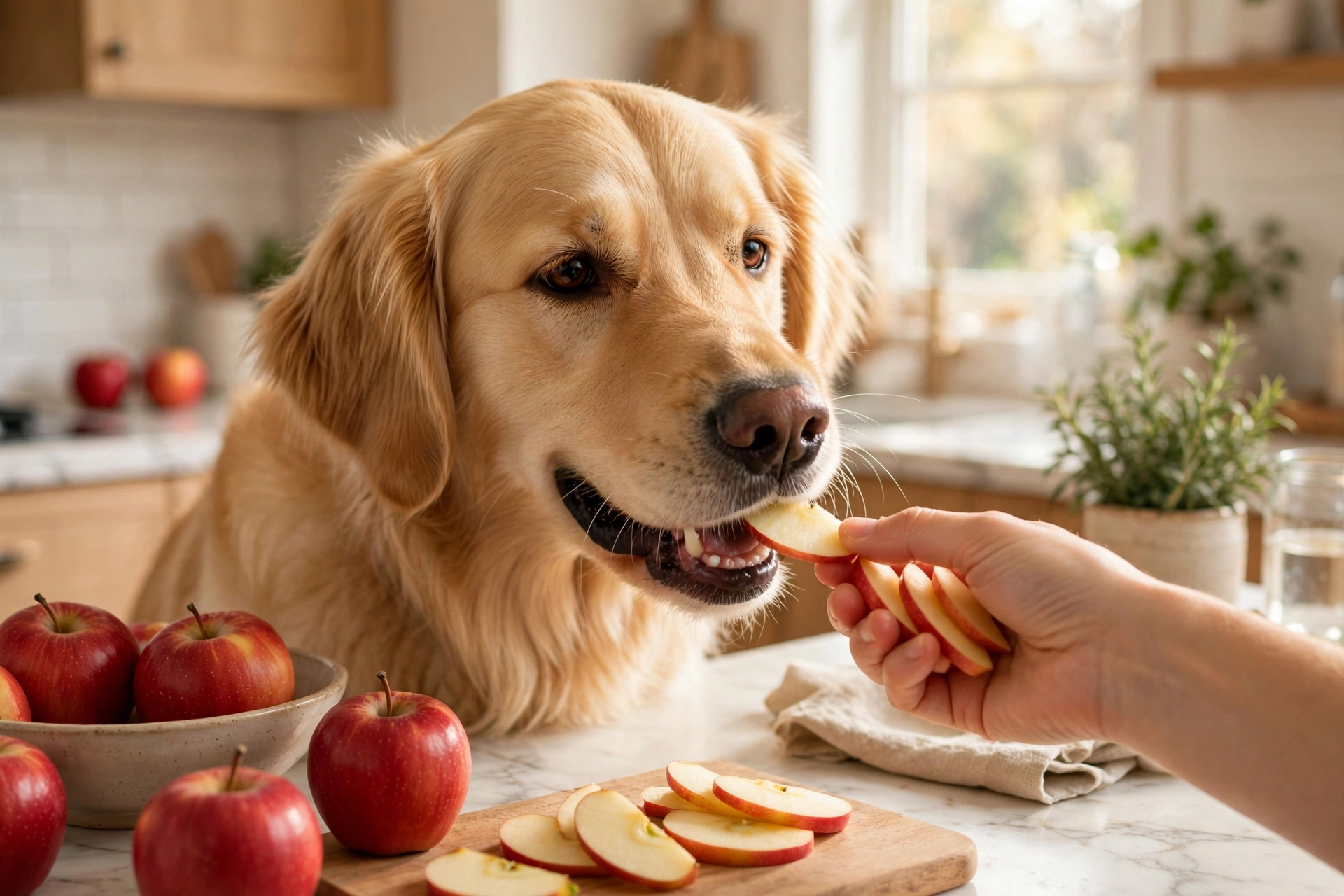
Few treats earn a tail wag faster than a crisp slice of apple. Apples are sweet, crunchy, and conveniently bite-sized — and if your dog has ever fixed you with hopeful eyes while you eat one, you have probably wondered whether sharing is safe. The short version: yes, apples can be a healthy occasional treat for dogs. But there is a right way and a wrong way to serve them, and one part of the apple deserves real caution.
Like our guide to whether dogs can eat pumpkin, this post is part of WeirdScoop’s “can dogs eat X” fruit series — same safe format, no guesswork, every claim grounded in veterinary guidance. When in doubt, ask your vet — especially if your dog has diabetes or a sensitive stomach.
Direct answer: Yes — plain, fresh apple flesh is a safe, low-calorie treat for most dogs, offering fiber and vitamins A and C. Wash the apple well, remove all seeds, the core, and the stem, and cut the flesh into small pieces. Keep apples to occasional treats within the 10% treat rule, and check with your vet first if your dog is diabetic.
Are Apples Good for Dogs?
Yes — in the plain, fresh form, apples are genuinely one of the better snacks you can share with your dog. The flesh of an apple is low in calories, low in fat, and contains useful fiber plus vitamins A and C, according to the AKC’s guidance on apples for dogs. A medium apple runs about 95 calories (USDA data) — and since your dog will only ever get a few slices, their share is a tiny fraction of that.
Fiber is the quiet star here. Apples contain both soluble and insoluble fiber, which supports healthy digestion and helps dogs feel full — useful if you have a dog on a weight-management plan. The vitamins add a small nutritional bonus, though apples should always be a treat, never a meaningful part of your dog’s nutrition. Their complete diet comes from their dog food, which is formulated to meet AAFCO nutritional standards.
Apples also have one practical advantage over most commercial treats: you know exactly what is in them. No ingredient list to decode, no mystery fillers. For owners trying to swap processed treats for whole-food options, a few apple slices are a solid choice.
Which Parts of the Apple Are Dangerous for Dogs?
Here is where the caution belongs — and it is specific, not scary. The flesh is safe. The seeds, core, and stem are not something you want your dog eating.
- Seeds. Apple seeds contain a small amount of amygdalin, a compound that releases cyanide when chewed and digested. A dog would need to chew and swallow a large quantity of seeds for this to become a real problem — one swallowed seed is not an emergency, and you should not panic if your dog grabs a dropped seed. But seeds should always be removed before serving, because the risk is cumulative and pointless to take.
- The core. The tough, fibrous core is a choking hazard, especially for small dogs and enthusiastic gulpers. It can also cause intestinal irritation or blockage if swallowed in chunks.
- The stem. Another small choking hazard with no nutritional value — just remove it.
The rule is simple: your dog gets the flesh. Everything else goes in the trash.
How Should I Serve Apples to My Dog?
Serving apples safely takes about thirty seconds. Follow these steps every time.
- Wash the apple thoroughly. Supermarket apples regularly appear on the Environmental Working Group’s “Dirty Dozen” list of produce carrying the most pesticide residue. A good rinse under running water removes most of it. Peeling is optional — the skin itself is safe — but washing is not.
- Remove the seeds, core, and stem. Cut the apple into quarters and cut the core out of each piece, the way you would for a child.
- Cut the flesh into small pieces. Size them to your dog: pea-sized bits for a Chihuahua, bigger chunks for a Lab. Small pieces prevent choking and slow down the gulping.
- Serve fresh. Raw apple flesh is the best option. If you want a summer treat, frozen apple slices make a great crunchy, cooling snack — just cut them before freezing.
A few creative serving ideas: mix a few apple pieces into your dog’s regular meal as a topper, stuff a couple of chunks into a food puzzle toy for mental enrichment, or freeze small pieces in a thin layer of water for a hot-day treat. Just remember the golden rule that the ASPCA’s guidance on pet-safe foods reinforces: plain flesh only, nothing added.
How Many Apples Can My Dog Eat?
Treats of all kinds — apples included — should stay within the roughly 10% daily treat allowance that veterinary nutritionists recommend, a guideline the AKC cites regularly. In plain terms: if your dog’s treats (commercial treats, table scraps, and fruit combined) exceed about a tenth of their daily calories, their balanced diet starts getting diluted.
What does that look like in apple terms? A few small slices a few times a week is a comfortable range for most dogs. Do not state a fixed “X slices per day” rule — the right amount depends entirely on your dog’s size, weight, and overall diet. A Great Dane and a Yorkie live in different treat universes.
Two cautions worth knowing:
- Too much fiber upsets stomachs. Apples are fiber-rich, and fiber in excess causes gas, loose stools, or diarrhea. Introduce apples with a small amount the first time and watch your dog for the next day before making them a regular treat.
- Natural sugars add up. Apples contain natural fruit sugar. For most healthy dogs this is a non-issue at treat quantities, but if your dog has diabetes or is on a vet-supervised weight plan, check with your vet first before adding any fruit to the diet.
Apple Snacks: What’s Safe and What’s Not
Not everything apple-flavored is dog-safe. Use this table as a quick reference:
| Apple form | Safe? | Why |
|---|---|---|
| Fresh apple slices (seedless, cored) | Yes | Safe, low-calorie treat with fiber and vitamins |
| Frozen apple slices | Yes | Great cooling snack; cut before freezing |
| Cooked plain apple (no additives) | Yes | Softer option for seniors or dogs with dental issues |
| Apple pie | No | Added sugar, butter crust; nutmeg (myristicin) is toxic to dogs in quantity |
| Apple juice / cider | No | Concentrated sugar, no fiber; some ciders contain spices or xylitol |
| Caramel / candied apples | No | Sugar overload; caramel and coatings are stomach-wrecking |
| Dried apple rings | Caution | Only if plain with no added sugar, sulfur, or xylitol — check the label |
| Apple seeds, core, stem | No | Cyanide traces in seeds; core and stem are choking hazards |
The theme is consistent: the closer the food is to “apple you just cut up,” the safer it is. Anything a human recipe turned it into — pie, juice, candy — is a different product with different dangers.
When Should I Skip Apples Entirely?
For most dogs, apples are fine. But there are a few situations where you should hold off or get a vet’s input first:
- Diabetes. The natural sugars in apples can complicate blood-sugar management. Ask your vet before feeding fruit to a diabetic dog.
- Known fruit allergies or sensitivities. Rare in dogs, but they exist. If your dog has reacted to other fruits, introduce apples cautiously or skip them.
- After stomach upset. If your dog is recovering from vomiting or diarrhea, fruit fiber is the wrong reintroduction food. Bland diets (plain chicken and rice) come first — ask your vet.
- If your dog is a power chewer of cores. Some dogs will demolish a whole apple — core included — faster than you can react. If yours is one of them, serve apples pre-cut and never hand over a whole one.
And one emergency note: if your dog ever eats something from the “no” column in quantity — a whole apple pie, a bag of dried apple rings with xylitol — call your vet or the ASPCA Poison Control line at 888-426-4435 immediately. Do not induce vomiting unless a vet directs it.
Frequently Asked Questions
Can puppies eat apples?
Yes, with the same rules as adults: washed, cored, seeded, cut small. Puppies have smaller throats and bigger appetites for trouble, so keep pieces tiny and supervise. Start with just one or two pieces to make sure your puppy’s stomach handles the fiber.
Are green apples or red apples better for dogs?
Neither has a meaningful advantage. All common apple varieties — red, green, yellow — are equally safe in the same prepared form. Pick whichever you are eating; the safety rules do not change by color.
My dog ate an apple seed. Should I call the vet?
Almost certainly not for one seed. The amount of amygdalin in a single seed is tiny, and dogs would need to chew and swallow many seeds for cyanide to become a concern. Remove seeds going forward and watch for unusual symptoms, but one dropped seed is not an emergency. If your dog ate a large number of seeds or shows vomiting, weakness, or labored breathing, call your vet.
Can dogs eat applesauce?
Only if it is plain, unsweetened applesauce with no xylitol, cinnamon in large amounts, or added sugar. Most commercial applesauce has added sugar or sweeteners, so check the label carefully. Fresh apple slices are simpler and safer — there is no label to decode.
Final Thoughts
Apples are one of the easiest healthy treats you can give your dog: cheap, crunchy, and safe when prepared right. Wash, core, seed, slice small, and keep them occasional. That is the whole recipe. If you are building a rotation of safe fruits, our guide to Thanksgiving foods dogs can’t eat is the essential companion read — it covers the seasonal fruit hazards (grapes, raisins) that are far more dangerous than anything in an apple.