

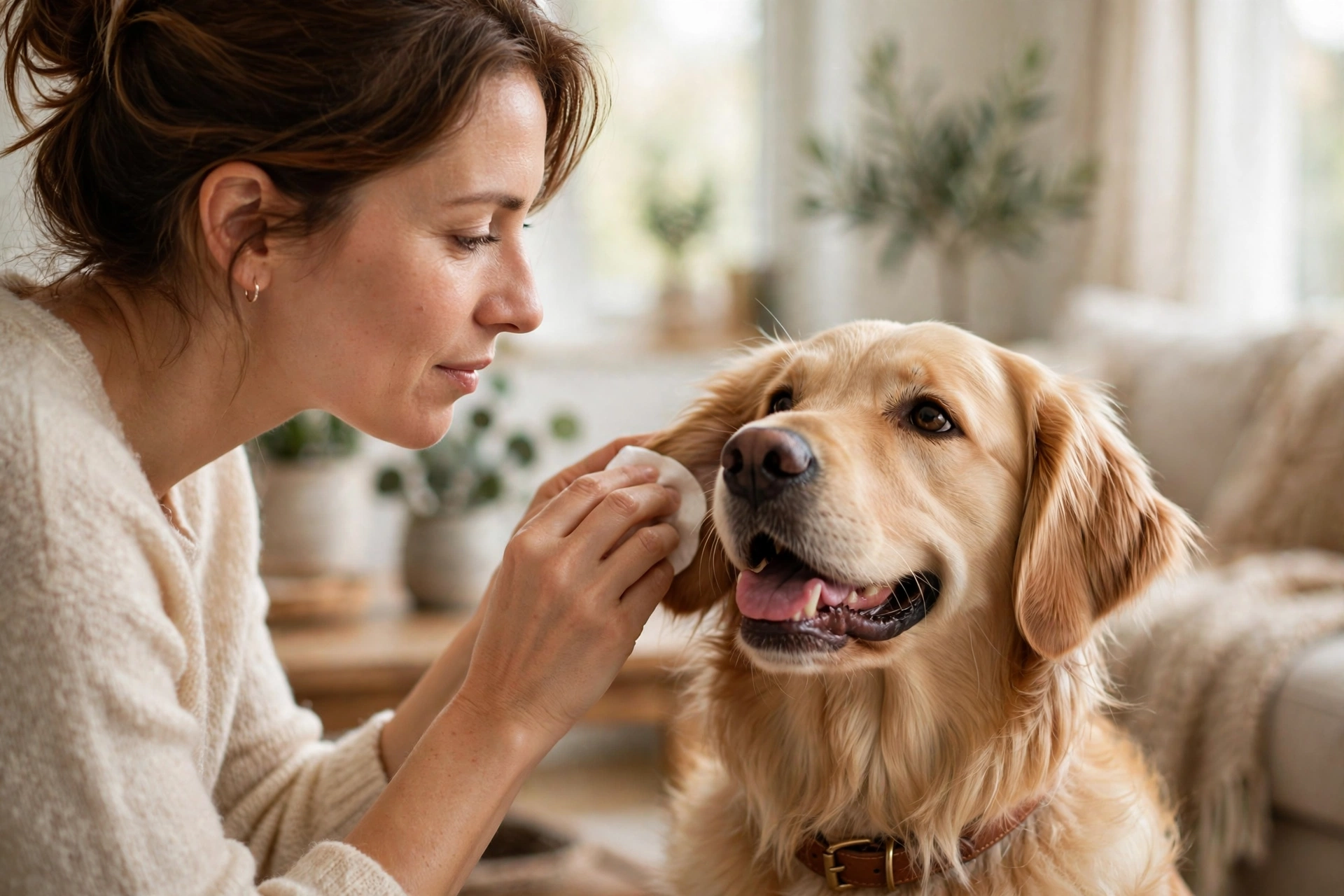
Nobody likes watching their dog shake their head in discomfort — and flaky, waxy, or smelly ears are usually the culprit. The good news? Cleaning your dog’s ears at home is one of the simplest grooming habits you can build, and most dogs learn to tolerate it once you get the technique right. This guide walks you through the supplies, the step-by-step method vets recommend, and when to skip cleaning and call your vet instead — because ears are one place where doing the wrong thing can do real harm.
Why Ear Cleaning Matters
Your dog’s ear canal is shaped like an L — it goes down, then takes a sharp turn inward before reaching the eardrum. That bend traps wax, moisture, dirt, and debris, creating a warm, dark environment where yeast and bacteria thrive. Regular gentle cleaning removes that buildup before it becomes a problem.
Cleaning also gives you a reason to look inside your dog’s ears regularly — and spotting redness, swelling, or discharge early is what separates a quick vet visit from a week of a miserable, head-shaking pup.
Breeds Prone to Ear Issues
Some dogs need more frequent ear checks than others. Floppy-eared breeds like Cocker Spaniels, Basset Hounds, Bloodhounds, and Labradors have ear flaps that trap heat and moisture inside the canal. Breeds with hairy ear canals — Poodles, Shih Tzus, Schnauzers, and Bichon Frises — tend to accumulate wax and debris in that hair. Dogs that love swimming or live in humid climates are also at higher risk, since moisture is the number-one driver of ear infections.
If your dog falls into one of these groups, plan to check their ears weekly and clean as needed rather than waiting for a problem to appear.
What You’ll Need
Gather your supplies before you start — you don’t want to be halfway through with a squirming dog and nothing in reach.
- A vet-approved ear cleaning solution. Look for one made specifically for dogs, ideally with a drying agent. Avoid alcohol-based solutions on irritated ears, since they sting.
- Cotton balls or gauze pads. These are for wiping the visible outer ear. Never use cotton swabs (Q-tips) inside the ear canal — they push debris deeper and can injure the eardrum.
- Treats. Reward calm behavior generously. Ear cleaning should end with a positive association, not a wrestling match.
- A towel. Things can get drippy, especially if your dog shakes mid-cleaning (they will).
Do not use water alone to clean ears — water left sitting in the canal promotes infection. And never improvise with vinegar, hydrogen peroxide, or essential oils unless your vet specifically instructs you to; these can irritate healthy ears and cause pain in infected ones.
Step-by-Step: How to Clean Your Dog’s Ears
1. Get your dog comfortable
Pick a calm moment, not right after playtime. Let your dog sniff the supplies, give them a treat, and gently lift one ear flap so you can see inside. Talk to them in a calm voice throughout — your energy sets the tone.
2. Fill the ear canal with cleaning solution
Hold the ear flap up and squeeze the solution into the ear canal until you can see it pooling slightly at the opening. Rest the bottle tip near the opening rather than pushing it deep into the canal.
3. Massage the base of the ear
With the flap still held up, use your thumb and fingers to gently massage the base of the ear (the soft part just below the ear opening) for 20–30 seconds. You should hear a soft squishing sound — that’s the solution loosening wax and debris down in the L-shaped canal. Most dogs actually lean into this part.
4. Let your dog shake
Step back and let your dog shake their head. This is the messy part — the shaking flings loosened debris up and out of the canal, which is exactly what you want. (This is why you brought the towel.)
5. Wipe the outer ear clean
Using a cotton ball or gauze pad, gently wipe the visible parts of the ear flap and the outer canal. Reach only as far as your finger comfortably goes — never probe deeper. Use a fresh cotton ball for each pass until it comes away clean.
6. Reward and repeat on the other ear
Give your dog a treat and some praise, then repeat the whole process on the second ear. Always use a fresh cotton ball for the other ear so you don’t transfer anything between ears.
How Often Should You Clean Your Dog’s Ears?
There’s no one-size-fits-all answer, but these are solid general guidelines:
- Floppy-eared or swim-loving dogs: check weekly, clean every 1–2 weeks or after swimming.
- Most other dogs: check every couple of weeks, clean about once a month or whenever you see light wax buildup.
- Dogs with a history of ear infections: follow whatever schedule your vet recommends.
Over-cleaning is a real thing — cleaning healthy ears too often can strip away their natural protective oils and cause irritation. If the ear looks pink, clean, and odor-free, leave it alone.
Signs of Ear Infection: Skip Cleaning, See Your Vet
This is the most important section of this guide. If you notice any of the following, do not attempt to clean the ear — see your veterinarian instead:
- Strong or foul odor coming from the ear
- Dark brown, yellow, green, or bloody discharge
- Redness, swelling, or warmth in the ear flap or canal
- Your dog yelps, flinches, or pulls away when you touch the ear
- Constant head shaking, tilting, or scratching at one ear
- Crusty, scabby skin around the ear
These are classic signs of an ear infection, and putting cleaning solution into an infected ear can cause significant pain and make things worse. Ear infections need veterinary diagnosis and treatment — usually medicated drops and sometimes oral medication. When in doubt, ask your vet.
Tips for Dogs Who Hate Ear Cleaning
If your dog runs at the sight of the bottle, rebuild the association gradually. Start by just lifting the ear flap and giving a treat — no cleaning. The next day, put a single drop of solution in and reward heavily. Build up over several short sessions, keep sessions brief, and never chase or corner a fearful dog. For dogs with genuine ear-cleaning anxiety, ask your vet to demonstrate handling techniques during a visit.
Frequently Asked Questions
Can I use baby wipes to clean my dog’s ears?
It’s better to use a product made for canine ears. Baby wipes aren’t formulated for the pH of a dog’s ear canal and can leave residue that traps moisture. A vet-approved ear cleaning solution plus cotton balls is inexpensive and far more effective.
Is it normal for my dog to shake their head after cleaning?
Yes — some head shaking right after cleaning is normal and actually helps expel loosened debris. Continued intense shaking, scratching, or tilting hours later can signal irritation or an underlying infection. When in doubt, ask your vet.
Can I pluck the hair out of my dog’s ears?
Best decided with your veterinarian. Some groomers routinely pluck ear hair in breeds like Poodles and Shih Tzus, but plucking can cause micro-irritation. Many vets now recommend leaving ear hair alone unless it’s clearly trapping debris and contributing to infections.
What if my dog’s ears smell but look clean?
A yeasty or musty odor with little visible discharge can still indicate an early infection, especially yeast overgrowth common in floppy-eared breeds. Don’t try to clean it away repeatedly — have your vet take a look. Catching it early usually means a simpler, shorter course of treatment.