

Meta description: Is your dog shedding so much you can’t keep up? Learn to tell normal seasonal shedding from excessive hair loss — and when to call your vet.
Category: Health & Wellness
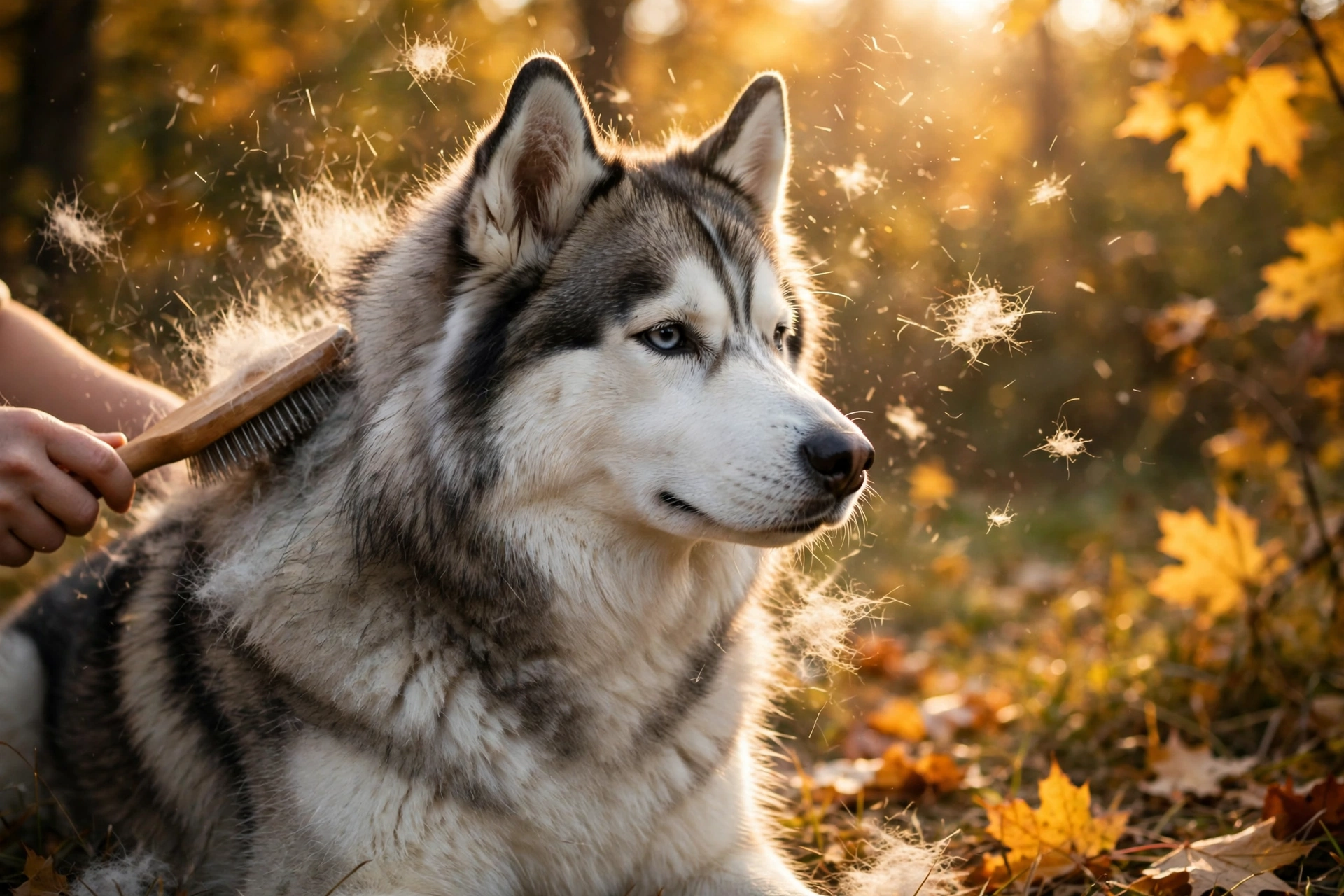
If your dog is leaving a second dog’s worth of fur behind them, you’re not imagining things — autumn is peak coat-blow season, when dogs trade their lighter summer coat for a thicker winter one. But not all shedding is seasonal: excessive shedding can be the first visible sign of allergies, skin parasites, infection, or hormonal disease.
Here’s how to tell which kind you’re looking at.
Direct answer: Some shedding is normal — most dogs shed year-round and blow their coats in spring and fall, and in autumn they’re swapping to their thicker winter coat. Shedding becomes a problem only when you see clumps of hair loss, bald patches, flaking skin, or shedding with scratching, lethargy, or weight change. Those signs warrant a vet visit.
Why is my dog shedding so much right now?
Short answer: Because it’s autumn — dogs are swapping their lighter summer coat for a thicker winter one, and the old hair comes out in volume.
Dogs don’t just grow their winter coat on top of their summer one. The swap is a replacement: as daylight hours shrink and temperatures drop, a new, denser coat grows in while the old one sheds out. For many dogs, this “coat blow” is far heavier than their day-to-day shedding, and it can last a few weeks.
According to PetMD, shedding is a natural, healthy process — it’s how dogs get rid of old or damaged hair. Double-coated breeds shed the most during these seasonal transitions because they carry a dense undercoat specifically designed for insulation. If your dog seems to be molting their entire body right now, the calendar is the most likely explanation.
How much shedding is normal for my dog’s breed?
Short answer: It depends entirely on the coat — double-coated breeds like Huskies, Labradors, Golden Retrievers, and German Shepherds shed the most, while single-coated and hair-like coats shed much less.
Some dogs are simply born to shed. Double-coated breeds carry a soft, dense undercoat beneath longer guard hairs, and they shed that undercoat heavily in spring and fall. Owners of heavy-coated dogs often joke that their dogs shed twice a year, for six months each.
Single-coated dogs and breeds with hair-like coats, such as poodles, shed far less because their coat structure is different — where your dog falls on that spectrum is largely written into their genetics.
What matters isn’t how much fur is on your floor in absolute terms — it’s how much your dog is shedding for them. You know your dog’s normal. If the amount or pattern changes suddenly, or the shedding doesn’t follow the usual seasonal rhythm, that’s worth noticing.
Why does my dog shed more when he’s stressed?
Short answer: Stress can trigger extra shedding through an adrenaline-linked response — it’s usually temporary and settles once the stressor passes.
According to PetMD, normal increases in shedding can be tied to stress, and the usual triggers read like a list of a dog’s worst weeks: a move to a new home, a new baby or pet joining the family, a bout of fireworks, or a recent vet visit. This adrenaline-linked shedding is temporary and typically settles once the stressor passes — the shedding alone isn’t a medical emergency.
The distinction to watch: stress shedding loosens more hair than usual but doesn’t create bald patches, clumps of hair loss, or skin changes. If you’re seeing those, stress isn’t the explanation — see the causes below and call your vet.
What causes excessive shedding in dogs?
Short answer: Beyond normal seasonal and breed shedding, excessive shedding is usually driven by a medical issue — poor nutrition, allergies, skin parasites, infections, or hormonal disease.
Normal shedding is a maintenance process. Excessive shedding is a symptom. Here’s what sits on the medical side of the line:
Poor nutrition. A dog’s coat reflects what they’re eating. Dogs fed an unbalanced or low-quality diet can develop dry, brittle fur and heavier-than-normal shedding. This doesn’t mean you should switch foods to fix the problem — dietary changes should only happen after a discussion with your veterinarian, and no supplement or specific food is a proven shedding cure. When in doubt, ask your vet.
Allergies. Both food allergies and environmental allergies (pollen, dust mites, mold) can cause itchy, inflamed skin and heavier shedding. Allergy-driven shedding almost always comes with scratching, licking, or red skin.
Skin parasites. Fleas, ticks, and mange mites irritate the skin and cause dogs to scratch and shed more. Flea allergy dermatitis — an allergic reaction to flea saliva — can cause dramatic hair loss in sensitive dogs even from a small number of fleas.
Infections. Bacterial skin infections and fungal infections like ringworm damage hair follicles and cause patchy hair loss, often with redness, odor, or scaly skin.
Hormonal disease. Conditions like hypothyroidism and Cushing’s disease change how hair grows and sheds. Hormonal hair loss often appears as symmetrical thinning or baldness rather than random patchiness.
Hormonal shifts after birth or spay/neuter surgery. A female dog that recently gave birth, or a dog recovering from spay or neuter surgery, can go through a temporary period of increased shedding as hormone levels shift. This usually resolves on its own, but mention it to your vet if it persists.
One important rule covering everything above: grooming helps you manage loose fur, but it doesn’t treat any of these underlying causes. Brushing a dog with a skin infection won’t fix the infection.
If your dog’s diet has changed recently — or if you’ve noticed digestive quirks like grass-eating alongside the coat changes — our guide on why dogs eat grass and when to worry is a useful companion read.
How can I tell normal shedding from excessive shedding?
Short answer: Normal shedding is even, all-over, and the skin underneath looks healthy; excessive shedding shows clumps, bald patches, or skin and behavior changes.
When you’re staring at a couch covered in fur, it’s hard to judge. Use this side-by-side to read what your dog’s coat is telling you:
| Sign | Normal shedding | Excessive shedding |
|---|---|---|
| Pattern | Even, all-over loosening of hair | Clumps coming out, or bald patches |
| Skin underneath | Clean, normal-colored skin | Red, flaky, discolored, or scaly skin |
| Timing | Matches spring/fall coat blow or steady year-round | Sudden increase outside the normal seasonal pattern |
| Texture | Coat still feels soft and healthy | Fur feels dry, brittle, or coarse |
| Scratching | No unusual itching | Heavy scratching, licking, or chewing |
| Behavior | Normal energy and appetite | Lethargy, appetite or weight changes |
| Triggers | Season, breed, recent mild stress | Allergies, parasites, infection, hormones |
A seasonal coat blow can be dramatic without being excessive. The key difference is always the skin and the pattern: healthy skin with even shedding is a coat doing its job, while patchy loss with skin changes is a coat asking for help.
Can the wrong shampoo make my dog shed more?
Short answer: Yes — never use human shampoo on a dog. It’s too harsh for their skin and can cause extra shedding, flaking, and even infection.
This one catches a lot of well-meaning owners. Human shampoo is formulated for human skin pH and oil levels, which are very different from a dog’s. Using it on a dog strips their natural oils, irritates the skin, and can lead to dryness, flaking, and heavier shedding — and in some cases it opens the door to skin infection.
Always use a shampoo made specifically for dogs, and rinse thoroughly — leftover shampoo residue irritates skin just as surely as the wrong formula. If you’re unsure how often to wash in the first place, our vet-backed guide on how often you should bathe your dog covers the full routine, but for most dogs a bath every 4–8 weeks plus regular brushing is the sweet spot.
When should I call the vet about my dog’s shedding?
Short answer: Call your vet if you see bald patches, clumps of hair loss, skin discoloration, dry or brittle fur, shedding with scratching, or shedding paired with lethargy or weight change.
According to PetMD, these are the signs that shedding has crossed from cosmetic to clinical:
- Bald patches or areas where the skin shows through
- Clumps of hair coming out at once
- Redness, darkening, or other skin discoloration
- Dry, brittle, or coarse fur texture
- Shedding that comes with scratching, licking, or chewing
- Shedding paired with lethargy, appetite loss, or weight change
Don’t wait for a full coat crisis to make the call. A patch that’s small today can be a symptom of something your vet can diagnose and treat early — allergies, parasites, and thyroid issues all have straightforward treatments once identified. When in doubt, ask your vet.
How can I manage normal shedding at home?
Short answer: Regular brushing is the single best tool — it removes loose fur before it hits your furniture, but it won’t treat a medical cause.
For healthy seasonal shedding, your job is management, not medicine:
- Brush more during coat blow. During spring and fall transitions, step up to daily or every-other-day brushing. An undercoat rake or de-shedding tool works best on double-coated breeds; a slicker brush suits most other coats.
- Bathe on a sane schedule. Every 4–8 weeks with a dog-safe shampoo keeps the coat clean without drying the skin. Rinse fully every time.
- Clean the dog’s favorite spots. Lint rollers handle furniture; a rubber-bristle broom is surprisingly effective on hard floors.
- Keep the diet conversation with your vet. Good nutrition supports a healthy coat, but don’t switch foods or add supplements to chase less shedding — discuss any diet concerns with your veterinarian first.
But remember the boundary from earlier: grooming manages normal shedding, it doesn’t treat a medical cause. If brushing isn’t keeping up, or you’re seeing any of the warning signs from the section above, that’s a vet conversation, not a grooming problem.
While you’re building an at-home care routine, our guide on how to trim your dog’s nails without stress covers another weekly ritual that keeps coat, claws, and comfort in check.
Frequently Asked Questions
Do dogs shed more in autumn?
Yes. Autumn is one of the two main coat-blow seasons — dogs shed their lighter summer coat as a thicker winter coat grows in. Double-coated breeds shed the most during this transition, and the heavy shedding can last a few weeks. It’s normal as long as the skin underneath looks healthy and no bald patches appear.
How often should I brush a dog that’s shedding heavily?
During a seasonal coat blow, brushing daily or every other day keeps loose fur under control and distributes the coat’s natural oils. Outside of heavy-shedding periods, most dogs do well with a few brushing sessions per week. Remember that brushing manages loose hair — it won’t fix shedding caused by a medical issue.
Will changing my dog’s food stop the shedding?
No — don’t change your dog’s diet to fix shedding without talking to your veterinarian first. While poor nutrition can contribute to a dull coat and heavier shedding, no specific food or supplement is a proven shedding cure. If you suspect the diet is involved, your vet can evaluate it properly. When in doubt, ask your vet.
My dog is shedding in clumps but otherwise acting normal — should I worry?
Yes, clumps of hair loss are worth a vet visit even if your dog’s energy and appetite seem fine. Clumping is one of the clear markers of excessive shedding and can signal parasites, infection, or hormonal issues in their early stages. Many of these are straightforward to treat when caught early.
The Bottom Line
Most of the time — especially in autumn — heavy shedding is your dog’s coat doing what it evolved to do: trading summer for winter. Learn your dog’s normal rhythm, brush through the heavy weeks, and keep baths dog-shampoo-only.
But treat the warning signs with respect: clumps, bald patches, skin changes, or shedding paired with scratching, lethargy, or weight change are your dog’s way of asking for professional help. When in doubt, ask your vet.