

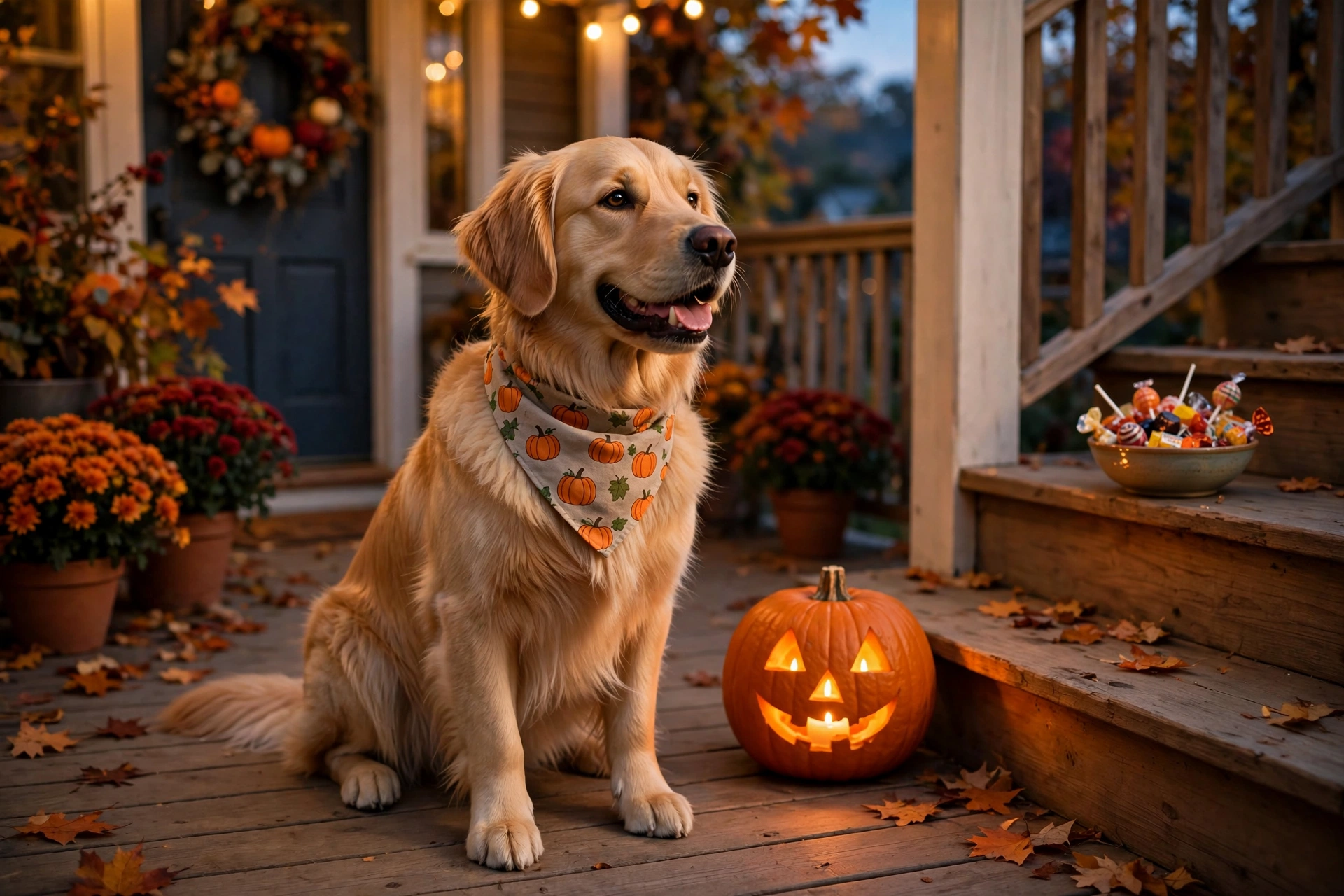
Halloween is one of the most fun nights of the year for families — but for dogs, it can be one of the most stressful and dangerous. Between bowls of chocolate, sugar-free candy, ringing doorbells, strangers in costumes, and open front doors, the average home turns into an obstacle course of hazards for a curious pup.
The good news: nearly every Halloween danger is preventable with a little planning. This guide covers what candy is toxic, whether your dog should wear a costume, how to keep them calm during trick-or-treating, and what to do if something goes wrong.
Direct answer: Halloween is one of the riskiest nights of the year for dogs. Chocolate and xylitol-sweetened candy can poison them, costumes can stress or injure them, and constant doorbell ringing plus open doors create escape risks. Keep all candy out of reach, dress your dog only if they genuinely enjoy it, and give them a quiet room away from trick-or-treaters.
Is Halloween Dangerous for Dogs?
Yes. Halloween combines three of the biggest risks dogs face at home — toxic food, stress, and escape opportunities — all in a single evening.
Chocolate is the best-known threat, but it is far from the only one. Sugar-free candy sweetened with xylitol, candy wrappers, glow sticks, and even a stressed dog bolting through an open door all send dogs to emergency clinics every October 31. According to pet insurer Pumpkin, chocolate and candy ranked as the number one most ingested toxic items for dogs in its analysis of thousands of veterinary claims from 2020 to 2025.
The pattern is predictable: candy bowls sit at dog-nose height, kids drop treats on the floor, guests arrive in strange outfits, and the front door opens dozens of times. A dog who is normally well-behaved can still get into trouble when the whole house is in chaos.
What Halloween Candy Is Toxic to Dogs?
Chocolate, xylitol-sweetened candy, and candy wrappers are the three biggest candy-bowl dangers for dogs.
Chocolate contains theobromine and caffeine, two stimulants dogs metabolize far more slowly than humans. The darker the chocolate, the more theobromine it contains — baking chocolate and dark chocolate are the most dangerous, milk chocolate is moderately dangerous, and white chocolate contains very little theobromine. Even small amounts can cause vomiting, diarrhea, restlessness, and a racing heart in a small dog.
Xylitol (also listed as birch sugar or wood sugar) is found in sugar-free gum, sugar-free candy, some peanut butters, and other sugar-free products. It is extremely toxic to dogs. Xylitol triggers a rapid release of insulin, which can cause a dangerous drop in blood sugar within minutes, and larger amounts can cause liver failure. If you suspect your dog ate anything containing xylitol, treat it as an emergency and call your veterinarian or poison control immediately.
Candy wrappers are a choking and blockage hazard. Foil and cellophane wrappers can irritate the digestive tract or cause an intestinal blockage, especially in small dogs.
Here is what to do to keep candy safe:
- Store all candy in sealed containers on high shelves or in closed cabinets — never in bowls on low tables.
- Teach kids to keep their trick-or-treat bags off the floor and closed.
- Check the floor after trick-or-treaters leave; dropped candy is the most common source of accidental ingestion.
- Save the ASPCA Animal Poison Control Center number in your phone before Halloween: (888) 426-4435.
- If your dog eats chocolate or xylitol candy, call your vet or poison control right away — do not wait for symptoms.
When in doubt, ask your vet. Chocolate toxicity depends on the type of chocolate, the amount eaten, and your dog’s size, so a quick call can tell you whether your dog needs emergency care or careful monitoring at home.
Should Dogs Wear Halloween Costumes?
Only if your dog genuinely enjoys it. A costume should never come at the cost of your dog’s comfort, safety, or ability to move, see, breathe, and bark normally.
The American Animal Hospital Association (AAHA) advises pet owners to skip costumes that cause stress. If your dog freezes, tries to chew the costume off, tucks their tail, or hides, that is their way of saying no — listen to them.
If your dog is happy in a costume, follow these rules:
- Keep it simple. A bandana, a cape, or a lightweight accessory is safer than a full-body outfit.
- Check the fit. Nothing should restrict breathing, vision, movement, or the ability to go to the bathroom.
- Avoid small parts. Buttons, dangling pieces, and anything chewable can be swallowed or become a choking hazard.
- Skip masks and hoods that cover the eyes or ears — dogs rely on both.
- Never leave a costumed dog unsupervised. A tangled costume can panic or injure a dog in seconds.
- Do a trial run a few days before Halloween so your dog can get used to it in a calm setting.
A dog in a simple, comfortable costume is adorable. A dog in a stressful, restrictive one is not — and your guests will not enjoy it either if your dog spends the evening miserable.
How Do I Keep My Dog Calm During Trick-or-Treating?
Give your dog a quiet room away from the front door, exercise them before the trick-or-treaters arrive, and keep the door routine as boring as possible.
The doorbell is the biggest stress trigger. Every ring announces a stranger in a strange outfit, and every open door is an escape opportunity. Dogs who normally bark at visitors can become genuinely anxious after an hour of it — see our guide on why dogs bark at night for more on noise-related barking.
A simple Halloween evening plan:
- Exercise early. A long walk or play session in the late afternoon burns off energy so your dog settles more easily. (If you are unsure when to go, see our guide on the best time of day to walk your dog.)
- Set up a retreat room. A bedroom or quiet room with their bed, water, a favorite toy, and some background music or TV works well. If your dog is crate trained, their crate with the door open can be a comforting den — see our crate training basics guide.
- Feed dinner early. A fed, exercised dog is a calmer dog.
- Manage the door yourself. Sit outside with the candy bowl if the weather allows, so trick-or-treaters never ring the bell at all. This one trick removes most of the stress.
- Keep ID current. Make sure your dog’s collar tags and microchip registration are up to date before the evening starts. Halloween is one of the highest-risk nights of the year for dogs slipping out and getting lost.
If your dog is prone to bolting, keep them on a leash indoors during trick-or-treat hours, or behind a baby gate in a back room. A few hours of inconvenience is far better than a lost dog on a dark, crowded street.
What Should I Do If My Dog Eats Halloween Candy?
Call your veterinarian or the ASPCA Animal Poison Control Center at (888) 426-4435 immediately. Do not wait for symptoms to appear.
Chocolate poisoning symptoms — vomiting, diarrhea, restlessness, rapid breathing, muscle tremors, and in severe cases seizures — can take 6 to 12 hours to appear, and by then treatment is harder. When you call, have ready: what your dog ate (type of candy or chocolate), how much, your dog’s weight, and when it happened.
Do not induce vomiting unless a veterinarian specifically tells you to. Vomiting is not safe for every dog or every substance, and doing it wrong can cause more harm than the candy itself.
Treatment for chocolate ingestion may include induced vomiting at the clinic, activated charcoal, IV fluids, and monitoring — which is why Pumpkin’s claims data shows an average chocolate-related vet bill for dogs of $1,100. A five-minute phone call can save you that bill and, more importantly, your dog a miserable night.
What About Glow Sticks, Decorations, and Pumpkins?
Glow sticks are a lesser-known Halloween hazard. The liquid inside is not highly toxic, but it tastes extremely bitter and can cause drooling, pawing at the mouth, and mild stomach upset. If your dog chews a glow stick, rinse their mouth with water and offer a small amount of food or milk to wash away the taste, and call your vet if symptoms persist.
Decorations carry their own risks:
- Candles in pumpkins can burn a curious dog or start a fire if knocked over. Use battery-operated tea lights instead.
- Fake cobwebs and string decorations can cause choking or intestinal blockage if chewed.
- Carved pumpkins themselves are safe in small amounts — plain pumpkin is actually good for dogs — but a rotting jack-o’-lantern can harbor mold and bacteria. For safe pumpkin treats, try our 3 easy homemade dog treat recipes instead.
Halloween Safety Checklist
Run through this list on October 31 morning:
- All candy stored in sealed containers, out of reach
- ASPCA Poison Control number saved: (888) 426-4435
- Vet’s emergency number saved
- Collar tags and microchip info up to date
- Costume trial run done (if dressing your dog up)
- Quiet retreat room set up with bed, water, and a toy
- Afternoon walk or play session scheduled
- Plan for the door: sit outside, use a baby gate, or keep the dog in the back room
- Guests briefed: no candy, no chocolate, no feeding the dog from their stash
- Battery-operated lights in pumpkins, not real candles
Frequently Asked Questions
Can dogs eat Halloween candy if it is just a little?
No. There is no safe amount of chocolate or xylitol candy for dogs. Even a small piece can be dangerous for a small dog, and wrappers add a choking or blockage risk. Stick to treats made for dogs — see our homemade dog treat recipes for safe options your dog will actually enjoy.
Is it cruel to dress a dog in a Halloween costume?
Not if the dog enjoys it. A comfortable, well-fitting costume on a relaxed dog is fine. It becomes a problem when the costume restricts movement, breathing, or vision, or when the dog shows stress signs like freezing, chewing at the outfit, or hiding. When in doubt, skip the costume — a festive bandana gets the same smiles.
Why is my dog so anxious on Halloween?
Halloween combines unfamiliar costumes, repeated doorbell ringing, strangers at the door, and a disrupted routine — all classic anxiety triggers for dogs. Giving your dog a quiet room, exercising them beforehand, and minimizing doorbell noise usually solves most of it. Dogs with severe anxiety may benefit from talking to your vet well before October 31.
What should I do if my dog runs out the door on Halloween?
Act fast. Check the immediate area, call your dog calmly, and ask neighbors and trick-or-treaters to watch for them. If your dog is microchipped, alert the chip company and local shelters right away, and post in local lost-pet groups with a recent photo. Prevention is far easier: keep ID current, manage the door, and keep a known bolter behind a closed door or baby gate during trick-or-treat hours.
The Bottom Line
Halloween can be a great night for the whole family — dogs included — as long as you plan for it. Keep candy locked away, let your dog skip the costume if they are not feeling it, and give them a quiet place to ride out the doorbell marathon. A little preparation on October 31 means no emergency vet visit on November 1.
When in doubt, ask your vet.