

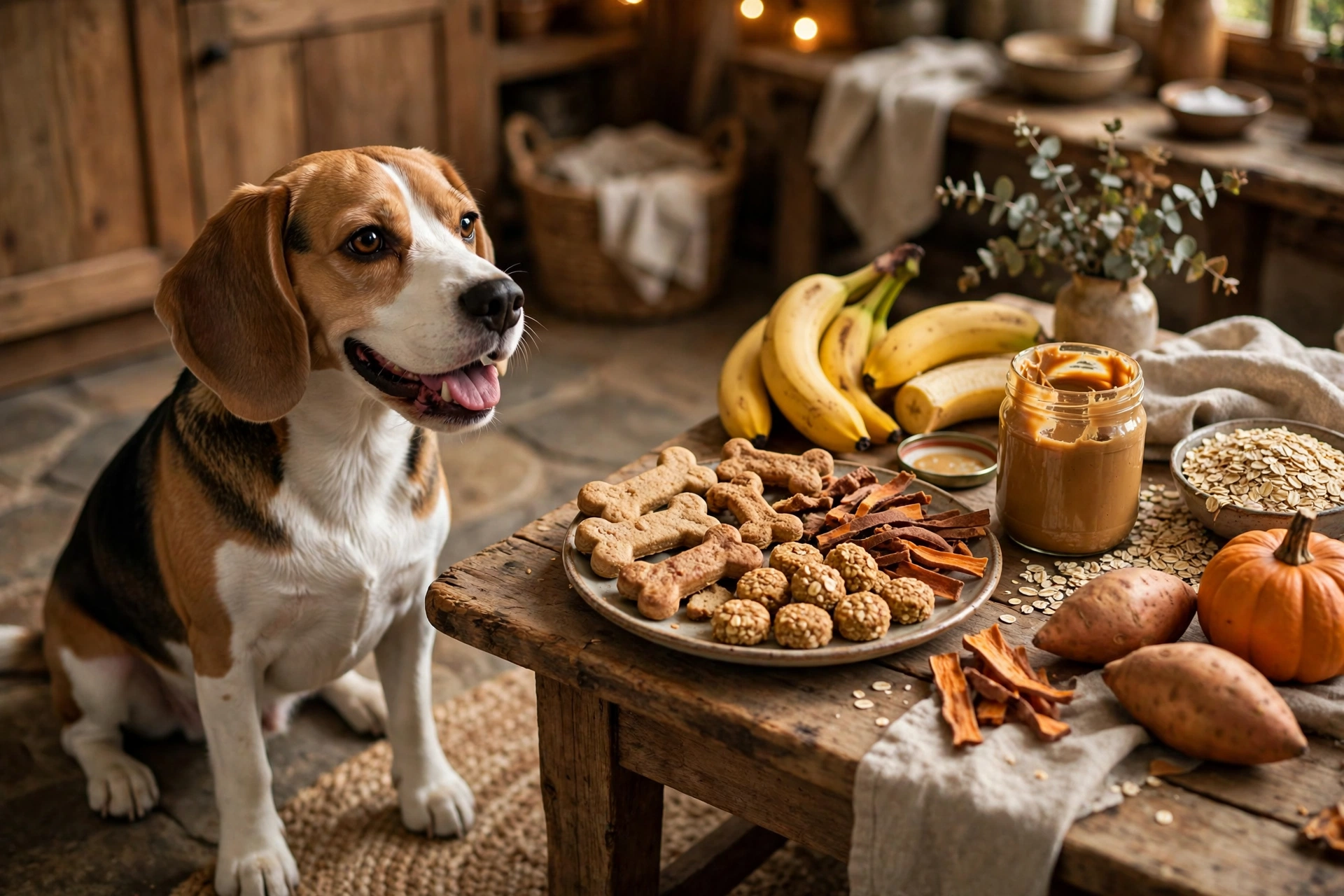
Store-bought treats are convenient, but have you ever squinted at the ingredient list? “Meat by-products,” “natural flavors,” preservatives you can’t pronounce — for something your dog eats every single day, that’s worth a second thought. Homemade dog treats flip the equation: you control every ingredient, you know exactly what’s in them, and they cost a fraction of premium store brands.
The best part? You don’t need to be a chef. These three recipes use ingredients you probably already have, take under 30 minutes each, and are built around foods veterinarians consider safe for dogs. Let’s get baking.
Direct answer: The three easiest homemade dog treats are peanut butter banana bites (mashed banana, xylitol-free peanut butter, oats — baked 15 minutes), pumpkin oat soft treats (pumpkin purée, oats, egg — great for sensitive stomachs), and sweet potato chews (thin-sliced, slow-baked 2-3 hours — a single-ingredient chew). All use vet-recognized safe ingredients, no preservatives, and store for up to two weeks.
Are Homemade Dog Treats Actually Safe?
Direct answer: Yes, homemade treats are safe as long as you use dog-safe ingredients and avoid toxic foods. The danger isn’t in cooking for your dog — it’s in a few specific ingredients that are harmless to humans but dangerous to dogs.
The U.S. Food and Drug Administration warns that xylitol (also labeled as birch sugar) — a sweetener common in “sugar-free” peanut butter — is extremely toxic to dogs and can cause a rapid, life-threatening drop in blood sugar. Always check your peanut butter label before baking. Other ingredients to keep out of your dog’s treats entirely:
- Xylitol/birch sugar — toxic even in small amounts (check peanut butter labels!)
- Chocolate and cocoa — contains theobromine, toxic to dogs
- Grapes and raisins — can cause kidney failure
- Onions and garlic — damage red blood cells
- Macadamia nuts — toxic to dogs
- Alcohol and raw yeast dough — dangerous if ingested
Stick to the recipes below and you’re working with ingredients veterinarians routinely list as safe: peanut butter (xylitol-free), banana, pumpkin, oats, eggs, and sweet potato.
Recipe 1: Peanut Butter Banana Bites
Direct answer: Mash one ripe banana with 1/2 cup of xylitol-free peanut butter, mix in 1 cup of rolled oats, roll into small balls, and bake at 350°F (175°C) for 12-15 minutes for crunchy, protein-rich training treats.
This is the classic for a reason — most dogs go absolutely wild for the peanut butter-banana combination, and the oats give the treats a satisfying crunch that also helps clean teeth.
You need:
- 1 ripe banana, mashed
- 1/2 cup creamy peanut butter (xylitol-free — check the label!)
- 1 cup rolled oats (plus a little extra for rolling)
- 1 egg (optional, helps bind)
Steps:
- Preheat your oven to 350°F (175°C) and line a baking sheet with parchment paper.
- In a bowl, mash the banana until mostly smooth — a few small lumps are fine.
- Stir in the peanut butter until combined, then add the oats and egg. Mix into a thick dough.
- Roll into small balls (about 1 tablespoon each) and place on the baking sheet. Flatten slightly with a fork.
- Bake 12-15 minutes until golden and firm. Cool completely before serving.
Best for: Training rewards — they’re small, smelly (in a good way), and easy to break in half. Dogs learn fastest with high-value rewards, and these qualify.
Storage: Airtight container at room temperature for up to 1 week, or refrigerate for 2 weeks.
Recipe 2: Pumpkin Oat Soft Treats
Direct answer: Combine 1 cup of plain pumpkin purée (not pie filling) with 2 cups of rolled oats and 1 egg, drop spoonfuls onto a baking sheet, and bake at 350°F (175°C) for 20-25 minutes for soft, tummy-friendly treats ideal for seniors and sensitive stomachs.
Plain pumpkin is a fiber superstar — veterinarians often recommend it for dogs with mild digestive upset. These treats come out soft and chewy rather than crunchy, which makes them perfect for older dogs, puppies, or any dog that inhales crunchy treats without chewing.
You need:
- 1 cup plain pumpkin purée (100% pumpkin — NOT pumpkin pie filling, which has spices and sugar)
- 2 cups rolled oats
- 1 egg
- 1 teaspoon cinnamon (optional — plain cinnamon in small amounts is safe for dogs)
Steps:
- Preheat your oven to 350°F (175°C) and line a baking sheet with parchment paper.
- Mix the pumpkin and egg in a bowl until smooth.
- Fold in the oats (and cinnamon if using) until you have a thick, sticky dough.
- Drop rounded tablespoons of dough onto the sheet, spacing them about an inch apart. Flatten slightly.
- Bake 20-25 minutes until set but still soft in the center. Cool completely — they’ll firm up as they cool.
Best for: Senior dogs, puppies, and dogs with sensitive stomachs. The soft texture is gentle on teeth, and pumpkin’s soluble fiber supports healthy digestion.
Storage: These are moister than the banana bites, so refrigerate in an airtight container for up to 2 weeks. You can also freeze them for up to 3 months — thaw a few at a time.
Recipe 3: Sweet Potato Chews
Direct answer: Slice sweet potatoes into 1/4-inch rounds or strips, bake low and slow at 250°F (120°C) for 2-3 hours, flipping halfway, for a single-ingredient, long-lasting chew that costs pennies per treat.
This is the simplest recipe here and the closest thing to a natural long-lasting chew you can make at home. Sweet potatoes are rich in beta-carotene and fiber, and the slow bake concentrates their natural sweetness into something dogs find irresistible.
You need:
- 2-3 medium sweet potatoes, scrubbed clean
Steps:
- Preheat your oven to 250°F (120°C) and line two baking sheets with parchment paper.
- Slice the sweet potatoes into 1/4-inch thick rounds (or lengthwise strips for bigger dogs). Keep slices even so they dry uniformly.
- Arrange in a single layer with space between pieces.
- Bake 2-3 hours, flipping halfway through. They’re done when dry and leathery but still slightly pliable — not brittle.
- Cool completely on the sheets. They’ll firm up more as they cool.
Best for: Power chewers who need something to work on, and dogs on limited-ingredient diets — there’s literally one ingredient. A great alternative to rawhide-style chews.
Storage: Airtight container at room temperature for up to 2 weeks. If your kitchen is humid, refrigerate them.
The 3 Recipes at a Glance
| Recipe | Prep + bake time | Texture | Best for | Shelf life |
|---|---|---|---|---|
| Peanut butter banana bites | 25 min | Crunchy | Training rewards | 1 week room temp / 2 weeks fridge |
| Pumpkin oat soft treats | 35 min | Soft & chewy | Seniors, sensitive stomachs | 2 weeks fridge / 3 months freezer |
| Sweet potato chews | 2.5-3.5 hrs (mostly hands-off) | Leathery chew | Power chewers, limited diets | 2 weeks room temp |
How Many Homemade Treats Can My Dog Have Per Day?
Direct answer: Treats — homemade or store-bought — should make up no more than 10% of your dog’s daily calories. For a medium dog eating 800 calories a day, that’s about 80 calories of treats, roughly 3-4 small homemade treats depending on size.
This is the well-known “10% treat rule” from veterinary nutritionists, and it applies even when the treats are healthy. Homemade doesn’t mean calorie-free: peanut butter is calorie-dense, and too many treats can unbalance your dog’s diet or lead to weight gain. Size the treats to your dog — pea-sized for small breeds, tablespoon-sized for large breeds — and cut back on meal portions slightly on heavy treat days (like training days).
How Do I Store Homemade Dog Treats Safely?
Direct answer: Store crunchy treats in an airtight container at room temperature for up to a week; refrigerate soft or moist treats for up to two weeks; freeze any recipe for up to three months.
Homemade treats contain no preservatives, which is the point — but it also means they spoil faster than store-bought. The sniff test works: if they smell off, look moldy, or feel slimy, toss them. When in doubt, refrigerate. For the freezer, spread treats on a baking sheet to freeze individually first, then bag them — that way you can grab a few at a time without thawing the whole batch.
Frequently Asked Questions
Can puppies eat homemade treats?
Yes, once they’re weaned (around 8 weeks), puppies can enjoy these recipes — just make the pieces tiny and count them toward the 10% daily treat limit. The pumpkin oat treats are especially good for teething puppies since they’re soft. Introduce any new food gradually and watch for tummy upset.
Is peanut butter really safe for dogs?
Plain peanut butter is safe and most dogs love it — the one critical exception is xylitol (sometimes listed as “birch sugar”), a sweetener in some “sugar-free” or “natural” brands that is highly toxic to dogs, per FDA warnings. Check the ingredient label every time you buy a new jar, and stick to brands with just peanuts and salt.
Can I use these treats for training?
Absolutely — small, smelly, tasty treats are exactly what trainers recommend. The peanut butter banana bites are ideal: break them into pea-sized pieces for small dogs. Keep training sessions short (5-10 minutes) and always end on a success.
My dog has food allergies — can I adapt these recipes?
Often, yes. The sweet potato chews are already single-ingredient. For grain sensitivities, you can swap rolled oats for oat flour alternatives your vet approves — but for dogs with diagnosed allergies, check with your vet before substituting, since some “grain-free” swaps have their own nutritional concerns. When in doubt, ask your vet.
The Bottom Line
Homemade dog treats aren’t about being a gourmet chef — they’re about knowing exactly what your four-legged family member is eating. These three recipes cover every need: quick training rewards, gentle treats for sensitive tummies, and long-lasting chews for dedicated gnawers. Bake a batch this weekend, watch your dog’s reaction, and you’ll probably never go back to mystery-ingredient treats again.
Pair treat time with good nutrition overall — if you’re exploring supplements for your dog’s joint or coat health, our guide to collagen for dogs breaks down what’s actually worth buying. And if your pup tends to get vocal when the treat jar opens at midnight, our guide on why dogs bark at night can help restore the peace. When in doubt, ask your vet.
[…] Step 3: Toss treats in as “jackpot” rewards. Throughout the day, toss high-value treats (small bits of cheese, chicken, or their favorite training treat) into the crate when your dog isn’t looking. Let them discover the treasure. For extra enrichment, stuff a Kong with peanut butter and let them work on it inside — a frozen Kong lasts even longer. If you want to make your own crate-time treats, try 3 Easy Homemade Dog Treat Recipes. […]
[…] but a rotting jack-o’-lantern can harbor mold and bacteria. For safe pumpkin treats, try our 3 easy homemade dog treat recipes […]
[…] to feel included, set out a small bowl of dog-safe treats and let them hand those out instead. Our 3 easy homemade dog treat recipes make great holiday treats your pup will actually […]
[…] single-ingredient treats is a safe choice. Or, if you’re feeling ambitious, our guide to 3 easy homemade dog treat recipes shows how to bake a batch […]
[…] it into treats. Pumpkin is a star ingredient in homemade dog treats. Our 3 easy homemade dog treat recipes include pumpkin oat treats made with safe, simple […]