

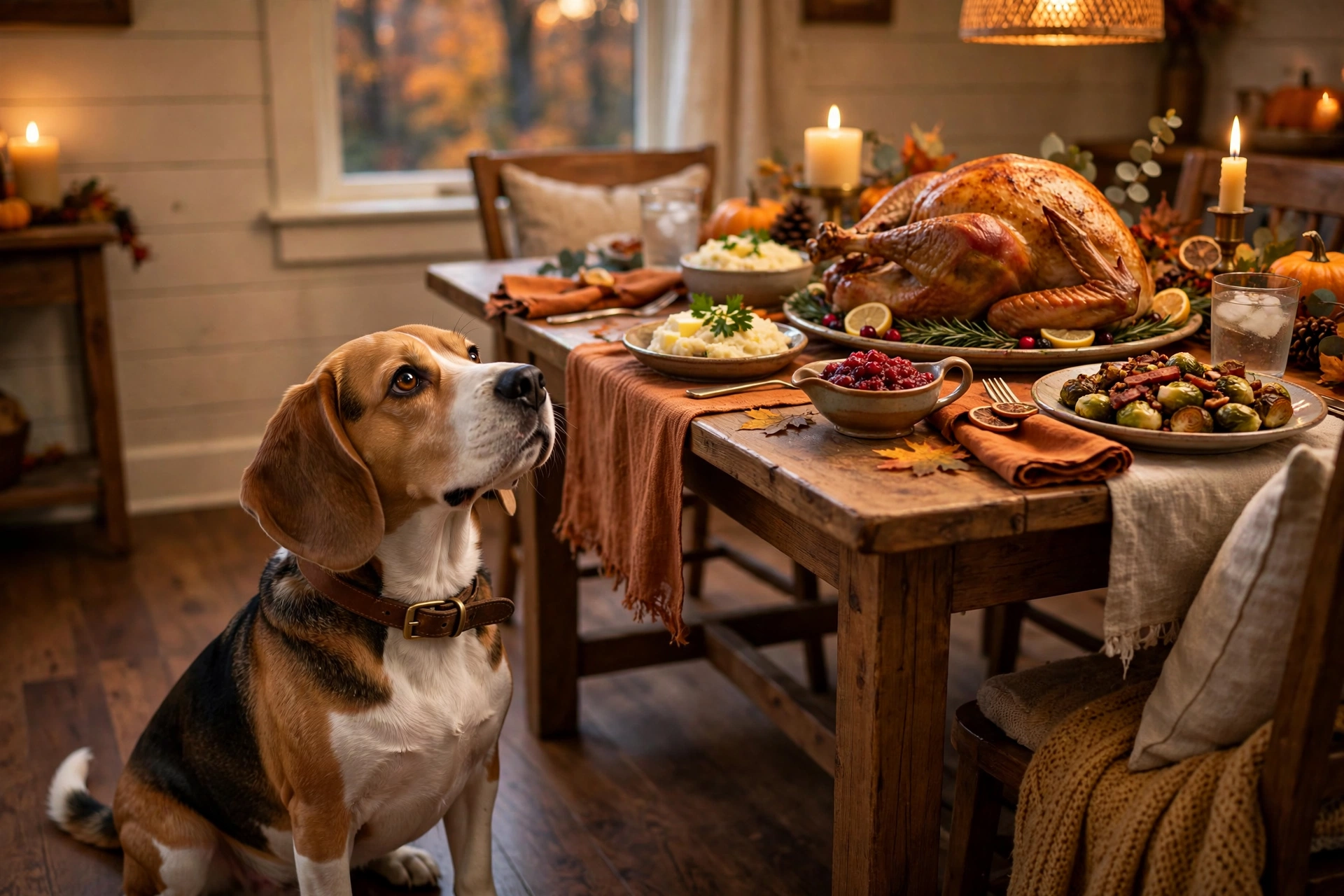
Thanksgiving dinner is a minefield for dogs. The table is loaded with rich, seasoned, fatty foods, guests are generous with scraps, and the trash can is full of temptation. Most of what is on your plate is either unsafe or simply too rich for a dog’s stomach — and a few items are genuinely toxic. Knowing the danger list before the turkey hits the table is the difference between a happy holiday and an emergency vet visit.
Direct answer: The most dangerous Thanksgiving foods for dogs are cooked turkey bones, turkey skin and fatty gravy, onions and garlic in any form, grapes and raisins, chocolate, xylitol, alcohol, and raw yeast dough. Plain, skinless, boneless turkey meat in small amounts is safe. If your dog eats something dangerous, call your vet or ASPCA Poison Control at 888-426-4435 right away.
Can dogs eat turkey on Thanksgiving?
Yes — the meat itself is fine. Small amounts of plain, cooked, skinless, boneless white turkey meat are safe for most dogs, according to the American Animal Hospital Association (AAHA) and Pet Poison Helpline veterinarians. A few small pieces as a treat are a perfectly reasonable way to include your dog in the holiday.
Everything around the meat is where the trouble starts. Turkey skin is extremely fatty, and fatty foods can trigger pancreatitis — a painful, sometimes life-threatening inflammation of the pancreas. Cooked turkey bones are brittle and splinter easily; splinters can lodge in the throat, puncture the stomach or intestines, or cause a blockage that needs emergency surgery. Seasoning, butter, and gravy add salt, fat, and often onion or garlic. So the rule is simple: meat, yes; skin, bones, and drippings, no.
Which Thanksgiving foods are toxic to dogs?
| Food | Danger level | Why it is dangerous |
|---|---|---|
| Cooked turkey bones | High — emergency risk | Splinter and can lodge in the throat or puncture the GI tract |
| Turkey skin, gravy, fatty foods | High | Fat overload can trigger pancreatitis |
| Onions and garlic (all forms) | High — toxic | Damage red blood cells and can cause anemia — raw, cooked, or powdered |
| Grapes and raisins | High — toxic | Even small amounts can cause kidney failure in some dogs |
| Chocolate and cocoa | High — toxic | Theobromine poisoning; darker chocolate is more dangerous |
| Xylitol (sugar-free gum, candy, some peanut butters) | High — toxic | Causes rapid insulin release, liver failure, and death |
| Alcohol | High — toxic | Same depressant effects as in people, at much lower doses |
| Raw yeast bread dough | High — toxic | Expands in the stomach and ferments into ethanol (alcohol poisoning) |
| Stuffing and casseroles | Medium–High | Usually contain onions, garlic, raisins, or heavy fat |
| Nutmeg | Medium — toxic | Causes hallucinations, increased heart rate, and vomiting |
| Macadamia nuts | Medium — toxic | Weakness, vomiting, tremors, and hyperthermia |
| Mashed potatoes with butter/cream | Low–Medium | Not toxic, but rich and fatty — likely to cause vomiting or diarrhea |
Onions and garlic deserve special emphasis because they hide in so many dishes. They stay toxic in all forms — raw, cooked, powdered, or mixed into gravy and stuffing — so a dish is not safe just because the onions were cooked down. According to the ASPCA, onion and garlic toxicity damages red blood cells and can cause anemia, and symptoms may not appear for a day or two.
Grapes and raisins are equally deceptive. They appear in stuffing, fruit salads, and some desserts, and even a small number can cause kidney failure in susceptible dogs. There is no known safe dose, so treat any grape or raisin ingestion as an emergency.
What about the foods guests sneak from the table?
Most Thanksgiving emergencies do not come from the main course — they come from well-meaning guests slipping food under the table. Brief your guests before dinner, especially children: no feeding the dog from plates, no exceptions. A few common sneaky dangers:
- Stuffing almost always contains onions, garlic, or raisins — sometimes all three.
- Gravy is fatty and often onion- or garlic-based; it is a pancreatitis risk in a ladle.
- Mashed potatoes are fine plain, but butter, cream, garlic, and cheese turn them into a stomach-upset bomb.
- Cranberry sauce is not toxic, but canned versions are loaded with sugar.
- Green bean casserole is usually made with butter, cream, and fried onions — skip it.
- Pumpkin pie is not the same as plain pumpkin. Pie filling contains sugar, spices, and sometimes nutmeg or xylitol. Plain canned pumpkin (not pie filling) is the safe version, and it is actually good for dogs in small amounts.
- Sweet potato casserole with marshmallows and brown sugar is far too sugary; plain cooked sweet potato is fine.
If you want guests to feel included, set out a small bowl of dog-safe treats and let them hand those out instead. Our 3 easy homemade dog treat recipes make great holiday treats your pup will actually enjoy.
What foods CAN dogs eat on Thanksgiving?
Your dog does not have to miss out. These are safe in small portions:
- Plain turkey meat — skinless, boneless, unseasoned, a few small pieces
- Plain canned pumpkin — not pie filling; a spoonful aids digestion
- Plain green beans — fresh or steamed, no butter or seasoning
- Plain sweet potato — cooked, no marshmallows or sugar
- Carrots — raw or cooked, a crunchy low-calorie treat
- Apple slices — no seeds or core; seeds contain trace cyanide compounds
- Plain cooked rice — helpful if your dog’s stomach is already uneasy
Keep portions small. Even safe foods can cause an upset stomach if your dog eats a mountain of them, and a dog who is used to kibble does not need a second Thanksgiving dinner. Treats and table extras should stay under about 10% of your dog’s daily calories.
What should you do if your dog eats something dangerous?
Act fast — do not wait for symptoms.
- Stay calm and remove access. Get the food away from your dog and secure the trash.
- Identify what and how much. Check the food, packaging, and roughly how much your dog ate. Note your dog’s weight if you can.
- Call your vet or ASPCA Poison Control (888-426-4435) immediately. Describe what your dog ate, how much, and when. Do not wait to see if symptoms develop — with xylitol and grapes, early treatment matters enormously.
- Do NOT induce vomiting unless a veterinarian directs it. Vomiting can make some ingestions worse, and it is never safe to attempt without professional guidance.
- Watch for symptoms. Vomiting, diarrhea, drooling, restlessness, tremors, collapse, or loss of appetite all warrant an emergency vet visit. If your dog has vomiting or diarrhea, watch for signs of dehydration in dogs — dry gums, loss of skin elasticity, and lethargy mean your dog needs fluids fast.
If your dog ate chocolate specifically, see our guide on what to do if your dog eats chocolate for the type-by-type breakdown and what the vet will do.
How do you keep your dog safe during the meal?
Prevention beats treatment. A few habits that keep Thanksgiving calm:
- Secure the trash. A turkey carcass in an open bin is the single most dangerous object in the house after dinner. Use a lidded can, and take bones out to the outdoor bin right away.
- Give your dog a retreat. A quiet room with their bed, water, and a chew keeps them away from the food table and the chaos. If your dog is crate trained, the crate with the door open can be a comforting den — see our crate training basics guide.
- Keep food out of reach. Counters, coffee tables, and low side tables are all in range. The AAHA recommends keeping unsafe foods out of reach, keeping candles, cords, and plants inaccessible, and giving your dog a quiet retreat from guests.
- Watch the door. Guests arriving and leaving means doors opening. Make sure your dog’s ID tags are current and your microchip registration is up to date in case of a bolt.
- Stick to the routine. Feed, walk, and water your dog on the normal schedule even on a chaotic holiday — routine is calming.
Frequently asked questions
Q: Can dogs eat turkey on Thanksgiving?
A: Yes, in small amounts. Plain, cooked, skinless, boneless turkey meat is safe. The danger is in the skin (fatty, pancreatitis risk), cooked bones (splintering), and seasoning or gravy (often contains onion or garlic). Serve the meat plain and skip everything else.
Q: What Thanksgiving food is most dangerous for dogs?
A: Xylitol, grapes/raisins, chocolate, and cooked turkey bones top the list — all can be life-threatening. Onions and garlic in any form are also toxic, and fatty foods like skin and gravy can trigger pancreatitis. When in doubt, do not feed it.
Q: What should I do if my dog ate stuffing?
A: Call your vet or ASPCA Poison Control at 888-426-4435 right away. Stuffing typically contains onions, garlic, or raisins, all of which are toxic. Tell them what the stuffing contained and how much your dog ate, and do not induce vomiting unless a vet directs it.
Q: Is pumpkin pie safe for dogs?
A: No. Pumpkin pie filling contains sugar, spices, and sometimes nutmeg or xylitol. Plain canned pumpkin (not pie filling) is safe and even beneficial in small amounts — about a spoonful for a medium dog. Check the label: it should list only pumpkin.
Sources: American Animal Hospital Association (AAHA) Thanksgiving pet safety tips; ASPCA Poison Control (888-426-4435); Pet Poison Helpline guidance on turkey, onion/garlic, and grape toxicity.
Closing note: When in doubt, ask your vet. A two-minute phone call beats a holiday emergency visit every time.