

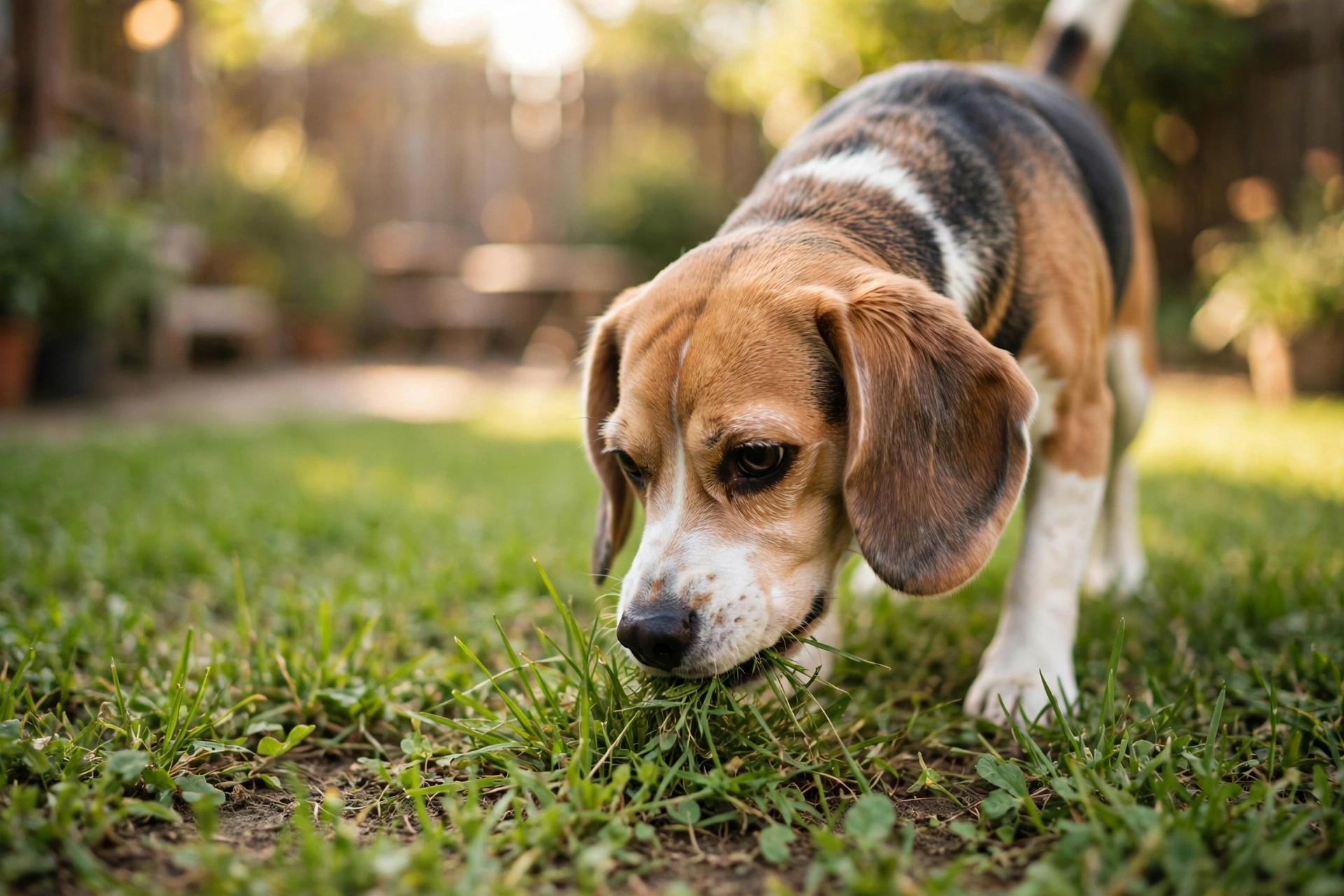
You’ve seen it a hundred times: your dog stops mid-walk, sniffs a patch of lawn, and starts grazing like a small cow. It looks strange, and if your dog vomits afterward, it’s easy to assume something is wrong. The reassuring truth is that grass-eating is one of the most common dog behaviors there is — and in most cases, it’s completely normal.
Direct answer: Most dogs eat grass because it’s a normal, instinctive behavior — not because they’re sick. A UC Davis study found about 68% of dogs eat grass or plants daily to weekly. Fewer than 25% vomit afterward, and only about 10% show illness signs before grazing, so grass-eating is usually not a dog trying to make itself vomit.
Is Eating Grass Normal for Dogs?
Yes. Grass-eating is so common that researchers consider it a normal canine behavior, not a symptom. Dogs are omnivores with scavenging ancestors, and plant matter has always been part of the canine diet in small amounts. Wild canids — wolves, coyotes, foxes — are regularly observed eating grass and plant material, and domestic dogs have kept the habit.
The UC Davis study on the subject is the most-cited research on grass-eating. It found that roughly 68% of dogs eat grass or other plants daily or weekly, and that the behavior was not linked to diet, age, or breed in any strong way. In other words, grass-eating dogs are not broken dogs. They’re just dogs.
That said, “normal” doesn’t mean “ignore it entirely.” The pattern matters. A dog that calmly nibbles a few blades on a walk is very different from a dog that frantically gulps grass, drools, and vomits repeatedly. The sections below explain how to tell the difference.
Why Do Dogs Eat Grass?
There’s no single proven reason dogs eat grass, but researchers and veterinarians point to several plausible drivers:
- Instinct and ancestry. Grazing on grass is an inherited behavior from wild canids. Some experts believe dogs eat grass to add roughage to the diet or to help pass intestinal parasites — a behavior that would have been useful to their ancestors.
- Taste and texture. Some dogs simply seem to like it. Fresh spring grass in particular is sweet, tender, and interesting to chew. Dogs explore the world with their mouths, and grass is one of the most available things to explore.
- Fiber. Grass contains fiber, and some dogs may graze to supplement their diet, especially if their regular food is low in fiber. This is a plausible driver, not a proven one — there is no strong evidence that grass-eating is caused by a specific nutrient deficiency, so don’t assume your dog’s food is lacking something just because they graze.
- Boredom or anxiety. Dogs left alone in a yard with nothing to do may graze out of boredom, much like they chew sticks or dig holes. Dogs with anxiety may also graze as a self-soothing behavior.
- Mild stomach upset. Some dogs do eat grass when their stomach feels off. But the research suggests this is the exception, not the rule — most grass-eating happens when the dog feels fine.
The honest answer is that different dogs graze for different reasons, and the same dog may graze for different reasons on different days. What matters most is the pattern and what comes after.
Do Dogs Eat Grass to Make Themselves Vomit?
This is the most persistent myth about grass-eating — and the research doesn’t support it. The popular theory is that dogs eat grass to induce vomiting when they feel nauseous, the way a human might stick a finger down their throat. But the UC Davis study found that fewer than 25% of grass-eating dogs vomit afterward, and only about 10% showed signs of illness before grazing.
If grass-eating were a deliberate vomiting strategy, you’d expect most grass-eaters to vomit and most of them to look sick first. Neither is true. Most dogs graze calmly, swallow the grass, and carry on with their walk as if nothing happened.
That doesn’t mean vomiting after grass never signals a problem. A dog that eats grass and then vomits occasionally is usually fine. But a dog that frantically eats grass and then vomits repeatedly — or shows other signs of distress — is a different story, and it deserves a vet visit (see the red flags below).
Is Grass-Eating Dangerous?
Plain grass itself is generally harmless. The real danger is what’s ON the grass. Keep your dog off lawns that have recently been treated with:
- Pesticides and herbicides. Lawn chemicals can cause vomiting, diarrhea, drooling, and worse. If your lawn was recently sprayed, keep your dog off it until it’s safe — follow the product’s re-entry instructions, and when in doubt, wait longer.
- Fertilizers. Many fertilizers contain ingredients that irritate the stomach or are toxic in quantity. Granular fertilizers are especially risky because dogs can lick up the granules.
- Other animals’ waste. Grass in dog parks and public areas can carry intestinal parasites from other dogs’ stool. Keep up with your dog’s parasite prevention and fecal testing.
Other, less common risks: sharp-edged grass (like foxtail awns in dry climates) can lodge in ears, noses, or paws; and a dog that eats large quantities of grass in one sitting can develop a stomach irritation or blockage. These are uncommon, but they’re worth knowing about if your dog is a heavy grazer.
If your dog is constantly licking its paws after being on grass, the issue may be environmental allergies rather than grass-eating itself — our guide to why dogs lick their paws covers the common causes and what helps.
When Should I Worry About My Dog Eating Grass?
Most grass-eating needs no action at all. But call your vet if you see this red-flag pattern:
- Frantic gulping. Eating grass urgently, in large mouthfuls, while lip-licking and drooling — this looks very different from calm grazing.
- Repeated vomiting. Vomiting more than once after grazing, or vomiting that keeps happening over hours.
- Diarrhea. Especially diarrhea with blood, or diarrhea paired with vomiting.
- Appetite change. A dog that stops eating its normal food but still grazes may have an underlying problem.
- Weight loss. Unexplained weight loss alongside any behavior change always warrants a vet visit.
- Abdominal pain. A tense or bloated belly, hunching, whining when the belly is touched, or restlessness.
- Lethargy. A dog that grazes and then lies down flat, uninterested in anything, is not just being a dog.
Also call the vet if your dog may have eaten grass treated with chemicals, or if you suspect it swallowed something else along with the grass (a stick, a toy piece, a wrapper).
When in doubt, ask your vet. A short video of the behavior — calm grazing versus frantic gulping — can be genuinely helpful for your vet to see.
How to Reduce Grass-Eating
If your dog’s grass-eating is normal and harmless, you don’t need to stop it. But if it’s excessive, happens on treated lawns, or is paired with vomiting, these steps help:
- Rule out a medical cause first. A vet check is the right first step if the behavior is new, sudden, or paired with any red flag. Mention the grass-eating specifically — and note whether it started around a food change.
- Add enrichment and exercise. Boredom grazing often fades when a dog gets more mental stimulation: puzzle feeders, snuffle mats, training sessions, and sniffy walks where the dog is allowed to explore with its nose. A tired, engaged dog grazes less.
- Supervise outdoor time. If your dog grazes in a yard, supervise and redirect calmly with a “leave it” cue when needed. Avoid scolding — punishment for a normal behavior just creates anxiety.
- Grow a safe patch. If your dog loves grass, consider growing a small pot of pet-safe wheatgrass indoors. It’s chemical-free, and it gives your dog a safe outlet for the habit.
- Keep treated lawns off-limits. If your lawn or a neighbor’s lawn has been sprayed or fertilized, keep your dog away until it’s safe, and wipe paws after walks on public grass.
One dietary note: if your dog has frequent digestive upset alongside grass-eating, your vet may suggest a diet adjustment. Plain canned pumpkin is a gentle, vet-recommended way to support digestion — our guide on whether dogs can eat pumpkin explains the right kind, the safe amount, and when pumpkin isn’t enough. Don’t change your dog’s food or add supplements to stop grass-eating without talking to your vet first.
Frequently Asked Questions
Is it OK for my dog to eat grass every day?
Yes, for most dogs, daily grass-eating is normal and harmless — the UC Davis study found that about 68% of dogs graze daily to weekly. As long as the grass is untreated, your dog is calm while grazing, and there are no red-flag symptoms, there’s no need to stop it.
Why does my dog eat grass and then throw up?
Occasional vomiting after grazing happens in fewer than 25% of grass-eating dogs and is usually not a concern on its own. But repeated vomiting, frantic grass-gulping, drooling, or vomiting paired with diarrhea, lethargy, or appetite loss is a reason to call your vet.
Can grass-eating mean my dog has a nutrient deficiency?
There is no strong evidence tying grass-eating to a specific nutrient deficiency. Dogs graze for many reasons, and most of them are behavioral or instinctive. If your dog has other signs of a dietary problem — dull coat, weight loss, chronic digestive issues — discuss the diet with your vet rather than assuming grass-eating is the clue.
Should I stop my dog from eating grass?
Not unless the grass is chemically treated, your dog eats it frantically, or the behavior comes with red-flag symptoms. For normal, calm grazing on untreated grass, supervision and a “leave it” cue for treated lawns are enough. If you’re worried, a vet check will settle it.
The Bottom Line
Your dog eats grass because dogs eat grass. It’s an old, normal, usually harmless behavior — not a sign that something is wrong, and not a deliberate attempt to vomit. Watch the pattern, keep your dog off chemically treated lawns, and know the red flags that turn a normal habit into a vet visit. When in doubt, ask your vet — a quick call beats a worried afternoon of Googling every time.
[…] you’ve noticed digestive quirks like grass-eating alongside the coat changes — our guide on why dogs eat grass and when to worry is a useful companion […]