

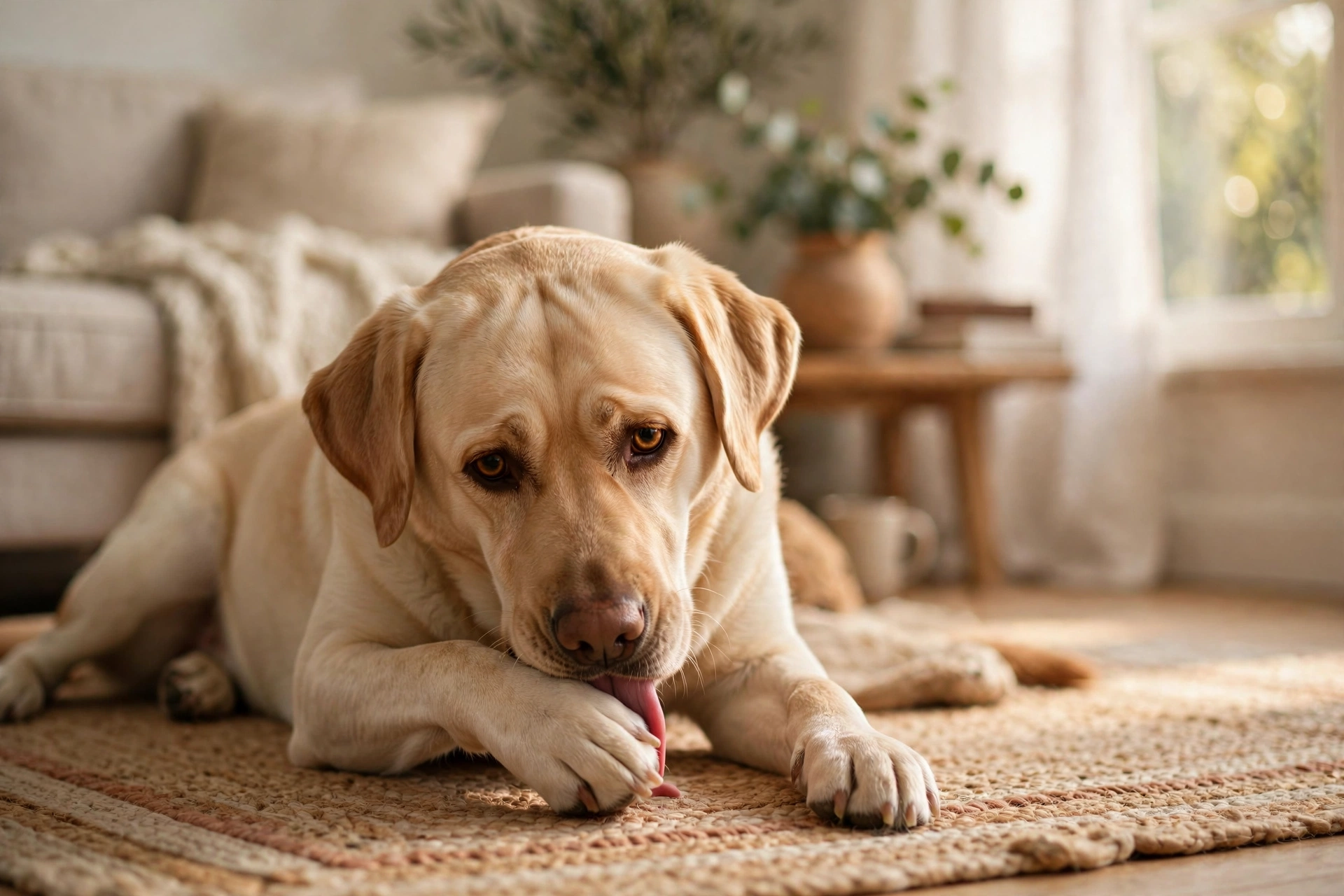
If you’ve ever caught your dog in a late-night licking marathon, paws firmly in mouth, you’re not alone. Occasional paw licking is perfectly normal — it’s how dogs clean themselves. But when the licking becomes constant, obsessive, or focused on one paw, it’s your dog’s way of telling you something is wrong. The good news? Most causes are common and manageable once you know what to look for. Let’s break down the most likely reasons and what you can do about them.
Allergies: The Number One Culprit
The single most common reason dogs lick their paws is allergies. Just like people with seasonal allergies get itchy eyes, dogs often show their itch through their feet. Environmental allergens — pollen, grass, mold, and dust mites — can make your dog’s paws itchy, and licking is their way of scratching the itch.
Food sensitivities can also trigger paw licking, though they’re less common. Signs that point to allergies include:
- Licking that gets worse during certain seasons (spring and fall are classic flare-up times)
- Red or pink-tinted fur between the toes (from saliva staining)
- Licking more than one paw, often all four
- Ear scratching or head shaking happening alongside the paw licking
If you suspect allergies, pay attention to when the licking is worst. A seasonal pattern is a strong clue. When in doubt, ask your vet — they can recommend allergy testing or safe relief options for your dog.
Boredom and Anxiety
Dogs lick for comfort. Some dogs develop paw licking as a self-soothing habit when they’re bored, understimulated, or anxious — similar to how people bite their nails when they’re nervous. Separation anxiety is a frequent driver: the licking starts when you leave the house and stops when you return.
Clues that point to a behavioral cause:
- The licking happens mostly when your dog is idle, resting, or alone
- It increases during predictable stressors — thunderstorms, fireworks, schedule changes
- Your dog stops immediately when distracted by play or a walk
- The licking is symmetrical and doesn’t involve obvious skin changes
For bored dogs, the fix is more enrichment: longer walks, puzzle feeders, chew toys, and play sessions. For anxiety, consistency helps — a predictable routine and a safe resting spot can make a real difference. If anxiety seems severe, talk to your vet or a certified dog trainer about a behavior plan.
Pain or a Minor Injury
When a dog focuses intently on just one paw — licking, chewing, or holding it up — pain is the prime suspect. Check for the obvious: a thorn, splinter, foxtail, or piece of glass caught between the toes, a cracked or broken nail, a small cut on a paw pad, or a bee sting. In winter, ice-melting salt on sidewalks can irritate and even burn paw pads.
What to do: gently spread the toes and examine each one, including the underside of the paw pad and the nail beds. Look for redness, swelling, debris, or an unusual smell. Limping alongside the licking is a clear signal to get your vet involved. When in doubt, ask your vet rather than digging around in a painful paw.
Dry Skin and Paw Pad Irritation
Dry, cracked paw pads are itchy paw pads, and dogs lick at the itch. Cold winter air, hot summer pavement, rough terrain, and frequent walking on salted sidewalks can all dry out the pads. Some dogs simply have more sensitive skin than others.
A few simple habits help a lot: rinse your dog’s paws with plain water after walks, especially during high-pollen seasons or when sidewalks have been treated. Pat them dry rather than rubbing — moisture trapped between the toes can encourage irritation. Keep walks off scorching pavement in summer. A vet-approved paw balm can protect and moisturize the pads during harsh weather.
How to Tell Normal Grooming From a Problem
A quick lick or two after coming inside? That’s just housekeeping. It becomes a concern when you notice any of the following:
- Frequency: Licking sessions that last many minutes or happen repeatedly through the day
- Intensity: Licking hard enough to cause red, raw, or swollen skin — or “hot spots”
- Focus: Obsessively targeting one paw or one spot, especially with chewing
- Changes: Saliva staining (reddish-brown fur between the toes), an unusual odor, swelling, or limping
- Timing: Licking that started suddenly after being completely absent before
A sudden change in behavior is always worth noting. If your normally indifferent-about-their-feet dog becomes a dedicated paw licker overnight, something triggered it.
At-Home Observation and Relief Steps
Before your vet visit — or while you’re monitoring a mild case — these practical steps can help you gather useful information and give your dog some relief:
- Do a paw check routine. Once a day, gently inspect all four paws: between the toes, the pads, and the nails. Look for redness, swelling, cuts, or stuck debris. This habit alone catches most minor issues early.
- Rinse after walks. A quick rinse with lukewarm water removes pollen, dust, and sidewalk chemicals that irritate paws. This is especially helpful during allergy season.
- Keep paws dry. After rinsing or rainy walks, dry between the toes thoroughly. Damp skin between the toes is a common spot for yeast and bacteria to thrive, which makes the itch worse.
- Log the pattern. Note when the licking happens — after walks, at night, when you’re gone, in certain seasons. A simple note on your phone for a week gives your vet genuinely useful diagnostic clues.
- Redirect and enrich. If boredom is the driver, swap licking time for mental stimulation: snuffle mats, frozen stuffed toys, and training games all beat an empty afternoon.
Don’t use human creams, essential oils, or over-the-counter anti-itch products on your dog’s paws without checking with your vet first — many contain ingredients that are unsafe for dogs if licked. When in doubt, ask your vet.
Red Flags That Need a Vet Visit
Most paw licking is a nuisance rather than an emergency, but see your vet promptly if you notice any of these:
- Limping, holding a paw up, or crying out when the paw is touched
- Swelling, an open wound, or a broken or bleeding nail
- A strong, unusual smell from the paws (a sweet or yeasty odor can signal infection)
- Raw, bleeding, or oozing skin from licking — this can become infected quickly
- Licking paired with other symptoms: ear infections, vomiting, diarrhea, or skin rashes elsewhere
- The licking suddenly gets much worse or doesn’t improve after a week or two of home care
Your vet may check for allergies, skin infections, parasites, or a lodged foreign body, and can prescribe safe relief. Don’t wait on the red flags — paw infections and injuries get worse, not better, with time.
Frequently Asked Questions
Is it normal for dogs to lick their paws every day?
A little daily grooming is normal — most dogs give their paws a quick clean, especially after walks. It crosses into problem territory when the licking is prolonged, obsessive, or focused on one spot. When in doubt, ask your vet.
Why does my dog lick their paws at night?
Nighttime is when dogs are idle, so boredom-related and anxiety-related licking often shows up then — and it’s also when you’ll simply notice it more. If it’s mostly a bedtime habit and the paws look healthy, try an evening chew toy or a calming wind-down routine. If the paws look irritated, allergies are still worth investigating.
Can I put anything on my dog’s paws to stop the licking?
Bitter-tasting sprays can discourage licking temporarily, but they don’t fix the underlying cause — and determined dogs will lick right through them. A better approach is to address the trigger: rinse off allergens, check for injuries, and add enrichment. Always check with your vet before applying any product to your dog’s skin.
Will paw licking go away on its own?
Sometimes, yes — a minor irritant like a bit of salt or a small sticker can resolve in a day or two. But persistent licking usually continues until the cause is addressed, and constant licking can create secondary problems like infections and hot spots. If it has lasted more than a week or two, or you see any red flags, get your vet’s input.
[…] Separation anxiety barking has a distinct signature: it starts within minutes of you leaving the room or going to bed, it’s whiny and continuous rather than sharp bursts, and it may come with scratching at doors, accidents despite being housetrained, or destruction focused on exit points. If your dog licks their paws excessively too, that can be another stress signal — compulsive licking is often linked to anxiety. […]
[…] licking is normal grooming, but persistent licking can mean irritation from salt or chemicals. Our why does my dog lick their paws guide covers the full range of causes if licking continues beyond […]
[…] on grass, the issue may be environmental allergies rather than grass-eating itself — our guide to why dogs lick their paws covers the common causes and what […]