

It is one of the most frightening sounds a dog can make: sudden, loud, rapid snorting, as if your dog is gasping for air or choking on something. The dog stands still, neck extended, eyes wide, honking like a goose. Then, after a few seconds, it stops — and the dog trots off as if nothing happened.
What you just witnessed was almost certainly a reverse sneeze. It looks dramatic, but in most cases it is harmless and over in under a minute. Here is what is actually happening, how to tell it apart from a real emergency, and when it deserves a vet visit.
Direct answer: Reverse sneezing is a spasm of the soft palate that makes a dog breathe rapidly inward through the nose, producing loud snorting or honking. Episodes usually last seconds to about a minute and resolve on their own. It is not choking — but long, frequent, or discharge-paired episodes need a vet.
What Is Reverse Sneezing in Dogs?
Reverse sneezing is a sudden spasm of the soft palate — the soft tissue at the back of the roof of the mouth — that triggers a series of rapid, forceful inward breaths through the nose. A normal sneeze pushes air out. A reverse sneeze pulls air in, which is why it sounds so different: instead of an explosive “achoo,” you get a repeated snorting, snoring, or honking noise.
During an episode, a dog typically stands still, extends its neck, spreads its front legs slightly, and makes loud snorting sounds. The episode usually lasts a few seconds to about a minute, then ends abruptly on its own. Most dogs shake it off immediately and return to whatever they were doing.
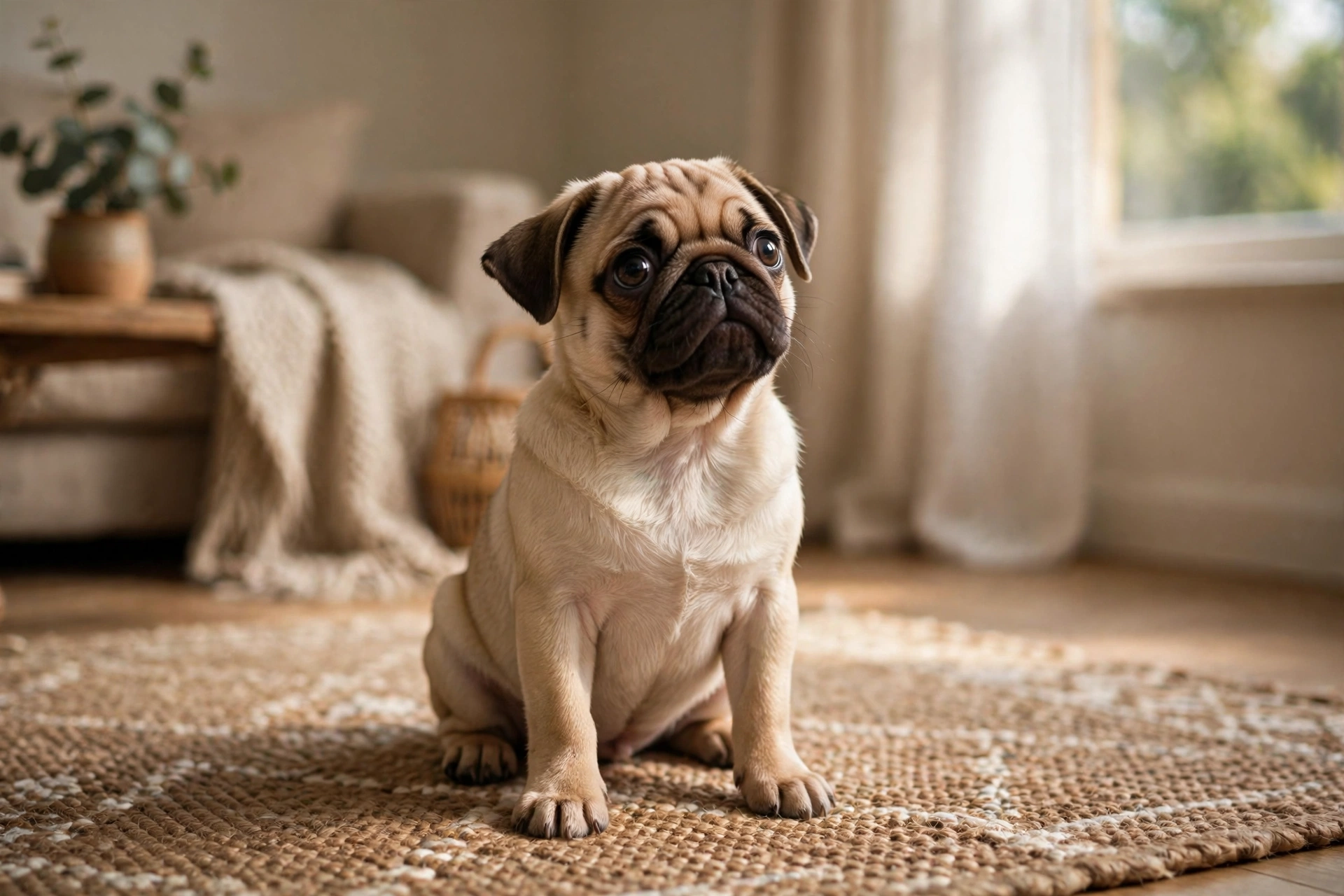
Reverse sneezing is not a disease. It is a reflex — the body’s response to irritation in the nasal passages or the back of the throat. According to veterinary guidance summarized by Pumpkin Pet Insurance, it is a common and usually benign reflex, particularly in small dogs and brachycephalic (flat-faced) breeds such as Pugs, French Bulldogs, and Shih Tzus, whose shorter airways make them more prone to it.
What Causes Reverse Sneezing?
Anything that irritates the nasal passages, sinuses, or back of the throat can trigger an episode. The most common triggers are:
- Dust, pollen, and airborne irritants. Household dust, pollen, scented candles, air fresheners, and cleaning sprays can all irritate a dog’s nasal passages.
- Perfumes and strong scents. Perfume, cologne, and strongly scented grooming products are frequent triggers.
- Excitement. Many dogs reverse sneeze when they get excited — during greetings, play, or walks.
- Pulling on the lead. A dog that pulls hard against a collar puts pressure on its throat and windpipe, which can trigger an episode. This is one reason a harness is often a better choice for dogs that pull — see our guide to stopping your dog pulling on the leash for the training side of that problem.
- Eating or drinking too fast. Gulping food or water can irritate the back of the throat and set off a reverse sneeze.
- Allergies and nasal mites. Dogs with seasonal allergies may reverse sneeze more often. Nasal mites — tiny parasites that live in the nasal passages — are a less common but real cause of repeated episodes.
- Sudden temperature or humidity changes. Moving from warm indoor air to cold outdoor air (or vice versa) can trigger an episode in sensitive dogs.
In many cases, you will never identify the exact trigger — and that is fine. An occasional reverse sneeze with no other symptoms is not a problem that needs solving.
What Does Reverse Sneezing Sound Like?
Reverse sneezing has a distinctive sound that is worth learning, because recognizing it is what keeps you calm when it happens. Owners describe it as:
- Loud, rapid snorting or snuffling through the nose
- A honking or goose-like sound
- Gasping or gagging noises, as if the dog is struggling to breathe in
The visual picture is just as distinctive: the dog freezes in place, extends its neck forward, and may stand with its elbows slightly out. The whole episode looks alarming — and then it ends, and the dog is fine.
The important thing to remember is that despite the dramatic sound, a dog having a reverse sneeze is still breathing. The inward snorts are air moving through the nose. That is the key difference from choking, which is covered in the next section.
If you have never seen a reverse sneeze before, a short video of the episode is worth capturing. It can help your vet distinguish reverse sneezing from coughing, tracheal collapse, or choking — conditions that can look similar to an untrained eye but need very different responses.
Is Reverse Sneezing the Same as Choking?
No — and confusing the two is the most common source of panic. Reverse sneezing and choking look and sound superficially similar, but they are very different situations, and the way to tell them apart matters.
Reverse sneezing:
- Loud snorting/honking through the nose
- Dog stands still, neck extended, but remains aware and responsive
- Episode ends on its own within about a minute
- Dog returns to normal immediately afterward — no drooling, no pawing, no distress
Choking:
- Drooling, retching, or gagging
- Pawing at the mouth or face
- Visible distress that does not resolve — the dog cannot settle, cannot swallow, and may panic
- Gums may turn blue or pale if the airway is blocked
If your dog is choking — drooling, retching, pawing at its face, and clearly in distress that is not resolving — that is an emergency. Try to keep the dog calm, and get to a vet or emergency clinic immediately. Do not delay by trying home maneuvers you have not been trained in.
For a reverse sneeze, the correct response is much calmer: stay nearby, speak softly, and let the episode pass. Do not try to “fix” it by blocking your dog’s nostrils, forcing its mouth open, squeezing its throat, or offering food or water during the episode. These are sometimes suggested online, but they are unsafe — especially if you have misdiagnosed choking as reverse sneezing. As veterinary sources including Medivet emphasize, no home intervention is needed for a typical reverse sneeze, and forcing anything on a dog that is actually choking can make things worse.
What Should I Do During a Reverse Sneezing Episode?
Mostly: nothing. A typical episode resolves on its own in seconds, and the best thing you can do is stay calm and let it pass. Your dog takes its emotional cues from you — if you panic, the dog panics, and a stressed dog’s episode can last longer.
That said, there are a few gentle, safe things that may help an episode end sooner:
- Stroke the throat lightly. A gentle stroke down the front of the throat may help relax the spasm. Keep it light and brief, and stop if the dog moves away.
- Speak calmly. A soft, steady voice can help an excited or anxious dog settle.
- Cover one nostril briefly — only if you are sure it is a reverse sneeze. Some vets suggest that briefly covering one nostril encourages the dog to swallow, which can end the spasm. Only do this if you are confident the dog is reverse sneezing (not choking), and never force it.
- Remove the trigger if you can identify it. If the episode started when you sprayed perfume or the dog sniffed a dusty corner, move the dog to fresh air.
What not to do: do not block both nostrils, do not force the mouth open, do not squeeze the throat, do not offer food or water during the episode, and do not shake or slap the dog. None of these help, and several of them are dangerous if the dog is actually choking.
After the episode ends, watch your dog for a minute or two. A dog that bounces back to normal needs no further action. A dog that remains distressed, coughs, drools, or seems to struggle with breathing needs a vet — see the warning signs below.
When Should I Worry About Reverse Sneezing?
Occasional reverse sneezing in an otherwise healthy dog is not a cause for concern. But certain patterns turn a harmless reflex into a reason to call the vet. Book a vet appointment if:
- This is the first episode you have ever seen. A first-ever episode is worth confirming with your vet, so you know you are dealing with reverse sneezing and not something else.
- Episodes are frequent or increasing. Several episodes a day, or episodes that are becoming more common, suggest an underlying irritant, allergy, or nasal problem worth investigating.
- An episode lasts longer than about a minute. Most reverse sneezes end within seconds. An episode that drags on past a minute is outside the typical pattern.
- There is nasal discharge or blood. Discharge (especially colored or bloody discharge) from one or both nostrils is not part of a normal reverse sneeze.
- The dog is coughing as well. A cough that accompanies or follows episodes can point to a respiratory or throat issue that needs checking.
- The dog seems lethargic or unwell. If episodes come with low energy, appetite loss, or general malaise, something broader may be going on.
Seek emergency vet care immediately if your dog shows any of these:
- Difficulty breathing that does not resolve when the episode ends
- Collapse, fainting, or inability to stand
- Blue or pale gums
- Continuous distress, drooling, or pawing at the face (possible choking)
A short video of the episode is genuinely helpful for your vet. Reverse sneezing, coughing, tracheal collapse, and choking can look similar in description but very different on video, and the right diagnosis depends on seeing the actual behavior.
When in doubt, ask your vet. A quick call describing the episode — how long it lasted, how often it happens, and whether there is any discharge — will usually settle whether your dog needs to be seen.
Can Reverse Sneezing Be Prevented?
There is no cure for reverse sneezing, and an occasional episode does not need one. But you can reduce how often episodes happen by reducing your dog’s exposure to common triggers:
- Reduce airborne irritants. Keep the home dusted, avoid smoking indoors, and skip strongly scented candles, air fresheners, and cleaning sprays around your dog.
- Use a harness instead of a collar for pullers. A harness removes pressure from the throat and windpipe, which eliminates one of the most common mechanical triggers. Pair it with loose-leash training so the pulling itself fades.
- Slow down fast eaters. A slow-feeder bowl or scatter feeding can stop the gulping that triggers episodes in dogs that inhale their food.
- Manage allergies. If your dog has seasonal allergies — itchy skin, watery eyes, paw-licking — talk to your vet about an allergy plan. Reducing overall allergic irritation can reduce reverse sneezing too. Our guide to why dogs lick their paws covers the allergy signs that often travel with it.
- Keep the air clean. A basic air purifier in the rooms your dog uses most can help in dusty homes or during high-pollen seasons.
If episodes are frequent despite trigger management, your vet may investigate further — checking for nasal mites, allergies, or other nasal issues. Treatment, if needed, targets the underlying cause, not the reverse sneezing itself.
Does Reverse Sneezing Hurt My Dog?
No — a typical reverse sneeze is not painful, and it does not harm your dog. Dogs often look startled or confused during an episode, and some seem mildly uncomfortable, but the reflex itself is not damaging. Think of it like a human sneezing fit: unpleasant for a moment, then gone.
What can hurt is the owner’s reaction. Panicking, grabbing at the dog, or forcing the mouth open can injure a dog or turn a mild episode into a genuinely stressful event. The calmest response is also the safest: stay nearby, speak softly, and let it pass.
One reassuring sign: most dogs that reverse sneeze regularly are completely unbothered by it. They snort, they stop, and they carry on. If your dog’s episodes follow that pattern — brief, self-resolving, no other symptoms — there is nothing to fix.
That said, dogs that reverse sneeze because of an underlying issue — allergies, nasal mites, chronic irritation — may have discomfort from the underlying cause, even though the sneezing itself is harmless. That is one more reason to mention frequent episodes to your vet: the sneezing is the symptom, and the cause is what deserves attention.
Frequently Asked Questions
How long does a reverse sneeze last?
Usually a few seconds to about a minute. Most episodes are over in under 30 seconds. If an episode lasts longer than about a minute, or your dog seems distressed after it ends, call your vet. A video of the episode, with its length, helps your vet judge whether it was a normal reverse sneeze.
Should I take my dog to the vet for reverse sneezing?
An occasional episode in an otherwise healthy dog does not need a vet visit. See your vet for a first-ever episode (to confirm the diagnosis), for several episodes a day or increasing frequency, for episodes lasting over about a minute, or for any episode paired with nasal discharge, blood, coughing, or lethargy. Seek emergency care for breathing difficulty, collapse, or blue/pale gums.
Are some breeds more prone to reverse sneezing?
Yes. Small dogs and flat-faced (brachycephalic) breeds — Pugs, French Bulldogs, Bulldogs, Shih Tzus, Boston Terriers — reverse sneeze more often because of their shorter, narrower airways. That does not mean every snort from a flat-faced dog is a reverse sneeze: these breeds are also prone to brachycephalic airway syndrome, so new or worsening noisy breathing in a flat-faced dog deserves a vet check rather than an assumption.
Can I give my dog medicine for reverse sneezing?
Do not give your dog any medicine — including antihistamines — for reverse sneezing without your vet’s direction. There is no standard medication for a reverse sneeze itself, because it is a brief reflex that resolves on its own. If episodes are frequent, your vet will look for an underlying cause (such as allergies or nasal mites) and treat that, rather than medicating the sneeze.
The Bottom Line
Reverse sneezing looks far worse than it is. A dog that snorts, honks, stands still with its neck out, and then carries on as if nothing happened has almost certainly had a reverse sneeze — a harmless spasm that needs no treatment and no panic. Learn the sound, learn the difference from choking, and know the warning signs: first-ever episodes, frequent or lengthening episodes, discharge, coughing, or any breathing difficulty all deserve a vet’s attention. When in doubt, ask your vet — and bring a video. A 20-second clip tells your vet more than a 20-minute description ever will.