

New Year’s Eve should be a celebration. For many dogs, it’s the worst night of the year. Fireworks are loud, sudden, and impossible to predict — exactly the combination that triggers a fear response in dogs. A dog that is normally confident can spend midnight shaking under the bed, and a dog that is already anxious can panic badly enough to bolt through a door or fence.
The good news: New Year’s Eve is weeks away, and that lead time is your biggest advantage. Almost everything that helps a dog through fireworks works better when it’s set up in advance — a safe haven the dog already knows, desensitization work started early, a conversation with the vet held before the holiday rush. This guide is built around that idea: prepare now, so that on the night itself you mostly just have to be there.
Direct answer: To keep your dog calm on New Year’s Eve, prepare weeks in advance: set up a familiar interior safe haven with a bed, water, and background sound; walk, feed, and give a toilet break during daylight before fireworks begin; keep windows closed with blackout curtains drawn; stay home if you can; and talk to your vet beforehand about anxiety options for severe cases. Never punish fear behavior, and keep ID tags and microchip details current in case your dog bolts.
Why Fireworks Scare Dogs So Much
Fireworks hit dogs on several levels at once. The noise is sudden and far louder than everyday sounds, and dogs hear a wider range of frequencies than we do, so the booms are even more intense for them. The flashes of light are unpredictable, and the smell of gunpowder is unfamiliar and alarming. Worst of all, from a dog’s perspective, there is no pattern to predict and no source to locate — the threat seems to come from everywhere at once.
New Year’s Eve makes this harder than a scheduled fireworks display because neighbourhood fireworks are unpredictable and unannounced. They can start at 6 p.m. or at 11:58 p.m., and they can continue for hours. Your dog can’t learn “it’s over now,” because another round may start at any moment. That’s why the escape and bolting risk is high on fireworks nights — a panicked dog will try to run from a threat it can’t locate. Keep your dog’s ID tag and microchip registration details current before the holiday, just in case.
Step 1: Set Up a Safe Haven — Weeks in Advance
The single most important thing you can do for your dog on New Year’s Eve is set up a safe haven — and the key word is “set up,” not “build on the night.”
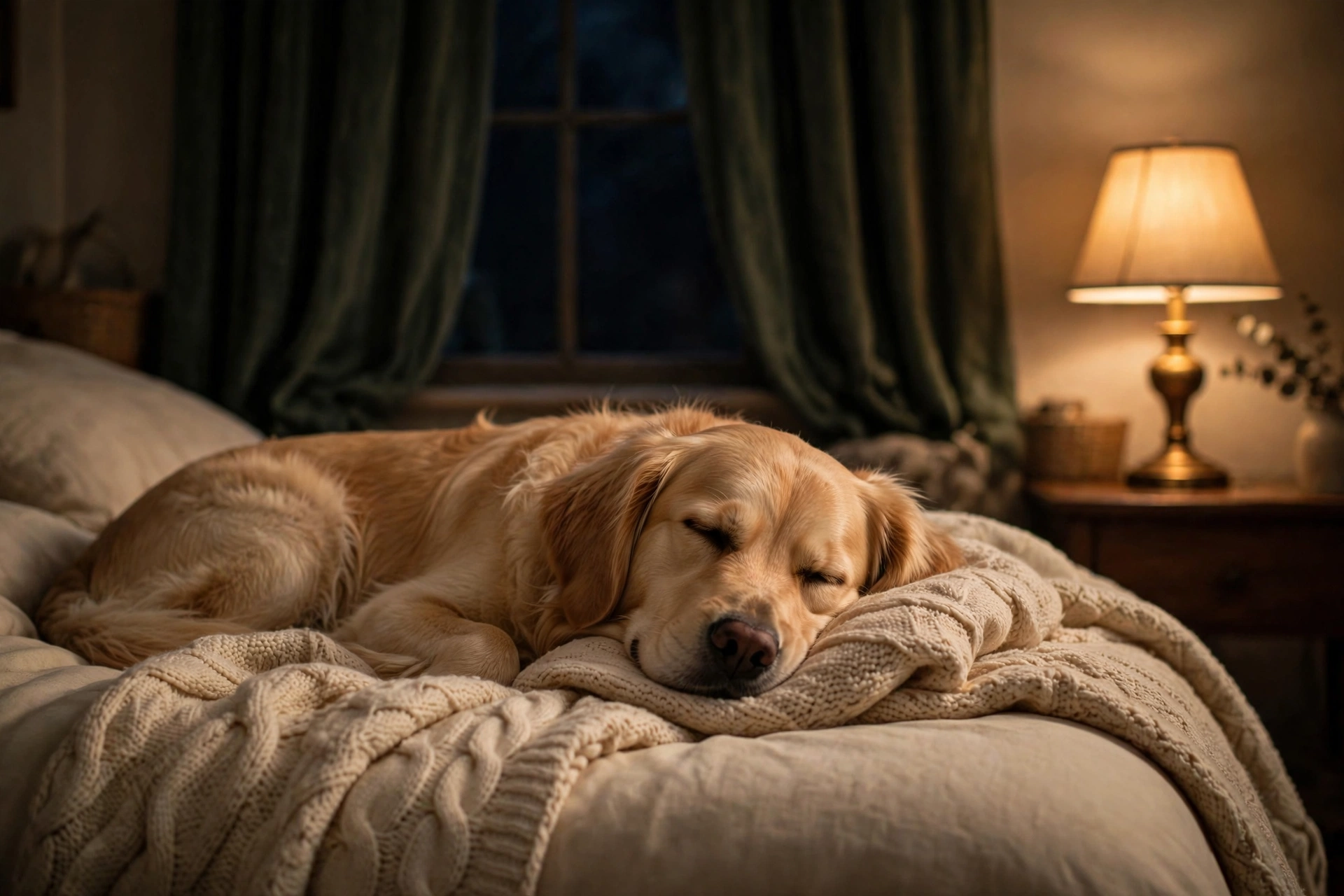
A safe haven is a familiar interior room where your dog feels secure, with access available at all times — not a room you create when the first firework goes off. Choose an interior room with as little outside noise and light as possible, away from windows. Furnish it with your dog’s bed or a pile of blankets, a water bowl, a few favorite toys, and something that smells like you, such as a worn sweatshirt.
Start using the room now. Feed your dog there sometimes, play there, let them nap there. The goal is that by New Year’s Eve, the room already means “safe and relaxing” — not “the scary room I get locked in when fireworks start.” A safe haven only works if the dog chooses to go there. Never shut a frightened dog in a room it can’t leave; that turns a refuge into a trap and can make panic worse.
On the night itself: close the windows, draw blackout curtains to block the flashes, and put on soft music or the TV at low volume to help mask the sound. Keep the door to the safe haven open so your dog can come and go.
Step 2: Walk, Feed, and Toilet Early
On New Year’s Eve, get the day’s essentials done before the fireworks begin. The RSPCA advises walking dogs during daylight hours to avoid fireworks time, and feeding and giving a toilet break before fireworks start, so no outdoor trip is needed during the display.
A daytime walk also gives your dog exercise and a chance to settle, but don’t expect exercise and feeding to produce calm on their own — they remove reasons to go outside during the fireworks, which is the real point. A dog that has been walked, fed, and toileted before dark has nothing urgent pulling it toward the door at midnight.
For any toilet trip that can’t wait, keep your dog leashed, even in a fenced yard. A panicked dog can clear a fence you’d swear was escape-proof. Stay with your dog the whole time, and get back inside promptly.
Step 3: Stay Home If You Can
If your dog is afraid of fireworks, the best place for you on New Year’s Eve is at home with them. Your calm presence is one of the strongest calming signals available. Dogs read their owners’ body language constantly, and an owner acting calm and normal tells the dog there is nothing to panic about.
That doesn’t mean hovering. Be there, act normally, and let your dog choose what to do. If your dog wants to hide under the bed, let them hide. If they want to press against you on the couch, let them. If they want to pace, let them pace. Comforting a frightened dog does not reinforce fear — current RSPCA guidance is clear that you should be there to comfort your dog and act calm, and that you should never shout at or punish a frightened dog. The old advice to “ignore the fear so you don’t reward it” is outdated. Fear is an emotion, not a behavior your dog is choosing, and comfort helps.
If you absolutely must go out, don’t leave your dog alone if you can help it. Ask a trusted friend or family member your dog knows to stay with them. And never leave your dog outside, tied up, or in a car during fireworks — the RSPCA specifically warns against all three.
Step 4: Talk to Your Vet Before the Holiday
For dogs with significant fireworks anxiety, talk to your vet before the holiday — not on December 31st, when the clinic may be closed or booked out. Your vet can discuss anxiety management options appropriate to your dog, and any medication would need to be prescribed by the vet, ideally with a practice dose given before the night itself so you know how your dog responds.
Pheromone diffusers and sprays are another option, but they work best when started weeks in advance — a diffuser plugged in on New Year’s Eve itself won’t have had time to take effect. If you plan to use one, start it now so the scent is already part of the safe haven’s background by the time the holiday arrives.
Desensitization — gradually exposing a dog to recorded firework sounds at low volume, building up slowly over sessions — can genuinely help, but it needs weeks of gradual work. The time to start is now, not on the night. Treat it as advance preparation for next year if you haven’t started by December, and don’t try a rushed version on the night itself. Never recommend or use any specific medication, supplement, or sedative without your vet’s direct guidance.
Step 5: On the Night — What to Do and What Not to Do
When the fireworks start, your job is simple: stay calm, stay present, and let your dog cope in their own way.
Do:
- Keep your dog indoors with windows closed and curtains drawn.
- Keep soft music or the TV on at low volume to mask the sound.
- Let your dog hide, pace, or seek you out — whichever they prefer.
- Keep the safe haven accessible at all times.
- Keep your dog leashed for any toilet trip, and stay with them.
- Act calm and normal. Comfort your dog if they seek it.
Don’t:
- Never take your dog to a fireworks display.
- Never tie your dog up outside during fireworks.
- Never leave your dog in a car or outside a shop during fireworks.
- Never punish, shout at, or scold a frightened dog — it makes fear worse.
- Never force your dog out of hiding or force them to play.
- Never try to “get them used to it” by exposing them to real fireworks.
Signs of fireworks stress include panting, pacing, hiding, barking or whining, trembling, and trying to escape. If you see these, stay calm, speak softly, and let your dog settle in their safe haven. Most dogs recover once the noise stops, though a very anxious dog may take an hour or more to fully relax.
Step 6: The Morning After — Check the Yard
Once the fireworks are over, there’s one more job: check the yard the next morning before your dog gets access, and clean up any firework debris. Fireworks contain toxic chemicals and heavy metals, and a curious dog that chews a spent firework casing can be poisoned. Pick up casings, fragments, and anything else that landed in the yard, and keep unused fireworks and glow sticks stored out of reach.
This is also a good moment to check that gates and fences are still secure — a panicked dog can damage a fence latch or dig under a gate in an escape attempt, and you don’t want to discover the gap at the next walk.
When to Get Professional Help
Most dogs cope with fireworks better when their owners prepare, but some need more support. Talk to your vet or a certified behaviorist if your dog:
- Shows extreme panic — destructive escape attempts, self-injury, or nonstop trembling — during fireworks.
- Is still visibly stressed hours after the noise stops.
- Has started showing anxiety at other loud noises, or anxiety that is spreading to new triggers.
- Has any breathing difficulty, collapse, or blue or purple gums during a fireworks episode — treat that as an emergency and seek vet care immediately.
A vet can rule out medical contributors to anxiety and discuss a management plan. Severe noise phobia is a real condition, and it is treatable — but it takes professional guidance, not a one-night fix. If your dog is crate-trained, a familiar crate inside the safe haven can add to their sense of security — see our crate training basics for beginners for how to make the crate a positive place.
A Simple New Year’s Eve Checklist
Use this as your plan for the night:
- Weeks before: Set up the safe haven and start using it. Start a pheromone diffuser if using one. Begin desensitization if you plan to. Talk to the vet about anxiety options.
- Daytime, Dec 31: Walk during daylight. Feed and toilet before dark. Confirm ID tag and microchip details are current.
- Before dark: Close windows, draw blackout curtains, turn on soft music or TV at low volume. Make sure the safe haven is ready and accessible.
- During fireworks: Stay home. Stay calm. Let your dog hide, pace, or cuddle. Keep leashed for any toilet trip.
- Morning after: Check the yard for firework debris before letting the dog out. Check gates and fences.
Frequently Asked Questions
Should I comfort my dog during fireworks?
Yes. Current RSPCA guidance says to be there to comfort your dog and act calm and normal. Comforting a frightened dog does not reinforce fear. Never shout at or punish a frightened dog — that makes the fear worse. Let your dog hide, pace, or seek you out, whichever they prefer.
When should I start preparing my dog for New Year’s Eve fireworks?
As early as you can — weeks in advance. Set up the safe haven now so your dog already knows it as a relaxing place, start any pheromone diffuser early so it has time to take effect, and talk to your vet before the holiday rush. Desensitization to firework sounds needs weeks of gradual work, so it must start well ahead of the night.
Why is my dog afraid of fireworks but not thunder?
Both are loud, but fireworks are more unpredictable — sudden, irregular, and paired with flashes of light and unfamiliar smells, with no pattern to learn. Thunder usually comes with weather cues (pressure changes, wind, rain) that dogs can sense coming, while neighbourhood fireworks can start at any moment without warning, which makes them harder for a dog to cope with.
What if my dog tries to escape during fireworks?
Stay calm and don’t chase a panicked dog — chasing can drive them further. Keep your dog indoors with doors and gates secured, and leash them for any toilet trip. This is why current ID tags and microchip registration matter: if the worst happens and your dog does bolt, up-to-date identification is what brings them home. If your dog has tried to escape before, talk to your vet about anxiety management before the next fireworks season.
The Bottom Line
New Year’s Eve doesn’t have to be a night of panic for your dog. The formula is simple, but it depends on starting early: a safe haven your dog already trusts, the day’s essentials handled before dark, a calm owner at home, and a vet conversation held before the holiday. Prepare now, and when the fireworks start, your main job is just to be there — calm, present, and letting your dog cope in their own way.
If your dog is also anxious around guests or visitors in general, see our guide on why your dog barks at night for more on nighttime anxiety and settling. When in doubt, ask your vet.