

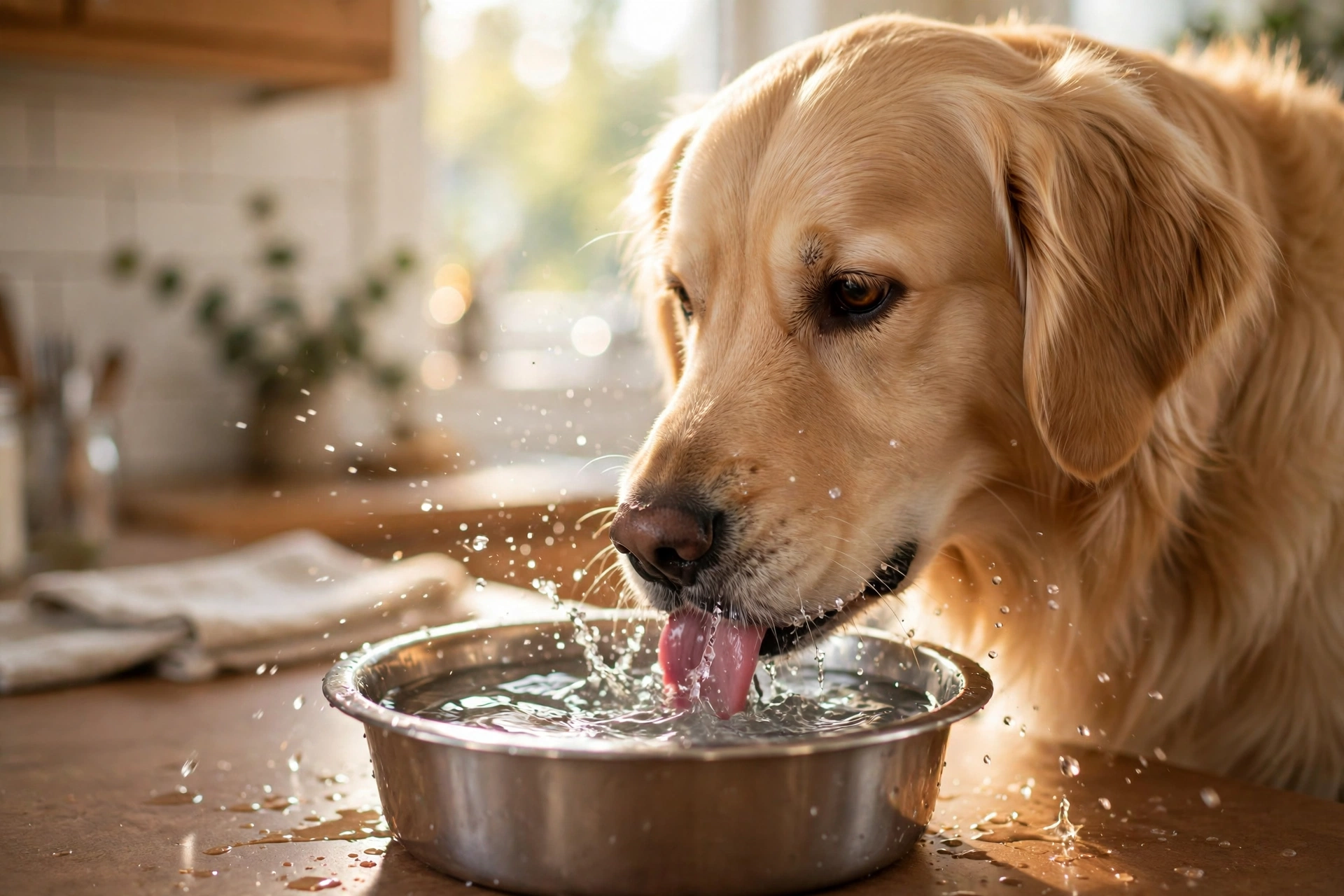
Most dog owners have watched their dog lap up water and assumed everything was fine. But dogs can become dehydrated quietly — long before they look sick. Unlike people, dogs can’t tell you they’re thirsty until the situation is already uncomfortable, and a dehydrated dog can go downhill fast, especially in warm weather or during illness.
Dehydration happens when a dog loses more fluid than they take in. Water makes up a huge share of your dog’s body, and even a small fluid deficit affects their circulation, body temperature, and organ function. The good news is that most early signs of dehydration are easy to check at home — no special equipment needed. This guide walks you through exactly what to look for, the simple tests vets use that you can do yourself, what causes dehydration in the first place, and what to do when you spot it.
Direct answer: The first signs of dehydration in dogs are dry or sticky gums, a dry nose, sunken-looking eyes, and skin that slowly returns to place when pinched. Other signs include excessive panting, lethargy, loss of appetite, thick drool, and dark urine. You can test at home with the gum press test and the skin elasticity test. If your dog is lethargic, vomiting, or won’t drink, call your vet right away.
What are the first signs of dehydration in dogs?
Early dehydration shows up in your dog’s mouth, skin, and energy level before it becomes dangerous. Catching these subtle changes is the whole game — a dog in the early stages can usually recover at home with water and rest.
Watch for these early warning signs:
- Dry or sticky gums: Healthy gums are slick and moist. If they feel tacky or dry to the touch, your dog is likely running low on fluids.
- Dry nose: A moist, cool nose is normal for most dogs. A persistently dry, cracked nose can signal fluid loss.
- Sunken eyes: As fluid volume drops, the eyes can look recessed or dull. This one tends to appear as dehydration progresses past the earliest stage.
- Loss of skin elasticity: Pinch the skin at the scruff of your dog’s neck. On a hydrated dog it snaps back instantly; on a dehydrated dog it returns slowly or “tents” in place.
- Thick, ropey drool: Saliva becomes thick and sticky instead of thin and watery.
- Low energy: A dog that is unusually tired, slow on a walk, or reluctant to play may be dehydrated — especially after heat or exercise.
- Reduced appetite: Dogs that feel lousy from fluid loss often turn their nose up at food.
- Panting more than usual: Heavy, prolonged panting after normal activity can mean your dog is overheating and losing fluids fast.
If you notice one or two of these signs together, take them seriously and offer water immediately in a cool, shaded spot.
How can I test my dog for dehydration at home?
You can check your dog’s hydration in about 30 seconds using two tests veterinarians themselves rely on. Neither hurts your dog, and both give you a quick read on whether fluids are low.
The gum test (capillary refill time)
- Lift your dog’s upper lip gently so you can see the gums above the front teeth.
- Press your fingertip firmly against the gum for two seconds, then release. The spot should turn pale where you pressed.
- Count how fast the pink color returns. On a well-hydrated dog, color returns in under two seconds.
- While you’re there, run your finger along the gums. They should feel wet and slick — dry or tacky gums point to dehydration.
The skin elasticity test
- Gently pinch and lift the skin at your dog’s scruff (between the shoulder blades), then let go.
- Watch how fast the skin falls back into place. Instant snap-back is normal; slow return means fluid loss.
- Note that older dogs and some wrinkly breeds (like Shar-Peis or English Bulldogs) naturally have looser skin, so compare against what is normal for your dog rather than an absolute standard.
Reading your results
Use this quick reference table to interpret what you find:
| What you see | What it likely means | What to do |
|---|---|---|
| Gums moist, color returns in under 2 seconds; skin snaps back instantly | Well hydrated | Keep doing what you’re doing — keep fresh water available |
| Gums slightly tacky, color returns in 2-3 seconds; skin returns slowly (2-4 seconds) | Mild dehydration | Offer fresh cool water in a shaded spot; monitor closely over the next hour |
| Gums dry, color takes 3+ seconds to return; skin stays tented; sunken eyes or lethargy | Moderate to severe dehydration | Offer water, but call your vet — especially if your dog is vomiting, has diarrhea, or won’t drink |
| Gums very pale, gray, or brick red; extreme lethargy or collapse | Emergency — possible heatstroke or shock | Cool your dog and get to an emergency vet immediately |
These tests are useful screening tools, not diagnoses. They tell you when to escalate — not what is wrong underneath.
What causes dehydration in dogs?
Dehydration isn’t only about skipping the water bowl. Plenty of dogs with full bowls still become dehydrated because something is pushing fluid out faster than they can replace it.
The most common causes include:
- Heat and exercise: A long walk or play session on a warm day drains fluids fast through panting and evaporation. Hot-weather hydration deserves extra attention — timing your walk for the cooler part of the day makes a real difference.
- Vomiting and diarrhea: Stomach illness is one of the fastest routes to dehydration. Even a single day of repeated vomiting can empty a small dog’s reserves.
- Not drinking enough: Some dogs are picky drinkers. A dirty bowl, water placed too far from where they rest, or anxiety can all keep a dog from drinking.
- Fever and infection: Illness raises fluid needs while often lowering the desire to drink — a bad combination.
- Certain medications: Some drugs increase urination or fluid loss. If your dog recently started a new medication and seems thirstier or more tired, ask your vet.
- Underlying disease: Kidney disease, diabetes, and some other conditions cause chronic fluid loss. Excessive thirst paired with excessive urination is a classic reason for a vet visit.
According to the American Veterinary Medical Association, dogs should always have access to clean, fresh water — and the ASPCA’s summer safety guidance warns that hot cars and hot pavement can put a dog into dangerous heat-related dehydration in minutes. Both organizations stress that prevention starts with water always being available.
How much water should my dog drink every day?
Most dogs need roughly 1 ounce of water per pound of body weight each day, a guideline cited by VCA Hospitals — so a 20-pound dog needs about 20 ounces (a little over two cups), and a 60-pound dog needs around 60 ounces (about seven and a half cups). But “roughly” matters here, because several factors shift the number:
- Food type: Dogs eating wet food get a significant share of their water from meals; kibble-fed dogs must drink more.
- Activity level: An active dog on a long hike needs noticeably more than a couch potato of the same weight.
- Weather: Heat increases fluid loss through panting and evaporation.
- Age and health: Puppies, nursing mothers, and seniors all run higher fluid needs; illness raises them further.
Rather than measuring cups obsessively, use the number as a baseline and adjust for your dog’s day. A practical habit: note roughly how much you pour and how much disappears. If your dog’s intake drops suddenly and nothing else changed, that is worth a vet call — especially paired with low energy or appetite changes.
What should I do if my dog is dehydrated?
What you do depends on how bad it looks. Here is a calm, step-by-step approach.
- Move them somewhere cool and shaded. Out of the sun, off hot pavement, into the house if it’s cooler there.
- Offer small amounts of fresh, cool water — not ice-cold. A dehydrated dog gulping down a full bowl can vomit, which makes things worse. Let them drink a little at a time.
- Try wetting their gums. If a dog won’t drink, you can dribble a little water along their gums or offer ice cubes to lick. Low-sodium bone broth (onion- and garlic-free) can tempt picky drinkers — homemade broth treats can double as a hydration boost for dogs that prefer licking to drinking.
- Rest them. No more exercise until they are clearly back to normal — energy, appetite, and hydration signs all recovered.
- Call your vet if: your dog is lethargic, refuses water, is vomiting or has diarrhea, shows the severe signs from the table above, or doesn’t bounce back within an hour or two of drinking.
When in doubt, ask your vet. Dehydration can mask or accompany serious illness, and a vet can provide subcutaneous or IV fluids — something no home remedy replaces in a truly dehydrated dog.
How can I prevent dehydration in my dog?
Prevention is simpler than treatment, and most of it is routine.
- Keep fresh water available at all times. Refill bowls at least twice a day, wash them regularly, and place bowls where your dog actually spends time.
- Bring water on outings. Carry a collapsible bowl and water on every walk, hike, or car trip — never assume there will be a clean source along the way.
- Time exercise for cooler hours. Early morning or evening walks cut fluid loss dramatically compared to midday heat.
- Feed some wet food or add water to kibble. Moisture in food is an easy, passive hydration boost.
- Watch dogs at higher risk. Puppies, seniors, brachycephalic (flat-faced) breeds, and dogs with chronic illness dehydrate faster and need closer monitoring.
- Never leave your dog in a parked car. The ASPCA warns that temperatures inside a car can climb into triple digits within minutes, even on a mild day — heatstroke can follow fast.
- Know the early signs. Check gums and skin occasionally so you notice change early, and watch for nighttime restlessness — a dog up and panting through the night may be overheated or uncomfortable.
Frequently Asked Questions
How fast can a dog become dehydrated? It depends on the cause. In extreme heat or with vomiting and diarrhea, a dog can reach dangerous dehydration within hours. In milder situations — a hot day with limited water — it typically develops over a day or two. Small dogs and puppies dehydrate faster than large adult dogs because they have less fluid reserve relative to their size.
Can my dog drink too much water? Yes, though it’s uncommon. Excessive drinking (polydipsia) is usually a symptom — of diabetes, kidney disease, Cushing’s disease, or certain medications — rather than a behavior. If your dog suddenly starts draining the bowl far faster than usual, schedule a vet visit rather than restricting water on your own.
Is it safe to give my dog electrolyte drinks or Pedialyte? Unflavored Pedialyte in small amounts is sometimes suggested for mild dehydration, but it is not a substitute for veterinary care, and flavored sports drinks are not appropriate for dogs. Always check with your vet first — they may recommend a specific oral rehydration approach or prefer to treat the underlying cause directly.
Will a dehydrated dog still eat? Often not. Loss of appetite is one of the early signs of dehydration, and a dog that refuses both food and water is telling you something is wrong. If a normally enthusiastic eater skips meals and shows any dehydration signs, call your vet the same day.
Dehydration in dogs is common, easy to miss, and — when caught early — usually easy to fix at home with water, shade, and rest. Make the gum press and skin pinch part of your routine checks, especially through the warm months, keep fresh water where your dog can always reach it, and don’t hesitate to call your vet when the signs look more than mild. A few seconds of checking can be the difference between a quiet recovery on the couch and an emergency vet visit. When in doubt, ask your vet — it’s always the safer call.