

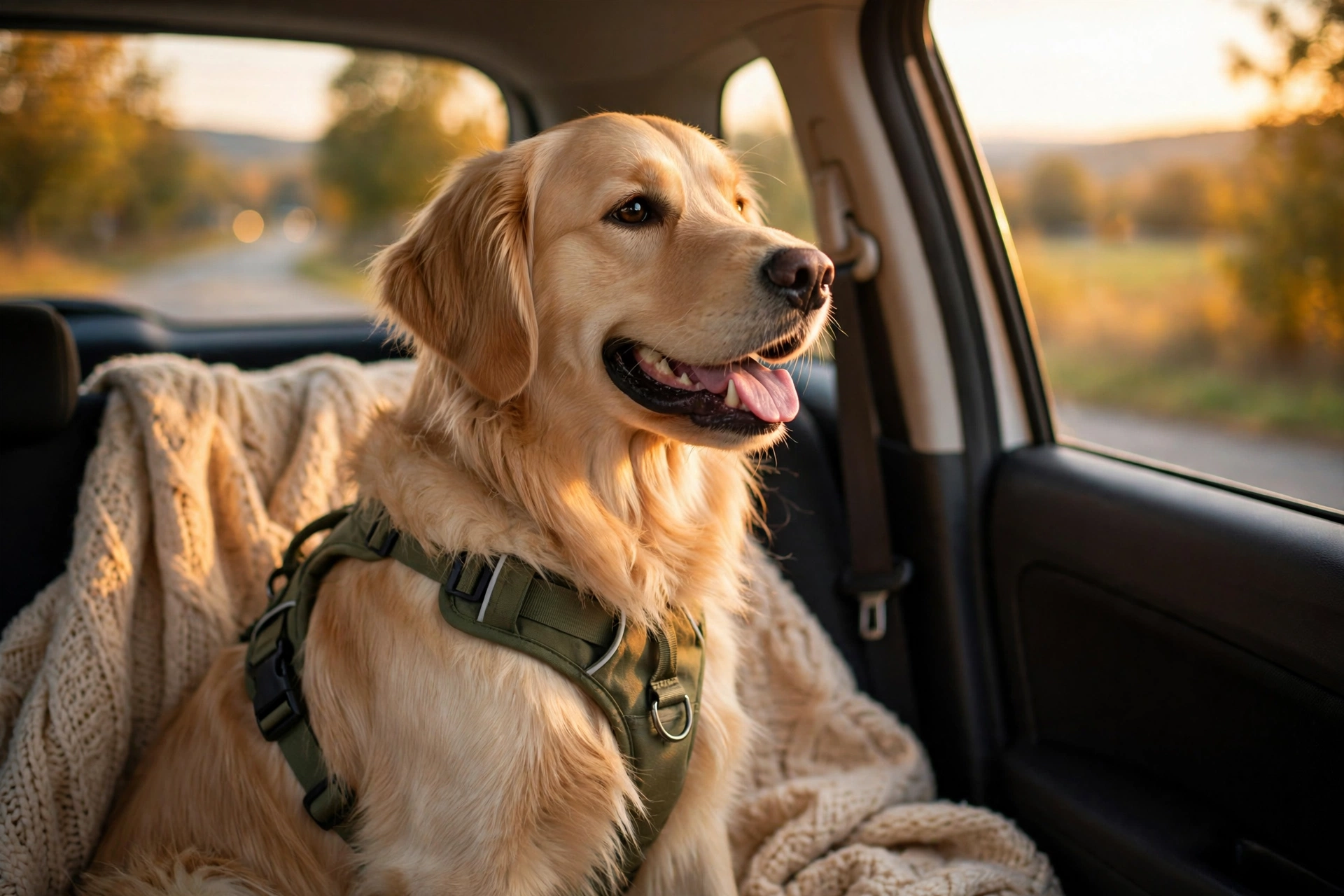
The holidays mean travel, and for a growing number of dog owners, that means the dog comes too. A familiar dog in the back seat makes a long drive feel shorter, and nobody wants to leave a family member behind at boarding while everyone else celebrates. But holiday travel is also the most stressful kind: crowded roads, packed airports, unfamiliar hotel rooms, and a dog whose routine is suddenly upside down.
The good news is that most holiday trips with dogs go fine with a little planning. The difference between a smooth trip and a miserable one is rarely luck. It is the decisions you make before you leave: how the dog rides in the car, what the airline actually allows, whether the hotel really welcomes dogs, and what you pack. When in doubt, ask your vet.
Direct answer: Most dogs travel best by car in a crate or harness clipped to a seatbelt in the back seat, with water and bathroom breaks, and never left alone in a car. Flying means checking your airline’s pet rules and health-certificate requirements before booking. At hotels, confirm pet fees and size limits before you book.
Should my dog travel with me at all?
Start here, because the best trip for some dogs is no trip. Travel is genuinely stressful for dogs that are ill, injured, recovering from surgery, or highly anxious, and a panicked dog in a car, cabin, or hotel room is a safety risk, not just an inconvenience. The American Veterinary Medical Association (AVMA) advises owners to consider whether travel is right for an individual animal, and for dogs that are very anxious or unwell, a trusted pet sitter or boarding stay at home is often the kinder and safer choice.
If your dog is healthy, reasonably confident, and used to car rides, travel is very doable. The rest of this guide covers how to do it safely, starting with the car, which is how most holiday dog travel happens.
How should my dog ride in the car?
A dog riding loose in a car is a danger to everyone in it. In a sudden stop or a crash, an unrestrained dog becomes a projectile, and a loose dog in the driver’s footwell is a crash waiting to happen. The Center for Pet Safety, which independently crash-tests pet restraints, has found that many products marketed for car travel fail under crash conditions, so choosing a genuinely tested restraint matters.
Your two safe options are:
- A secured crate. A sturdy crate placed in the cargo area or back seat, strapped or wedged so it cannot slide, is the safest way for most dogs to travel. The crate should be large enough for the dog to stand, turn around, and lie down comfortably, but not so large that the dog is thrown around inside it. Line it with a familiar blanket and add a chew or a safe toy. Our crate training basics guide covers how to build that positive association before the trip.
- A seatbelt-attached harness. A crash-tested harness that clips to the car’s seatbelt keeps the dog in the back seat and prevents it from being thrown forward. Look for harnesses that have been independently crash-tested, not just labeled car safe, and check that the fit is snug, with the attachment on the back, not the neck.
A few rules apply no matter which option you choose:
- Back seat only. The front passenger seat puts a dog in the airbag zone, and an airbag deploying into a dog can cause serious injury. Keep the dog in the back.
- Head inside the window. Dogs love hanging their heads out of the window, but flying debris, insects, and dust can cause eye and ear injuries. Crack the window for air, not for heads.
- Never ride in an open pickup bed. A dog in an open truck bed can be thrown out, jump out, or be struck by debris.
- Feed lightly before a car trip. About one-third of the normal meal reduces the chance of carsickness on the drive.
How often should I stop on a road trip with my dog?
Plan for regular water, bathroom, and exercise breaks along the way. What matters is not letting a long stretch of highway turn into hours without water, a chance to relieve itself, or a chance to stretch its legs. On a full-day drive, stopping every couple of hours is a sensible rhythm for most dogs, and more often for puppies, seniors, or dogs that drink heavily.
At each stop, offer water first. Our signs of dehydration in dogs guide lists what to watch for, including dry gums and loss of skin elasticity. Let the dog relieve itself on leash, away from traffic, and give it a short walk or a sniff around the grass. Ten minutes of sniffing does more to settle a dog than an hour of sitting in the car.
And the rule that never bends: never leave your dog alone in a parked car. The AVMA’s advice is blunt, never, ever leave a dog in a parked car. Even on a mild day, a parked car’s interior temperature can climb to dangerous levels within minutes, and cracking the windows does not prevent it. On a road trip, if you need to stop somewhere dogs cannot go, take turns with a travel companion so someone always stays with the dog.
What do I need to know before flying with my dog?
Flying with a dog is the most paperwork-heavy way to travel, and the rules are not universal. Airline pet policies, carrier size limits, breed restrictions, and fees vary by airline and by route. The single most important step is to read your specific airline’s current pet page before you book, not a general summary of airline rules.
The main questions to answer from that page:
- Cabin or cargo? Small dogs that fit in an airline-approved carrier under the seat can usually travel in the cabin. Larger dogs travel in the cargo hold as checked baggage or via the airline’s cargo service. Some airlines restrict brachycephalic (flat-faced) breeds because of breathing risks at altitude.
- Carrier requirements. Airlines specify carrier dimensions, ventilation, and construction. Measure your dog and your carrier against the airline’s stated limits.
- Health certificate. Many airlines require a health certificate from a veterinarian issued within a set number of days before travel. The exact window varies by airline and destination, so confirm the deadline on the airline’s page and book the vet visit to match it.
- Fees and booking. Pet fees vary widely, and most airlines limit the number of pets per flight, so book the pet’s spot at the same time as your own ticket.
- Layovers and connections. Direct flights are far better for dogs than connections. If a direct flight exists, it is usually worth paying more for it.
Prepare the dog, not just the paperwork. Acclimate the dog to its travel carrier well before the trip, leave the carrier out at home with the door open, feed meals inside it, and build up to closed-door naps over days or weeks. On travel day, exercise the dog before heading to the airport, offer water, and give the dog a bathroom break right before check-in.
One thing not to do: do not give your dog a tranquilizer or sedative for a flight unless your veterinarian specifically prescribes it for that trip. The AVMA and the Center for Pet Safety advise against tranquilizing pets for air travel, because sedation can affect breathing and temperature regulation at altitude, and a sedated dog cannot brace itself or respond normally.
How do I find a dog-friendly hotel?
Pet-friendly is one of the least reliable labels in travel. One hotel’s pet-friendly means a dedicated dog floor with beds and treats; another’s means they tolerate a small dog for a $150 fee and a list of restrictions. Confirm the details before you book:
- Pet fee and deposit. Fees vary enormously, from a small flat fee to a per-night charge that can rival the room rate, plus a refundable deposit. Ask for the total, in writing, before booking.
- Size and breed limits. Many hotels cap pet weight (commonly 25-50 pounds) or restrict certain breeds. Confirm that your dog qualifies, do not assume.
- Where the dog can go. Some hotels allow dogs only in the room, not in the lobby, restaurant, or pool area.
- Leaving the dog alone. Bring a crate or soft-sided crate and keep the dog crated if you leave it alone in the room. Leave the Do Not Disturb sign on and tell the front desk you have a dog in the room so staff do not open the door unexpectedly.
- The room itself. Ask for a ground-floor room near an exit if possible. Check the room on arrival for hazards: cleaning chemicals, medications left by a previous guest, gaps under doors, and balconies the dog could climb.
Bring familiar items from home: the dog’s usual food and treats, a familiar blanket or bed, a favorite toy, water and food bowls, and a long-lasting chew for alone time. Also bring cleanup supplies, poop bags, paper towels, and an enzyme cleaner, so any accident is a two-minute cleanup, not a hotel bill.
What should I pack for a holiday trip with my dog?
Pack the dog’s bag the way you would pack a child’s: assume you will need everything, and assume you will not be able to buy it at your destination on a holiday.
| Category | What to pack |
|---|---|
| Food and water | Usual food (enough for the whole trip plus one extra day), treats, collapsible water bowl, bottled water for the car |
| Health | Medications, vaccination records, vet’s phone number, pet first-aid basics, any prescribed calming aids |
| ID | Collar with current ID tag, leash, spare leash, a second tag with your destination address and phone for longer stays |
| Comfort | Familiar blanket or bed, favorite toy, chew, crate or travel carrier |
| Cleanup | Poop bags, paper towels, enzyme cleaner, old towels for muddy paws |
| Paperwork | Health certificate (if flying), airline or hotel confirmations, microchip number |
Before any trip, get a vet check that vaccinations are current and pack the proof. Save your vet’s number in your phone, and look up a veterinarian near your destination before you leave. Bring a recent photo of your dog on your phone: if the dog gets lost in an unfamiliar place, a clear photo is the single most useful thing for anyone helping you search.
Check the ID tag before you go. The tag should have your current mobile number, and for a longer stay, add a second tag with the destination address and phone number. If your dog is microchipped, confirm the registration details are up to date.
What if my dog gets anxious or sick during the trip?
Even well-planned trips hit bumps. A dog may pant, whine, or refuse food on the first day, a normal stress response to a strange place, and most dogs settle within a day once the routine returns. Keep feeding times, walk times, and bedtime as close to the home routine as possible; familiarity is the fastest anxiety treatment. Our best time of day to walk your dog guide explains why a predictable walk schedule matters, on the road, that predictability matters even more.
Watch for the signs that mean a vet visit, not just stress: vomiting or diarrhea that does not stop, refusal to drink water, lethargy, difficulty breathing, or any injury. Know where the nearest emergency vet is at your destination before you need one. And on the way home, give the dog a day to decompress: a normal walk, normal meals, and a good sleep.
Frequently asked questions
Is it better to drive or fly with my dog?
For most dogs, driving is less stressful: the dog stays with you, you control the stops, and there is no cargo hold or carrier-size limit. Flying makes sense for long distances where driving would take multiple days. If you fly, choose a direct flight, confirm your specific airline’s current pet rules before booking, and acclimate your dog to the carrier well in advance.
Can I leave my dog in the car while I run into a shop?
No. Never leave a dog alone in a parked car. The AVMA advises never, ever doing it. Interior temperatures can reach dangerous levels within minutes even on a mild day, and cracking the windows does not prevent it. Take turns with a travel companion so someone always stays with the dog.
Do dogs need a health certificate to fly?
Many airlines require one, issued by a veterinarian within a set number of days before travel, but the exact window varies by airline and destination. Check your specific airline’s current pet page and book the vet visit to match its deadline. Bring the certificate and vaccination proof with you.
How do I stop my dog barking in a hotel room?
Prevent it rather than fixing it: exercise the dog before you leave the room, leave a familiar blanket and a long-lasting chew, keep the dog crated, and keep absences short at first. Leave the Do Not Disturb sign on and tell the front desk about the dog. If the dog barks nonstop when left alone, do not leave it alone in the room, take it with you or arrange care.
The bottom line
Holiday travel with your dog comes down to four decisions: restrain the dog properly in the car, check your specific airline’s rules before booking any flight, confirm the hotel’s real pet policy (fees, size limits, and where the dog can go) before you pay, and pack as if you cannot buy anything at your destination. Do those four things, keep the routine familiar, and never leave your dog alone in a parked car. When in doubt, ask your vet, and have a great trip.