

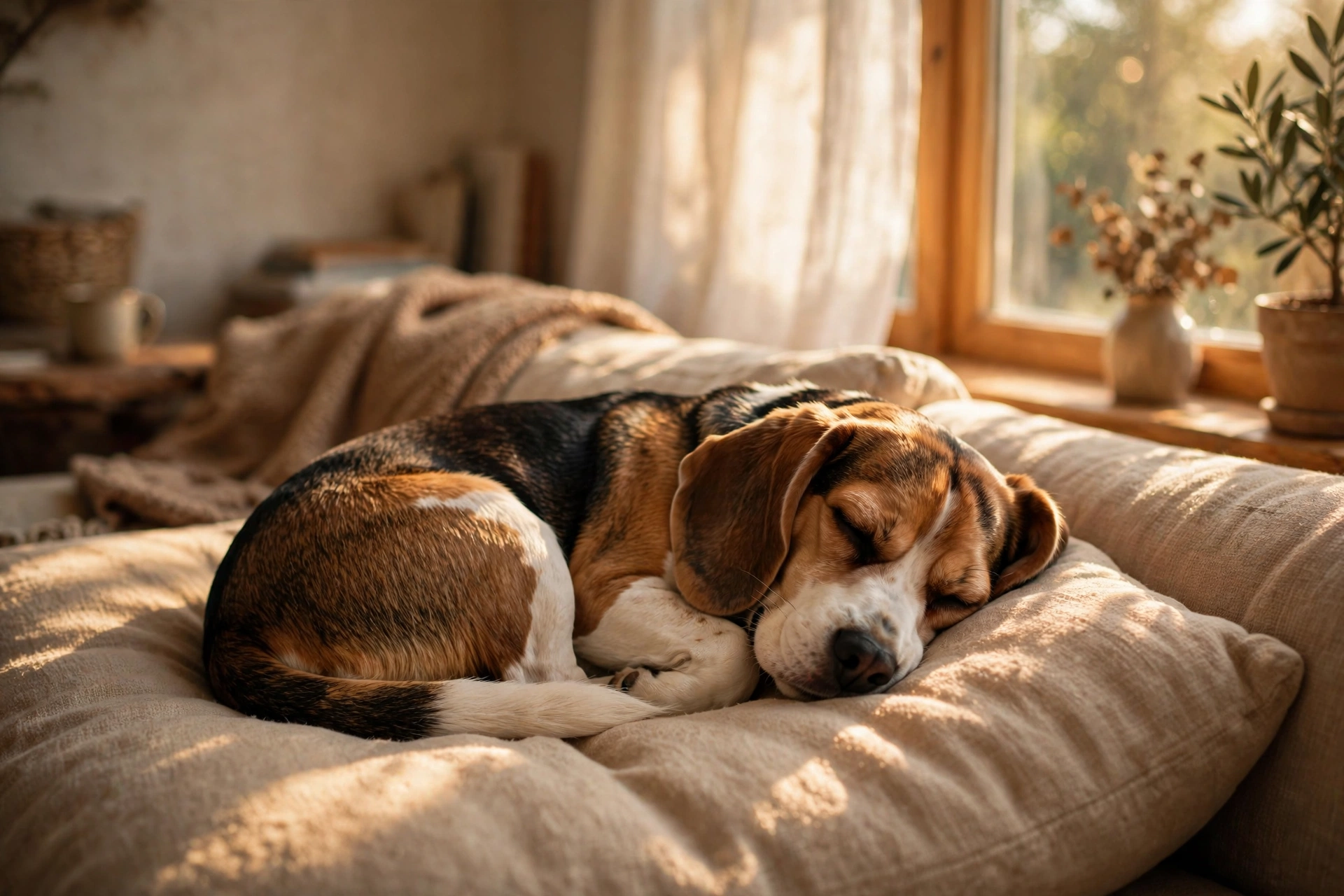
You come home from a full day, and your dog is in the exact same spot — and the exact same position — as when you left. You watched them sleep through the mail, the neighbor’s lawn mower, and a thunderstorm. Then at 11 PM, they are suddenly wide awake and ready to play.
Is your dog sleeping too much, or are you just comparing them to a human? For most dogs, the answer is the second one. Dogs sleep dramatically more than people, and what looks like laziness is usually completely normal. But there is a real line between a healthy sleeper and a dog that is lethargic — and knowing where that line sits can matter a great deal.
Direct answer: Most adult dogs sleep 12 to 14 hours per day, puppies sleep up to 18 to 20 hours, and senior dogs often sleep 16 to 18 hours — according to the American Kennel Club. Large breeds, puppies, seniors, and recently exercised dogs all sleep more. Excessive sleep becomes a concern when it is a sudden change from your dog’s normal pattern, or when it comes with lethargy, appetite changes, limping, or reluctance to play — those signs warrant a vet visit.
How Much Do Dogs Normally Sleep?
More than you probably think, and more than almost any other pet you have owned.
- Adult dogs: roughly 12 to 14 hours per day, according to the American Kennel Club. That includes nighttime sleep plus naps.
- Puppies: 18 to 20 hours per day. Puppies are building brains and bodies at an astonishing rate, and much of that growth work happens during sleep.
- Senior dogs (age 7+ for most breeds, earlier for giant breeds): 16 to 18 hours per day is common, as aging bodies need more rest and recovery time.
- Large and giant breeds: Great Danes, Mastiffs, Newfoundlands and similar breeds famously sleep more than small breeds — some large-breed owners joke their dog is decorative furniture, and they are only slightly exaggerating.
For comparison, the average human adult needs about 7 to 9 hours. Your dog sleeping 14 hours is not the equivalent of you sleeping 14 hours — it is the equivalent of a human getting a normal night’s rest. Do not apply human standards to a species with a completely different sleep architecture.
Dogs also sleep differently than we do. About 10 to 12 percent of a dog’s sleep is REM sleep (the deep, dreaming stage), compared to roughly 20 to 25 percent in humans. Dogs cycle through sleep stages faster and wake more easily — which is why your dog can doze lightly through your TV show but snap instantly awake at the sound of the treat bag.
If you want to understand what a content, well-rested dog looks like when awake, our guide to 10 signs your dog is happy describes the alert, engaged behavior you should see during waking hours.
Why Do Dogs Sleep So Much?
There are real biological reasons your dog treats the couch as a full-time job.
Sleep fuels growth and learning
In puppies, sleep is when the body releases growth hormone and the brain consolidates everything learned during waking hours. Research on animal sleep consistently shows that young animals deprived of sleep show impaired learning and development. If your puppy falls asleep mid-play, that is not laziness — that is a brain filing away today’s lessons.
Dogs are crepuscular by nature
Dogs’ wild ancestors were most active at dawn and dusk, resting through the middle of the day and the deep night. Modern dogs retain that pattern: they tend to be most alert and playful in the morning and evening, and naturally drowsy through the midday stretch. A dog that sleeps all afternoon and bounces off the walls at 7 PM is following ancient programming.
Exercise and mental stimulation increase sleep
A dog that just had a long walk, a training session, or an intense game of fetch will sleep deeply afterward — and that is a sign of a well-exercised dog, not a tired one. Bored, under-exercised dogs actually tend to sleep more too, but it is a restless, fragmented sleep punctuated by pacing and attention-seeking. There is a difference between the deep, satisfied sleep of a fulfilled dog and the flat, joyless napping of a bored one.
Interestingly, the time of day you exercise your dog shapes their whole sleep pattern. Our guide to the best time of day to walk your dog covers how morning versus evening walks affect energy levels and rest.
Weather and season matter
Dogs, like people, tend to sleep more in cold, dark winter months and during hot summer afternoons. Shorter daylight hours shift melatonin patterns, and extreme heat makes activity physiologically expensive. A dog that naps more in January is responding to the season, not developing a problem.
What Affects How Much an Individual Dog Sleeps?
Beyond age and breed, several factors move the needle for your specific dog.
- Breed and size. Beyond the large-breed tendency to sleep more, breed purpose plays a role: breeds developed for bursts of intense work (Greyhounds, for example) are famous couch potatoes between sprints, while working breeds like Border Collies sleep less and need more stimulation.
- Daily routine and stimulation. A dog with a predictable routine — regular walks, meals, play, training — sleeps more soundly and in clearer patterns than a dog with a chaotic schedule. Routine is a sleep aid.
- Health status. This is the one to watch. Hypothyroidism, diabetes, heart disease, chronic pain (especially arthritis in seniors), infections, and even depression or anxiety can all increase sleep. The key distinction: health-related sleep changes are usually sudden and come with other symptoms.
- Diet and weight. Overweight dogs sleep more and move less, and the relationship runs both ways — less movement leads to more weight gain. If your dog’s sleep increased alongside weight gain, the two are probably connected.
- Recent changes. A new home, a new baby, the loss of another pet, a change in your work schedule — all of these can temporarily change a dog’s sleep as they adjust.
When Is Sleeping Too Much a Warning Sign?
Here is the line that matters: a sudden change from your dog’s normal pattern is more significant than the absolute number of hours. A Great Dane that has always slept 16 hours is fine. A Border Collie that went from 12 hours to 18 in a week is not — especially with other symptoms.
Call your vet if increased sleep comes with any of the following:
- Lethargy, not just sleep. A sleeping dog that wakes up bright and playful is resting. A lethargic dog is dull and unresponsive even when awake — slow to get up, uninterested in walks, toys, or food they normally love. Lethargy is a medical symptom; sleep is a behavior.
- Appetite changes. Eating less, refusing treats, drinking much more or much less water alongside extra sleep.
- Signs of pain. Limping, stiffness (especially in the morning), reluctance to climb stairs or jump, whimpering, or snapping when touched.
- Digestive or other symptoms. Vomiting, diarrhea, coughing, excessive panting, or pale gums combined with sleepiness.
- Sudden onset. Any dramatic change over days, not weeks, deserves a prompt vet call.
Senior dogs deserve special attention here. It is easy to write off a 12-year-old dog’s increased sleep as “just old age,” and sometimes it is. But seniors are also the dogs most likely to be silently coping with arthritis pain, organ disease, or cognitive decline — all of which are more treatable when caught early. If your senior dog’s sleep pattern shifts noticeably, that is a vet visit, not a shrug.
When in doubt, ask your vet. A quick call describing the change costs nothing and can catch problems while they are still small.
Knowing the difference between normal rest and a real health signal is a core part of reading your dog’s body. Our guide to signs of dehydration in dogs covers another subtle-but-serious set of symptoms every owner should recognize early.
How Can I Tell If My Dog’s Sleep Is Healthy?
Use this quick checklist. A healthy sleeper:
- Wakes up alert, bright-eyed, and ready to engage — especially around walk and meal times
- Still gets excited about their favorite things: walks, play, visitors, treats
- Sleeps in relaxed positions (on their side, belly-up, or “splooting”) — signs of comfort and security
- Has a roughly consistent daily pattern you can predict
- Eats, drinks, and eliminates normally
A dog to watch more closely:
- Is hard to wake or seems “flat” even when awake
- Has lost interest in things that used to excite them
- Sleeps in tense, curled positions constantly, or seeks isolated spots they never used before
- Shows a sudden, unexplained increase in total sleep time
- Pairs extra sleep with any appetite, mobility, or behavior change
Should I Wake My Dog Up?
Generally, no — let sleeping dogs lie, as the saying goes. Interrupting deep sleep repeatedly can leave a dog groggy and irritable, just like it does to people. Puppies especially need uninterrupted sleep for development.
The exceptions: if your dog needs medication at a set time, if they have been asleep far beyond their normal pattern and you are concerned, or if they are sleeping in an unsafe spot (too hot, too cold, somewhere they could get hurt). Otherwise, enjoy watching them dream — the twitching paws and muffled barks are REM sleep in action, and researchers believe dogs really do dream about their days.
One practical note for light sleepers: dogs that wake frequently at night often just need more daytime structure. A consistent evening walk, a calm wind-down routine, and a comfortable sleeping spot resolve most nighttime restlessness. If your dog is up barking at every sound, our guide on why dogs bark at night covers the causes and fixes in detail.
Frequently Asked Questions
Is it normal for my puppy to sleep 20 hours a day?
Yes. Puppies between 8 and 16 weeks commonly sleep 18 to 20 hours per day, and it is completely normal for a puppy to fall asleep suddenly in the middle of play. Sleep is when puppies grow and when their brains consolidate learning. As long as the puppy is bright, playful, and eating well during waking hours, heavy sleep is healthy.
My senior dog sleeps all day. Is that just old age?
Often, yes — 16 to 18 hours is normal for senior dogs. But do not automatically attribute every change to age. Arthritis pain, hypothyroidism, heart disease, and canine cognitive dysfunction all increase sleep and are common in seniors. If the change was sudden or comes with stiffness, appetite changes, or confusion, see your vet.
Why does my dog sleep more in winter?
Shorter days and colder weather naturally increase sleep in dogs, partly through the same melatonin-driven seasonal rhythms that affect people. Less outdoor time also means less stimulation. As long as your dog is still enthusiastic about walks and play when offered, seasonal sleepiness is normal.
Do dogs dream?
The evidence strongly suggests yes. Dogs show the same REM sleep brain patterns as dreaming humans, including the twitching, paddling paws, and vocalizations of active dreaming. Studies of sleeping rats showed their brains replaying maze experiences during REM sleep, and researchers believe dogs similarly dream about their daily experiences — walks, play, and their favorite people.
Final Thoughts
Your dog’s marathon naps are one of the most normal things about them. Twelve to fourteen hours for an adult, up to twenty for a puppy, sixteen-plus for a senior — those numbers are not a problem to solve. They are a dog being a dog.
The skill worth building is not counting hours but knowing your individual dog’s baseline. You are the world’s leading expert on what “normal” looks like for your dog. When that baseline shifts suddenly — especially with lethargy, appetite changes, or signs of pain — trust your instincts and call the vet. Everything else is just a well-rested dog doing what dogs do best.