
Roanoke Colony: The Vanishing Colony of Roanoke Island
In August 1590, supply ships returned to the Roanoke Colony off the coast of North Carolina to find the entire settlement had vanished.
The Cryptic Message
White had instructed the colonists that if they were forced to leave due to danger, they should carve a Maltese cross next to the name of their destination. There was no cross. The word “Croatoan” referred to a nearby island inhabited by a friendly Native American tribe. White attempted to sail to Croatoan Island to search for the settlers, but a fierce storm damaged his ships and forced him to return to England. The colony was never found, and the fate of the Roanoke settlers became one of America’s oldest historical mysteries.
Drought and Integration
For centuries, historians debated whether the colonists were massacred by hostile tribes or starved to death. Modern archaeological excavations and historical analysis suggest a more peaceful resolution: the colonists likely integrated with the local Native American populations. During the severe drought that struck the region between 1587 and 1589—the worst in 800 years—the settlers would have struggled to survive without supplies. By moving to Croatoan Island and joining the local tribes, they would have found food, shelter, and security, eventually blending into the indigenous population and leaving the word “Croatoan” as a simple note of their new home.
The Tree Ring Analysis and the Great Drought
The fate of the Roanoke colonists was long shrouded in mystery, but tree ring analysis has provided critical clues about the environmental conditions they faced. In the late 1990s, researchers analyzed the growth rings of ancient bald cypress trees in North Carolina, reconstructing the region’s climate history back to the 12th century. The data revealed that the Roanoke colony was established during the worst three-year drought in 800 years, spanning from 1587 to 1589. This extreme drought would have decimated their crops and poisoned their water supply, forcing the settlers to seek food and shelter elsewhere to survive.
The Archaeological Digs at Croatoan Island
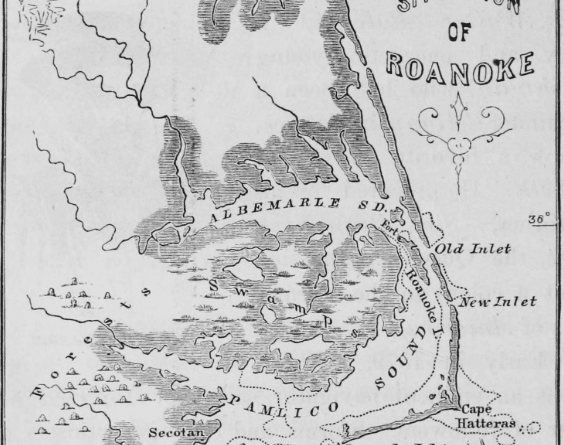
Recent archaeological excavations at Hatteras Island, historically known as Croatoan Island, have uncovered compelling evidence of the Roanoke settlers’ presence. Archaeologists have found 16th-century English artifacts, including lead writing pencils, trade beads, and European metal tools, buried within the layers of ancient Native American villages. These artifacts suggest that the colonists did not meet a violent end, but rather integrated with the local Croatoan tribe to survive the extreme drought, eventually blending into their community and leaving the word “Croatoan” as a simple signpost of their destination.
The Lost Colony in American Myth
The mystery of the Roanoke colony has played a major role in shaping American folklore and national identity. The story of Virginia Dare and the vanishing settlers has inspired countless novels, plays, and films, representing the perils of early colonial life and the untamed nature of the American frontier. The search for the colony became a symbol of early American exploration, drawing generations of historians and amateur sleuths to the Outer Banks of North Carolina to search for clues, and establishing the Roanoke legend as one of the founding myths of the United States.
White’s Failed Return and Personal Loss
For John White, the governor of the colony, the vanishing of the settlers was a deeply personal tragedy. Among the missing colonists were his daughter, Eleanor Dare, and his granddaughter, Virginia Dare. White spent the remainder of his life in England trying to raise funds for another expedition to North Carolina, but he was never able to secure the backing he needed. He died in obscurity, haunted by the memory of the empty settlement and the carving of “Croatoan” on the wooden post, a tragic figure whose personal loss remains tied to one of the world’s oldest colonial mysteries.
DNA Analysis and the Search for Descendants
In recent years, the search for the Roanoke colonists has entered the genomic era. The Lost Colony of Roanoke DNA Project has collected DNA samples from local Native American families in North Carolina, comparing their genetic markers to historical records of English colonists. The project hopes to find genetic proof of integration, such as European DNA lineages that date back to the late 16th century. While the results are still inconclusive, finding English DNA markers in local families would provide the final, scientific confirmation that the Roanoke settlers survived and found a new home among the Croatoan people.
Ancient Tree Rings and the Great Drought
The tree ring data gathered from North Carolina’s bald cypress trees provided the first scientific confirmation of the environmental crisis faced by the Roanoke settlers. The growth rings revealed that the years 1587 to 1589 were characterized by the most severe drought the region had experienced in eight centuries. This environmental crisis would have destroyed the corn crops of both the colonists and the local Native American tribes, leading to widespread food shortages. The drought explains why the settlers had to abandon the island and join the Croatoan people, as survival would have been impossible without the shared resources and hunting skills of the indigenous community.
The Lumbee Tribe and English Family Names
The Lumbee tribe of North Carolina, who live near the region of Roanoke, has long claimed descent from the lost colonists. Early 18th-century English explorers who visited the tribe noted that many members had light hair, gray eyes, and spoke a dialect of English that resembled Elizabethan speech. Additionally, many Lumbee family names—such as Dial, Chavis, and Sampson—matched the names of the settlers listed on John White’s roster of the Roanoke colony. While genetic research is ongoing, these cultural and linguistic connections provide compelling evidence that the lost colonists survived and found a new home among the indigenous families of North Carolina.
FAQ
Who was Virginia Dare?
Virginia Dare was the granddaughter of Governor John White and the very first child of English parents to be born in the New World. She vanished along with the rest of the Roanoke colonists.
Why did John White wait three years to return to Roanoke?
John White was delayed in England because of the outbreak of the war with Spain. The English government impounded all ships for the war effort, preventing him from securing a rescue vessel sooner.
What did archaeological digs at Croatoan reveal?
Excavations have uncovered 16th-century English artifacts, including trade goods, writing tools, and weapon fragments, mixed within Native American settlement layers, supporting the theory that the colonists moved and integrated there.