
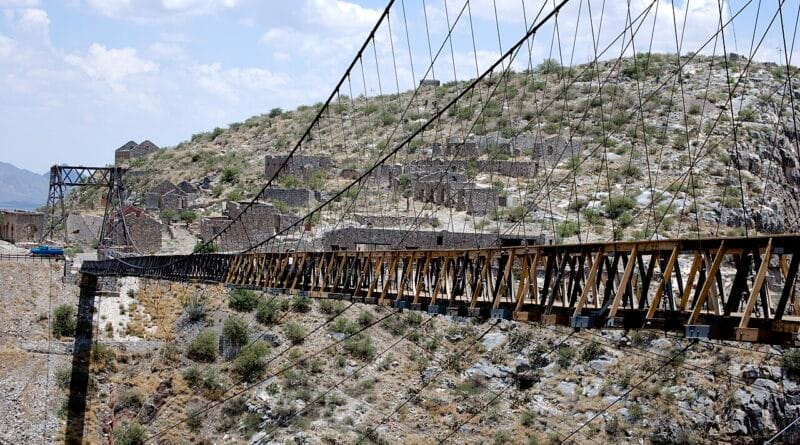
Silent Zone of Mapimi: The Desert Where Tech Dies
Deep inside the Chihuahuan Desert, where the Mexican states of Durango, Coahuila, and Chihuahua meet within the Mapimí Biosphere Reserve, lies the Silent Zone of Mapimi—a mysterious desert region where technology allegedly goes to die. Travelers and researchers have reported that radio signals vanish, compasses spin uncontrollably, and satellite signals fail to connect. For decades, this barren stretch of land has been the subject of wild urban legends, government cover-ups, and stories of extraterrestrial visitations. However, behind the paranormal folklore lies a fascinating history of rocket crashes, meteorite falls, and unique geological deposits that make this desert one of the most interesting scientific anomalies on Earth.
The Origin of the Silent Zone of Mapimi Legend
The modern legend of the Silent Zone of Mapimi began on July 11, 1970, when a United States Air Force Athena RTV test rocket was launched from Green River, Utah. The rocket, which was supposed to land in White Sands, New Mexico, suffered a major guidance failure and traveled hundreds of miles off-course, plunging deep into the heart of the Mapimí desert. The rocket carried small containers of radioactive cobalt-57, prompting a massive, secretive recovery operation by the US military to locate the debris and extract the radioactive material before it could contaminate the local water supply.
The US military constructed roads, hired local guards, and built a temporary airfield in the middle of the desert to fly out the contaminated soil. The clandestine nature of the recovery operation, combined with the arrival of heavy military machinery, triggered intense rumors among local residents. Stories of crashed UFOs, alien bodies, and secret energy fields began to spread. After the military completed the cleanup and left, local landowners realized that the mystery was a powerful tool to draw tourism to their remote region, and they began to promote stories of a zone where radio waves were absorbed by the atmosphere.
The Science Behind the Silent Zone of Mapimi
While stories of radio signals disappearing are largely exaggerated for tourists, the Silent Zone of Mapimi does possess genuine geological and physical anomalies. The region is rich in mineral deposits, particularly magnetite—a naturally magnetic iron oxide mineral. Over millions of years, these iron deposits have built up in the soil, creating localized magnetic anomalies that can cause analog compasses to fluctuate slightly. While these magnetic fields are not strong enough to block modern cell phones or satellite communications, they did interfere with early shortwave radios and analog navigational equipment used by pilots in the mid-20th century.
Furthermore, scientists working at the Mapimí Biosphere Reserve research station have frequently reported that their standard communication equipment, including GPS trackers and satellite phones, operates perfectly normal. The “silence” is not a physical barrier that absorbs radio waves, but rather a lack of local transmission towers in the vast, uninhabited desert. The geological mineral deposits do, however, explain why the area is an active focus for research, as geophysicists study how the underground iron formations affect the earth’s local magnetic fields.
The Meteorite Magnet of Mexico
Another genuine phenomenon that makes the Silent Zone of Mapimi unique is the high frequency of meteorite impacts in the area. Throughout the 20th century, several major meteorites have landed in the region, leading some to joke that the desert acts as a cosmic magnet. The most famous of these occurred in February 1969, when a massive space rock entered the atmosphere and exploded over the village of Pueblito de Allende, Durango, just outside the zone. The resulting debris, known as the Allende meteorite, scattered thousands of fragments across the desert floor.
The Allende meteorite is considered by scientists to be one of the most important space rocks ever recovered. It is a carbonaceous chondrite, a rare class of meteorite that contains organic compounds and some of the oldest materials in the solar system, dating back over 4.5 billion years. The fragments contained calcium-aluminum-rich inclusions that formed before the earth and other planets even existed. The discovery of these ancient materials drew international scientific expeditions to the Mapimí desert, establishing the region as a critical center for planetary science and meteorite recovery.
The True Wonder: The Mapimí Biosphere Reserve
Beyond the myths of magnetic fields and crashed rockets, the Silent Zone of Mapimi is part of a protected ecological sanctuary of global importance. Established in 1977, the Mapimí Biosphere Reserve spans over 340,000 hectares of desert terrain, dedicated to protecting the unique biodiversity of the Chihuahuan Desert. The reserve is home to several endangered and endemic species that are found nowhere else on Earth, including the Mapimí giant tortoise (Gopherus flavomarginatus), the largest land reptile in North America.
The reserve also protects rare desert flora, including hundreds of species of cacti and agaves that have adapted to survive the extreme heat and dry conditions of the desert. Scientists at the reserve work to restore the tortoise populations and study how desert ecosystems respond to climate change. Protecting this fragile desert environment is the true priority for conservationists, who work to ensure that the unique plants and animals of the Chihuahuan Desert survive the threats of habitat destruction and illegal poaching, ensuring the reserve remains a sanctuary for science.
Lessons in Hysteria and Ecotourism
The story of the Silent Zone of Mapimi illustrates the powerful interaction between historical events, folklore, and the search for economic survival. When the US military left the desert in 1970, they left behind a community struggling to survive in a harsh environment. The creation of the “Silent Zone” myth provided a new source of income through ecotourism, drawing curious travelers from around the world who wanted to experience the “silent” energy fields. While scientists have disproven the paranormal claims, the myth continues to thrive, proving that human curiosity is just as powerful as the natural forces that shape the desert.
The Chihuahuan Desert Ecosystem and Climate
The Chihuahuan Desert is one of the most biologically diverse deserts in the world, spanning across northern Mexico and the southwestern United States. The region of Mapimí is characterized by its arid, dry climate, with rainfall occurring primarily during the summer months. Temperatures can exceed 40 degrees Celsius (104 degrees Fahrenheit) during the summer and drop below freezing in the winter. The plants in the region have evolved unique survival mechanisms, such as deep taproots and water-storing stems, to cope with these extreme conditions. By studying these desert organisms, researchers are gaining valuable insights into how climate change will affect global ecosystems and how we might adapt our own agriculture to survive increasingly hot and dry environments in the future.
FAQ
Can you use a cell phone in the Silent Zone of Mapimi?
Yes, modern mobile phones and satellite communicators work perfectly fine in the zone. However, due to the extreme remoteness of the desert, you will likely not have a cellular signal simply because there are no transmission towers nearby.
Why do meteorites keep landing in the Mapimi desert?
The region is not physically attracting space rocks. The high number of recovered meteorites is due to the desert’s dry climate and flat, light-colored terrain, which makes it much easier to spot and preserve dark meteorite fragments over centuries.
Is there radiation in the Silent Zone of Mapimi?
No, there is no dangerous radiation. While the 1970 US Athena test rocket carried trace amounts of cobalt-57, the military successfully removed all contaminated soil and debris during the cleanup operation, leaving the site safe.