
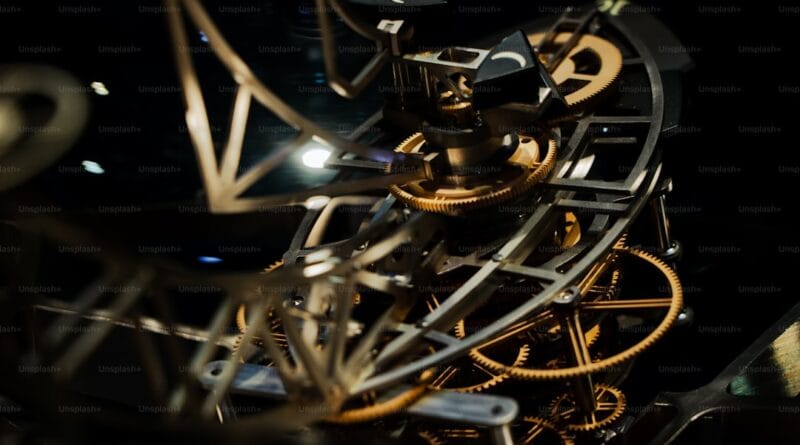
The Antikythera Mechanism: The 2,000-Year-Old Computer That Stunned Archeologists
In 1901, divers exploring a Greek shipwreck off the island of Antikythera retrieved a corroded, calcified lump of bronze that looked like a green rock. For decades, it lay in the National Archaeological Museum in Athens, overshadowed by beautiful marble and bronze statues. It was only when historians began x-raying the object in the 1970s and 2000s that they realized they were looking at a complex gear-driven analog computer built over 2,000 years ago. The Antikythera mechanism possesses a level of technological sophistication that would not reappear in Europe for another 1,500 years.
The Salvage of the Century
The story of the device begins in the spring of 1900, when a group of Greek sponge divers was blown off course by a storm. They took shelter near the tiny island of Antikythera, located between Crete and the Greek mainland. Once the storm passed, one of the divers decided to explore the waters. At a depth of 150 feet, he discovered the remains of a massive Roman cargo ship that had sunk around 60 BC. The seabed was littered with treasures, including bronze and marble statues, jewelry, coins, and glassware.
The Greek government launched an salvage operation, which lasted for over a year. The work was dangerous and resulted in the death of one diver and the paralysis of two others. The archaeologists of the time were focused on the beautiful art, collecting statues of Hercules and Ulysses. Among these treasures was a wooden box about the size of a shoebox, containing several fragments of corroded bronze. Because it looked like a chunk of oxidized metal, it was placed in a storage room and forgotten while the statues were restored.
In 1902, an archaeologist named Valerios Stais noticed that one of the bronze fragments had a gear wheel embedded in it. He suggested that the object was an astronomical clock, but his colleagues dismissed the idea. They believed that the Greeks did not possess the technology to build gears, and they argued that the object must have dropped from a modern ship onto the ancient wreck. The fragment remained in obscurity for another fifty years, until a physicist named Derek de Solla Price began to analyze it.
The Clockwork Universe
In the 1970s, Price used gamma-ray imaging to look inside the corroded bronze fragments. What he saw was stunning: a complex assembly of at least thirty interlocking gear wheels, with triangular teeth cut from a single sheet of bronze. In 2005, a multi-disciplinary research team used high-resolution micro-focus X-ray computed tomography to create a three-dimensional model of the mechanism. This revealed hidden inscriptions, some only a few millimeters high, which served as a user manual for the device.
The Antikythera mechanism was an analog computer designed to track the movements of the heavens. It had a main dial on the front that showed the position of the Sun and Moon in the zodiac, along with a calendar of 365 days. On the back, it featured two spiral dials. The upper dial tracked the Metonic cycle, a nineteen-year cycle that aligns the solar year with the lunar months. The lower dial tracked the Saros cycle, a 223-month cycle used to predict solar and lunar eclipses, complete with glyphs indicating the time and color of each eclipse.
The gear configurations inside the box are highly specific, using prime numbers to model astronomical cycles. The main drive wheel was connected to a gear with 64 teeth, which linked to a 38-tooth gear to drive the Metonic cycle. A separate, massive gear with 223 teeth drove the Saros spiral on the lower back dial. These tooth counts were not random; they represent the exact mathematical ratios of the celestial movements relative to the Earth’s orbital period. For example, a 53-tooth gear was used in the lunar anomaly train to represent the Moon’s varying speed as it moves closer to and farther from the Earth.
The sophistication of the gearing is what makes the mechanism so shocking. It used epicyclic, or planetary, gearing—where smaller gears rotate on top of larger, moving gears. This type of gearing is used in modern automatic transmissions to shift gears, and its presence in an ancient Greek device was thought to be impossible. The Greeks even managed to model the irregular orbit of the Moon. Because the Moon’s orbit is elliptical, it moves faster when closer to the Earth and slower when farther away. The device replicated this using a pin-and-slot gear system, where one gear was mounted slightly off-center on another, creating a variable speed of rotation.
The Rhodes Connection and Archimedes
Who built this device? While the creator’s signature is missing, historians have identified several candidates. The inscriptions on the calendar dial use months that correspond to the calendar of Corinth or its colonies, particularly Syracuse in Sicily. This has led some researchers to link the device to Archimedes, the legendary mathematician who lived in Syracuse in the third century BC. Cicero, the Roman writer, recorded that Archimedes had built two planetary models that could track the movements of the Sun, Moon, and planets.
However, the shipwreck dates to the mid-first century BC, long after Archimedes’ death in 212 BC. A more likely explanation is that the device was built by a workshop on the island of Rhodes. During the second and first centuries BC, Rhodes was a center of astronomy and engineering. The astronomer Hipparchus, who worked in Rhodes, made major contributions to lunar theory, and it is his specific calculations that are built into the pin-and-slot gear system of the device. The philosopher Posidonius also built a planetary model in Rhodes, which Cicero visited and described in his writings.
The device was likely used as a teaching tool or a high-status demonstration of wealth and intellect. It was not a navigation tool, as the delicate bronze gears would have been ruined by the salty air and motion of a ship. Instead, it was a display of cosmic order, showing that the universe was a predictable, rational machine that could be calculated using mathematics and geometry. It represents the peak of Hellenistic science, a tradition that was soon to be extinguished by the rise of the Roman Empire.
The Lost Technology of the Ancients
The existence of the Antikythera mechanism challenges the traditional, linear view of human history. We assume that technology progresses step-by-step, with each generation building on the last. But the mechanism shows that advanced technologies can be lost. After the fall of the Hellenistic kingdoms and the rise of the Roman Empire, the skills required to design and cut bronze gears vanished. The knowledge was forgotten, and for over a thousand years, no one in Europe built a device of this complexity.
It was not until the fourteenth century, with the invention of the mechanical astronomical clocks in European cathedrals, that clockwork of this scale reappeared. If the knowledge of gear-making had survived and spread, the history of science might have been very different. The industrial revolution, which was driven by gears, steam, and mechanical automation, might have occurred in the Middle Ages or even during the Roman Empire, completely changing the course of human development.
As scientists continue to study the fragments, they are working to build functional models of the device, using both ancient and modern techniques. Each recreation reveals the genius of the ancient designers, who managed to squeeze the entire cosmos into a single bronze box. The Antikythera mechanism remains a reminder that the past was far more complex and technologically capable than we believe, holding secrets that were buried in the silt of the sea for two thousand years.
Frequently Asked Questions
What was the Antikythera mechanism used for?
The Antikythera mechanism was an analog computer used to track astronomical cycles, predict solar and lunar eclipses, and model the movements of the Sun, Moon, and the five known planets. It also calculated the dates of the ancient Olympic Games.
How did the Antikythera mechanism work?
The device worked through a system of at least thirty interlocking bronze gears operated by a hand crank. The rotation of the crank moved the gears, which in turn moved pointers on the front and back dials to display astronomical calculations.
Who built the Antikythera mechanism?
The exact creator is unknown, but evidence points to an engineering workshop on the island of Rhodes. The calculations used in the gear system match the lunar theories of the astronomer Hipparchus, who worked in Rhodes in the second century BC.