
The Green Children of Woolpit: A 12th-Century Mystery That Still Baffles Historians
During the harvest season in the twelfth century, two children walked out of a deep pit dug to trap wolves in the village of Woolpit in Suffolk, England. They had bright green skin, wore clothing made of strange materials, and spoke an incomprehensible tongue. They refused all food except raw broad beans. This strange event, known as the Green Children of Woolpit, is recorded in the works of two medieval chroniclers who lived at the time, turning a local legend into an enduring historical puzzle.
The Chroniclers of the Harvest
The story of the Green Children of Woolpit is not just a fairy tale passed down through oral tradition. It was recorded by two independent medieval writers: William of Newburgh, a canon of the Augustinian priory in Yorkshire, and Ralph of Coggeshall, an abbot of a Cistercian monastery in Essex. Both men were respected chroniclers who gathered information from eyewitnesses. William included the story in his work Historia rerum Anglicarum, noting that he was initially skeptical but felt compelled to record it because of the sheer number of reliable witnesses who swore to its truth.
The incident occurred during the reign of King Stephen, a chaotic period in English history known as the Anarchy. The village of Woolpit, located in Suffolk, was named after the “wulf-pyttes” or deep pits dug by farmers to catch wolves that threatened their livestock. It was a typical, quiet agricultural community where life revolved around the seasons. The arrival of two children who looked entirely different from anyone in the village caused an immediate sensation among the harvest workers who found them wandering near the pits.
The workers took the children to the house of Sir Richard de Caine, a local landowner. The children were crying and appeared to be in deep distress. Sir Richard offered them food, but they refused to eat bread, meat, or vegetables, even though they were clearly starving. For several days, they would touch nothing, until the villagers brought freshly harvested broad beans, still in their pods. The children seized the beans and ate them raw, surviving on nothing else for months. It was a strange beginning to an even stranger life in the English countryside.
Sir Richard’s House and the Lost Boy
Sir Richard de Caine kept the children in his house, attempting to integrate them into the household. Over time, the boy and the girl began to adapt. The boy, who was the younger of the two, was sickly and depressed. Despite the efforts of the villagers, he grew increasingly weak and died shortly after the children were baptized. The girl, however, was resilient. She began to eat other foods, and as her diet improved, the green pigment in her skin slowly faded, revealing a normal complexion.
She learned English and was eventually baptized under the name Agnes. She remained in the service of Sir Richard’s household for years, where she was described as being “rather loose and wanton in her conduct.” Later in life, she moved to King’s Lynn in Norfolk, where she married a senior royal official named Richard Barre, who was an archdeacon and ambassador for King Henry II. She lived a normal life, a former visitor from another world integrated into the high society of medieval England.
Once Agnes could speak English, the villagers questioned her about where she and her brother had come from. Her explanation was baffling. She claimed they came from a place called “St. Martin’s Land,” named after the patron saint of their country. She described it as a land where there was no sun, only a constant, dim twilight, and where all the inhabitants had green skin. She said they could see a bright, sunlit land across a wide river, but they did not know how to cross it.
St. Martin’s Land and the Cavern of Bells
Agnes explained that on the day they disappeared, she and her brother were herding their father’s sheep in the fields of St. Martin’s Land. They entered a cavern and heard a loud, sweet sound of bells, which she compared to the bells of Bury St. Edmunds Abbey. Entranced by the sound, they walked deeper into the cave, following the noise for a long time. Eventually, they reached the end of the tunnel and emerged into the blinding light of the English harvest fields, where the heat and brightness overwhelmed them, causing them to fall into the wolf pits where they were found.
The chroniclers noted that the children’s language was completely unrecognizable, lacking any roots common to English, French, or Latin. Modern linguists suggest that this was not a language from another planet, but rather a highly distorted dialect of Flemish. Alternatively, the children may have been suffering from cryptophasia, a private language developed by twins or closely isolated siblings under extreme stress. When children are neglected and isolated from adults, they often invent their own vocabulary and grammar, which is entirely incomprehensible to outsiders.
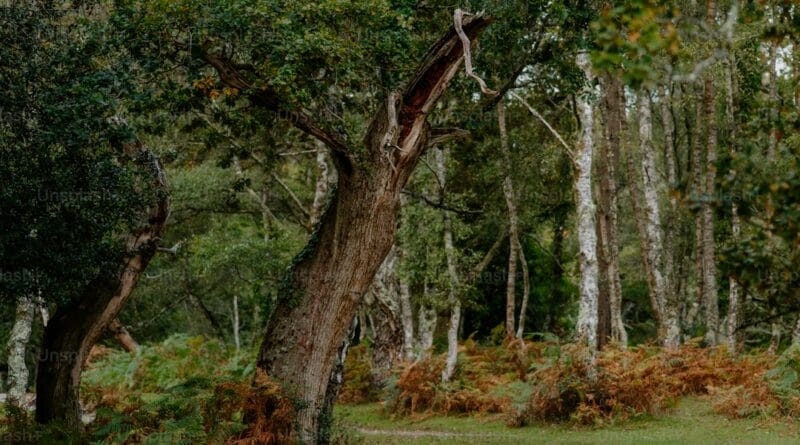
This explanation has led to a variety of theories. Modern historians have attempted to separate the folklore from the potential historical reality. The most popular theory is that the children were the offspring of Flemish immigrants who had settled in eastern England. During the 12th century, many Flemish weavers and merchants came to England, but they were persecuted under King Stephen’s reign, and many were massacred at the Battle of Fornham in 1173, near Woolpit. The children may have fled into the nearby forests of Thetford, hiding in the trees where the dim light resembled St. Martin’s Land.
Under this theory, their green skin was not a sign of extraterrestrial origin, but a symptom of hypochromic anemia, historically known as “chlorosis” or “green sickness.” This condition is caused by a severe iron deficiency, often resulting from a poor diet, which gives the skin a distinct greenish tint. The children’s exclusive diet of raw broad beans, which are rich in iron and other nutrients, eventually cured their anemia, causing the green color to fade as they integrated into Sir Richard’s home and began eating a balanced diet.
The Legacy of the Green Children
The story of the Green Children of Woolpit has endured because it sits at the intersection of history and myth. Unlike other medieval legends of fairies and goblins, this story features real historical figures, specific locations, and documented records from chroniclers who lived at the time. It has inspired modern literature, most notably Herbert Read’s 1935 novel The Green Child, which uses the legend as a starting point for a philosophical story about aesthetics and politics. Folklorists have also analyzed the story as a remnant of pre-Christian mythology, linking the green skin to the Green Man, a traditional pagan symbol of rebirth and the spirits of the forest.
In Woolpit today, the children are still remembered. The village sign features a representation of the green boy and girl standing next to a wolf, and the local church contains records detailing the history of the legend. The story continues to inspire writers, artists, and musicians, serving as a reminder that the past was a place of deep mystery, where the boundaries between the known world and the unknown were easily crossed by those who followed the sound of bells into the dark.
Frequently Asked Questions
What did the green children of Woolpit eat?
When first found, the children refused all food except raw broad beans, which they ate straight from the pods. As they adapted to the village, they began to eat a normal diet, which eventually caused their green skin color to fade.
Where is St. Martin’s Land?
According to the girl, St. Martin’s Land was a dim, twilight country where everyone had green skin. Modern historians believe this was a child’s description of the dark forests of Thetford, where they had hidden after fleeing their homes.
Who wrote about the green children of Woolpit?
The story was recorded by two independent 12th-century chroniclers: William of Newburgh in his history book Historia rerum Anglicarum, and Ralph of Coggeshall in his monastery chronicle Chronicon Anglicanum.