
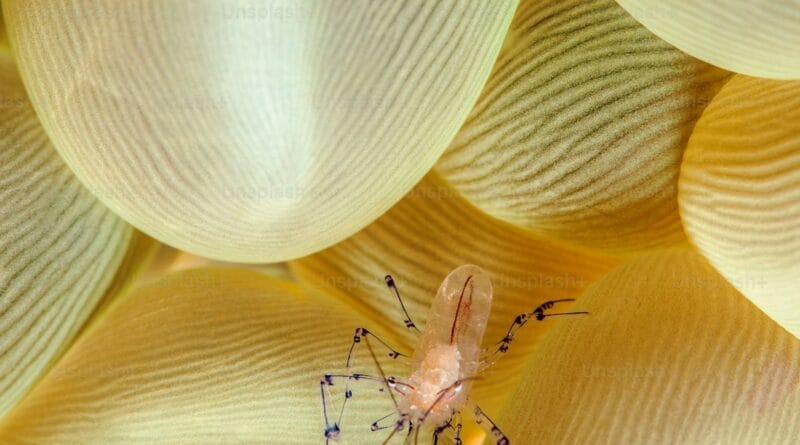
The Pistol Shrimp: The Tiny Ocean Monster That Shoots Sun-Hot Shockwaves
In the shallow waters of tropical oceans lives a tiny creature, barely two inches long, that can shoot a weapon hotter than the surface of the sun. The pistol shrimp uses a specialized, oversized claw to snap shut at speeds exceeding sixty miles per hour, creating a cavitation bubble that collapses with enough energy to produce light, heat, and a sound louder than a jet engine. It is the only known animal to hunt using the physics of sonoluminescence, turning a simple bubble into a deadly shockwave.
The Plunger and the Socket
The pistol shrimp, also known as the snapping shrimp, belongs to the family Alpheidae, which contains over six hundred species worldwide. They are characterized by their asymmetrical claws, with one claw growing to half the size of the shrimp’s entire body. This massive claw is not used for pinching or crushing like a lobster’s claw. Instead, it is a highly specialized mechanical weapon. The claw consists of two parts: a hammer-like plunger and a matching socket.
To operate the claw, the shrimp uses a biomechanical trigger mechanism that resembles a crossbow. When cocking the claw open, a tiny ridge on the joint acts as a latch, holding the plunger in place under the intense tension of the massive closer muscle. When the shrimp releases this latch, the stored elastic energy is discharged in less than one millisecond. This release is roughly one hundred times faster than the blink of a human eye, creating an explosive force that slams the plunger into the water-filled socket. This motion forces a high-speed jet of water out of a narrow groove in the socket, ejecting the water at speeds of over sixty miles per hour. This high-velocity water jet is the catalyst for the weapon.
For a long time, scientists believed that the sound of the snap was caused by the physical impact of the two halves of the claw hitting each other. But in 2000, a team of researchers at the University of Twente in the Netherlands, using ultra-high-speed cameras operating at 40,000 frames per second, discovered that the claw impact is silent. The sound, the heat, and the light are all generated after the claw has closed, produced entirely by the behavior of the water jet as it moves through the ocean, defying early biological assumptions.
The Physics of Cavitation
The secret of the weapon lies in a phenomenon called cavitation. According to Bernoulli’s principle, as the speed of a fluid increases, its pressure decreases. The jet of water ejected by the claw moves so fast that the pressure behind it drops below the vapor pressure of the water. This causes the water to boil at room temperature, forming a tiny bubble filled with water vapor. This is a cavitation bubble, a pocket of low-pressure gas moving through the high-pressure ocean water.
As the water jet slows down, the surrounding water pressure increases, forcing the cavitation bubble to collapse. This collapse is violent, occurring in less than a nanosecond. The water rushes in from all sides, compressing the gas inside the bubble to a fraction of its original volume. This compression generates a massive shockwave with a pressure of eighty kilopascals, enough to stun or kill small fish and crabs up to several feet away. The sound of the collapse reaches 218 decibels, which is louder than a gunshot or a jet engine taking off.
In the world of marine engineering, cavitation is a destructive force. When cavitation bubbles form on the spinning blades of boat propellers, their collapse generates microscopic liquid jets with speeds reaching 1,000 meters per second. These jets strike the metal blades with enough force to dent, pit, and destroy heavy steel propellers over time. Engineers are studying the pistol shrimp because they cannot understand how the biological tissue of the claw survives this constant self-inflicted blast without tearing itself apart. The shrimp has developed a built-in shock defense that outlasts modern steel.
The compression also heats the gas inside the bubble to extreme temperatures. As the bubble collapses, the energy is concentrated into a tiny point, raising the temperature of the gas to over 8,000 degrees Fahrenheit (4,700 degrees Celsius). This is close to the temperature of the surface of the sun. The heat is so intense that it briefly ionizes the gas, creating a plasma that emits a short flash of light. This light emission, known as sonoluminescence, lasts for less than ten picoseconds, making the pistol shrimp the only known animal to generate light through acoustic energy.
The Blind Digger and the Goby
While the pistol shrimp possesses a devastating weapon, it has a major vulnerability: it is nearly blind. Its eyes are covered by its carapace, leaving it unable to spot predators at a distance. To survive, many species of pistol shrimp have developed a symbiotic relationship with a small fish called a goby. The shrimp digs and maintains a deep sandy burrow, which serves as a safe home for both animals. While the shrimp is busy cleaning out sand, the goby sits at the entrance of the burrow, acting as a sentinel.
The two animals remain in constant physical contact. The shrimp keeps one of its long antennae pressed against the goby’s tail at all times. If the goby spots a predatory fish or bird, it twitches its tail in a specific pattern. The shrimp senses the vibration and instantly retreats into the safety of the burrow. If the danger is extreme, the goby will dive in after the shrimp. In return for this early warning system, the goby gets a safe, free shelter in a hostile reef environment where burrows are hard to find.
This partnership is a classic example of mutualism, showing how two completely different species can merge their skills to survive. The shrimp provides the engineering and defense, while the goby provides the vision. Together, they create a secure home on the ocean floor, showing that even the most heavily armed creatures in the ocean rely on cooperation to overcome the challenges of survival.
Jamming Submarine Sonar
The collective sound of pistol shrimp colonies has a major impact on underwater technology. In tropical waters, thousands of shrimp live in close proximity, creating a constant, crackling background noise that sounds like burning twigs or sizzling bacon. During World War II, the US Navy discovered that this noise was loud enough to interfere with submarine sonar. The shrimp noise created a static barrier that made it difficult to detect enemy submarines or traverse shallow reefs.
To solve this, the Navy hired acousticians to study the shrimp, mapping their distribution and recording their sounds. Submarine crews learned to hide inside these “shrimp beds,” using the constant noise to mask their own acoustic signatures from enemy sonar systems. Today, marine researchers continue to study the shrimp’s claw mechanics to design silent, high-efficiency underwater propulsion systems and shock-resistant materials, showing that this tiny ocean dweller continues to influence human engineering and naval strategy.
The pistol shrimp remains a reminder of the power of scale in nature. It shows that you do not need to be a giant to wield immense force. By mastering the physics of cavitation and sonoluminescence, this tiny mollusk hunter has turned the water itself into a weapon, carving out a niche for itself in the complex ecosystems of the world’s coral reefs.
Frequently Asked Questions
How loud is a pistol shrimp’s snap?
The snap of a pistol shrimp reaches 218 decibels, which is louder than a gunshot or a jet engine at takeoff. The sound is not caused by the claw itself, but by the violent collapse of the cavitation bubble generated by the water jet.
Does a pistol shrimp create light?
Yes, the pistol shrimp creates a brief flash of light during the collapse of the cavitation bubble. The pressure inside the collapsing bubble heats the gas to over 8,000 degrees Fahrenheit, ionizing the atoms and producing light through a process called sonoluminescence.
Why do pistol shrimp live with goby fish?
Pistol shrimp live with goby fish because the shrimp is nearly blind and needs a lookout to watch for predators. The goby acts as a sentinel, warning the shrimp of danger through tail vibrations, while the shrimp provides a dug-out burrow for shelter.