
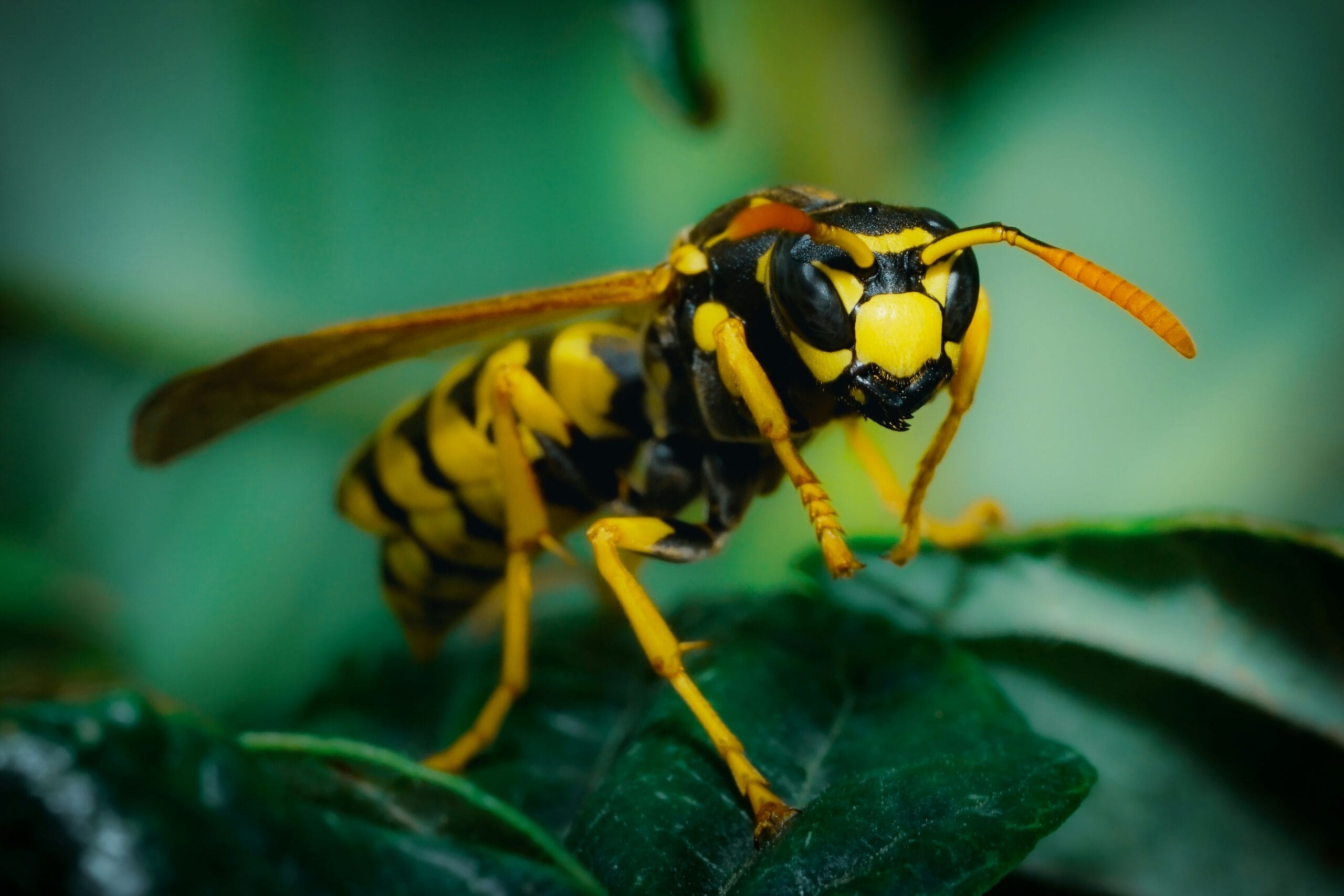
This Tiny Wasp Turns Cockroaches Into Living Zombies — And Scientists Are Obsessed With It
Somewhere in the tropical regions of Africa, South Asia, and the Pacific Islands, a wasp the size of a paperclip is performing neurosurgery on a cockroach. Not to kill it. To control it.
The Setup: Meet Ampulex compressa
The emerald jewel wasp (Ampulex compressa) measures less than an inch long and glitters with metallic green and blue hues that make it look almost decorative. Don’t be fooled. The female of the species has evolved one of the most precise and disturbing reproductive strategies in the entire animal kingdom. Her target? The American cockroach (Periplaneta americana) — an insect that outweighs her by a factor of ten.
She doesn’t have the brute strength to drag a struggling roach anywhere. So she doesn’t bother making it struggle. Instead, she makes it cooperate. What happens next is the kind of thing that makes neuroscientists put down their coffee and lean forward.
The jewel wasp’s behavior has been studied since the 19th century, but a flood of new research — from Harvard, Vanderbilt, and peer-reviewed journals through 2025 — keeps revealing layers of this attack that nobody expected. Each new study makes it weirder.
The Weird Part: Two Stings, One Zombie
The attack takes about 11 seconds if the roach doesn’t notice in time. The wasp jumps onto the cockroach’s back and delivers Sting #1 into the base of the neck — a precise jab that temporarily paralyzes the roach’s front legs, buying just enough time to set up Sting #2.
Then comes the neurosurgery. The wasp bends her abdomen down through the roach’s soft throat tissue and guides her stinger — which carries its own pressure sensors — directly into two specific regions of the cockroach’s brain. The venom she injects isn’t a sedative. It doesn’t knock the roach out. It blocks the neural circuits that produce the urge to escape, while leaving all motor functions intact. The roach can still walk. It just won’t, unless something pushes it.
A 2019 study in Molecular & Cellular Proteomics mapped the wasp’s venom in detail: 264 proteins, including enzymes that mimic the roach’s own brain chemistry, neuropeptide precursors held in an acidic state and time-released after injection, and compounds that hijack the Toll/NF-kB signaling pathway. It’s not a blunt chemical weapon. It’s a targeted neurochemical storm.
After the second sting, the wasp bites one of the roach’s antennae down to half-length and drinks a sip of its blood — likely to replenish her own energy after the effort. Then she walks the zombie cockroach to a pre-dug burrow by tugging gently on the shortened antenna. Like walking a dog. The roach follows without protest.
The Explanation: Science Can’t Stop Studying This
Inside the burrow, the wasp lays a single egg on the roach’s leg and seals the entrance with pebbles and dirt. The roach sits there, alive and immobilized, for about six days. When the egg hatches, the larva chews a small hole in the roach’s abdomen and begins feeding from the inside — carefully avoiding vital organs at first, keeping its food source alive as long as possible.
But a 2023 study published in Current Biology by neurologist Kenneth Catania at Vanderbilt University upended what scientists thought they knew about that “careful” feeding. Catania discovered the larva immediately goes for the cockroach’s heart and starts consuming it. Then it chews through the trachea — the roach’s respiratory system — and inhales the escaping air bubbles. This gives the larva oxygen while it’s sealed inside a living body. Within 48 hours, the cockroach is dead. The whole operation is over in less than a week.
Even more recent research, published in Brain, Behavior and Evolution in early 2025, found that the wasp’s cocoon — formed inside the dead roach’s hollow husk — is itself a defensive structure. Other cockroaches, it turns out, will eat the developing larva if given the chance. The cocoon hardens on day 10 of development, and before that point, 80% of larvae get killed by hungry roaches nearby. The whole lifecycle is a race.
Why It Matters Beyond the Horror
Researchers at Harvard and other institutions are studying Ampulex compressa‘s venom specifically because it achieves something pharmacologists struggle to do artificially: selectively suppress one behavior (escape) without touching others (movement, sensory processing). If that mechanism could be replicated or adapted, it could have applications in treating certain neurological conditions where specific neural circuits need to be dampened without broad sedation.
There’s also the pure evolutionary mystery of it. A half-inch wasp evolved the ability to perform targeted brain surgery on an insect ten times its size, guided only by pressure sensors in a stinger. No tools. No practice. Just millions of years of selection pressure producing something that looks, from the outside, like expertise.
FAQ
Does the cockroach feel pain during this process?
Insects almost certainly don’t experience pain the way mammals do — they lack the brain structures associated with conscious suffering. The cockroach’s behavior changes dramatically after the sting, but whether that constitutes suffering is a genuinely open philosophical and scientific question. What’s clear is that the roach stops responding to stimuli that would normally trigger escape.
Is the jewel wasp dangerous to humans?
No. The jewel wasp is a parasitoid specialist — its entire toolkit is tuned for American cockroach neurology. It has no interest in humans and its sting, while technically possible, would produce only minor local irritation. Scientists who handle them regularly report no significant reactions.
Could this venom be used as an insecticide?
Researchers have explored this. Because the wasp naturally targets cockroaches — one of the most pesticide-resistant insects on earth — its mechanism of action is appealing. But synthesizing the full 264-protein venom cocktail at scale is not yet feasible. For now, it remains a research subject rather than a product.