
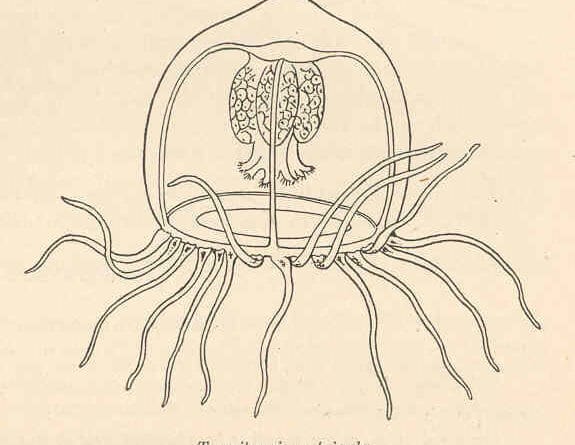
Meet the Immortal Jellyfish That Can Cheat Death
Death is the one universal rule of biology—unless you happen to be the immortal jellyfish (Turritopsis dohrnii), a tiny creature floating in the Mediterranean Sea.
Cellular Time Travel
The process is known as transdifferentiation, a rare cellular mechanism where one type of mature cell transforms directly into another type without passing through an intermediate stem cell stage. When threatened, the adult jellyfish (the medusa) absorbs its own tentacles, sinks to the seafloor, and reverts into a colonial polyp—the earliest stage of its lifecycle. This polyp then spawns hundreds of genetically identical baby jellyfish. It is the biological equivalent of a butterfly turning back into a caterpillar when it senses danger.
Implications for Humans
While this process makes Turritopsis dohrnii biologically immortal, it is not invulnerable. They are still eaten by fish, killed by diseases, and susceptible to pollution. But their cellular trick has captured the attention of geneticists studying human aging. By identifying the specific genes that trigger transdifferentiation, researchers hope to unlock new treatments for cellular degeneration and learn how human organs might be coaxed into repairing themselves.
The Biochemical Trigger of Cellular Reversion
The process of cellular reversion in Turritopsis dohrnii is triggered by specific environmental cues, such as physical damage, starvation, or a drop in water temperature. When these stress factors are detected, the jellyfish’s cells undergo a rapid transformation, shifting from specialized muscle and nerve cells back into unspecialized stem cells. This process, known as transdifferentiation, allows the jellyfish to bypass the standard aging process and rebuild its entire body from scratch. Scientists are studying the biochemical pathways that regulate this process, hoping to identify the specific genes and proteins that control cellular reversion and apply them to human regenerative medicine.
Gene Expression and Human Aging Research
Research into the genome of Turritopsis dohrnii has revealed that the jellyfish possesses multiple copies of genes associated with DNA repair and cellular maintenance. These genes are highly active during the reversion process, protecting the cell’s genetic material from damage and ensuring the new polyp is genetically identical to the parent medusa. By comparing the jellyfish’s genome to that of other non-immortal species, geneticists hope to identify the evolutionary changes that enabled biological immortality and develop new therapies to combat age-related cellular degeneration and diseases in humans, such as Alzheimer’s and cancer.
The Polyp Colony and Colonial Budding
Once the adult jellyfish has reverted into a polyp, it does not remain a single entity. The polyp attaches to a hard surface and begins to grow, forming a branching colonial network of polyps. This colony feeds on microscopic plankton and reproduces asexually through a process called budding. Over several weeks, the polyps develop tiny segments that eventually break off and float away as free-swimming medusae. This colonial lifestyle allows a single threatened jellyfish to multiply into hundreds of genetically identical clones, ensuring the survival of its genetic lineage in the marine ecosystem and showcasing the remarkable complexity of its survival mechanism.
Marine Ecology and Global Spread
The Turritopsis dohrnii jellyfish is native to the Mediterranean Sea, but it has recently spread to oceans around the globe, including the Atlantic, Pacific, and Indian Oceans. Marine biologists believe the jellyfish has hitchhiked in the ballast water of cargo ships, which suck in seawater in one port and discharge it in another. Because of their biological immortality and ability to survive extreme stress, the jellyfish are highly resilient and can adapt to new marine environments easily. This global expansion has raised concerns about their impact on local marine food webs, as they feed on fish larvae and zooplankton, highlighting the ecological significance of this tiny, immortal creature.
Cellular Reprogramming in Stem Cell Therapy
The ability of Turritopsis dohrnii to reprogram its cells has major implications for stem cell research. In humans, mature cells are typically locked into their specialized functions and cannot revert back into stem cells without artificial genetic modification (such as the creation of induced pluripotent stem cells). The jellyfish, however, performs this feat naturally and on demand. By studying the signaling pathways that initiate transdifferentiation, scientists hope to learn how to reprogram human cells in vivo, allowing for the direct repair of damaged heart muscle, spinal cords, and brain tissue without requiring external stem cell transplants.
Cellular Longevity and Astrobiological Research
The cellular biology of Turritopsis dohrnii has also drawn interest from astrobiologists studying the potential forms of life on other celestial bodies. If life exists in the harsh, sub-surface oceans of Europa or Enceladus, it would need to survive extreme radiation, low temperatures, and prolonged periods of starvation. The immortal jellyfish’s ability to completely rebuild its cellular structure on demand shows that organisms can develop highly resilient life-cycle adaptations to survive extreme environmental stress. By understanding the evolutionary mechanisms that enable such cellular longevity on Earth, scientists can better define the biosignatures of resilient life-forms they look for in future space missions, expanding our definition of what is biologically possible in the cosmos.
The Ethical Implications of Human Longevity Research
While the prospect of utilizing transdifferentiation to combat human aging is exciting, it also raises complex ethical and social questions. If scientists were to successfully develop therapies that drastically extend the human lifespan or achieve biological immortality, it would fundamentally reshape our society, economy, and resources. Issues of overpopulation, social inequality in access to life-extending treatments, and the psychological impact of a vastly extended life would need to be addressed. Thus, the study of the tiny Turritopsis dohrnii is not just a scientific pursuit, but one that challenges us to consider what it means to live a complete human life, prompting a dialogue between biologists, ethicists, and philosophers about the future of our species.
FAQ
How does the immortal jellyfish reverse its aging process?
It uses a cellular process called transdifferentiation, allowing its mature cells to transform directly into different types of cells. This enables the adult jellyfish to revert back into its larval polyp stage when threatened or injured.
Can the immortal jellyfish still die?
Yes. While they do not die of old age, they can still be eaten by marine predators, killed by bacterial or viral infections, or die due to environmental changes and water pollution.
Why are scientists studying Turritopsis dohrnii?
Scientists study the jellyfish to understand how its cells undergo transdifferentiation. This research could offer insights into human stem cells, organ regeneration, and the biology of aging.