
Hessdalen Lights: The Glowing Orbs of Hessdalen Valley
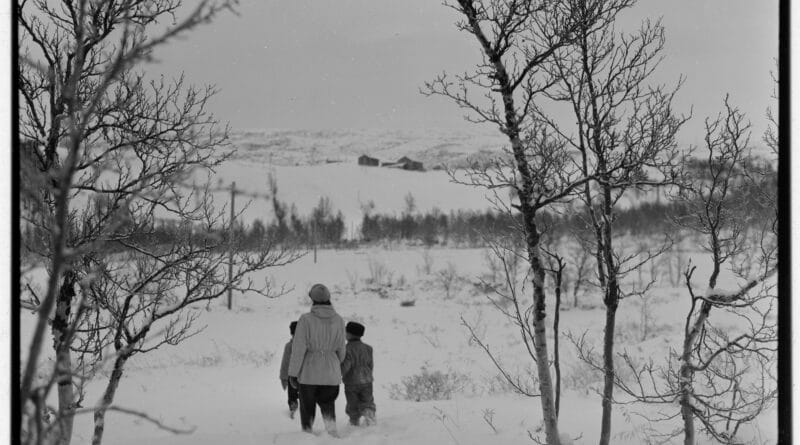
High in the rural valley of Hessdalen in central Norway, residents began reporting the Hessdalen lights—mysterious glowing orbs that hover in the night sky.
Atmospheric Anomalies
The Hessdalen lights behave in ways that defy easy explanation. They can shine in white, yellow, or red hues, and they have been tracked by radar traveling at speeds of up to 30,000 kilometers per hour. Some lights split into multiple orbs before merging back together. Spectrographic analysis of the lights shows they are composed of plasma, containing elements like scandium, iron, and silicon. Scientists have proposed several theories, with the most promising focusing on the valley’s unique geology.
The Natural Battery Theory
The Hessdalen valley is rich in sulfur, iron, and zinc, divided by a riverbed that creates a natural battery structure. Scientists believe that acidic water from local mines reacts with the mineral deposits, creating electrical charges that travel up into the atmosphere. When these charges ionize the air, they form glowing balls of cold plasma. Another theory suggests that the valley’s quartz rock formations generate piezoelectricity under stress, which periodically discharges as luminous balls of energy. While the theories are compelling, the exact trigger that keeps the Hessdalen lights burning remains one of the world’s most beautiful physical mysteries.
The Piezoelectric Quartz Crystal Battery
The geology of the Hessdalen valley is unique, consisting of massive quartz crystal formations alongside iron and copper mines. When the earth’s crust shifts or undergoes tectonic stress, the quartz crystals generate a powerful electrical charge through the piezoelectric effect. This electrical energy is believed to travel up through the mineral-rich riverbeds, creating a natural battery system. When the electrical charge reaches the surface, it reacts with the highly ionized air in the valley, creating the glowing balls of plasma that have baffled observers for decades. This natural battery theory represents one of the most compelling explanations for the persistence of the lights.
The European Space Agency Scientific Studies
The Hessdalen lights have attracted the attention of major scientific organizations, including the European Space Agency and the Italian National Research Council. In the early 2000s, researchers established the Hessdalen Automatic Station, equipped with radar, magnetometers, and spectral cameras to monitor the lights 24 hours a day. The station’s data revealed that the lights are composed of thermal plasma that exhibits a high level of electromagnetic activity, suggesting they are fueled by natural geological and atmospheric currents. These studies have transformed the Hessdalen lights from a popular UFO myth into a significant focus of plasma physics research.
The Combustion of Dust and Scandium
Another leading theory explaining the Hessdalen lights is the combustion of microscopic dust particles in the valley’s atmosphere. The valley contains high concentrations of scandium, a rare earth element that is highly reactive and burns with a bright, white light. When wind or electrical currents lift scandium-rich dust from the mining waste piles into the air, the particles can react with the moisture and oxygen in the atmosphere, creating floating, burning clouds of dust. This combustion theory explains why the lights often appear to float and drift slowly with the wind, behaving like glowing clouds of dust rather than solid objects.
The Hessdalen Observatory and Ecotourism
The Hessdalen lights have transformed the local economy, turning a quiet mining valley into a major center for ecotourism and scientific research. Every year, physicists, ufologists, and tourists gather in Hessdalen, Norway, hoping to catch a glimpse of the glowing orbs. The local community has embraced this interest, establishing the Hessdalen Interactive Observatory and hosting annual science camps for students. This integration of research and tourism has provided critical funding for the ongoing monitoring of the lights, ensuring that the valley remains a laboratory for studying atmospheric plasma and geological electricity.
Astrobiological Implications of Plasma Life
The study of the Hessdalen lights has intriguing implications for astrobiology and the search for extraterrestrial life. Some scientists suggest that the self-organizing behavior of the plasma orbs—such as splitting, merging, and responding to radar—resembles a form of non-carbon-based life. While this remains a fringe theory, it highlights the potential for complex, energetic structures to emerge in extreme environments without relying on organic chemistry. By understanding how the Hessdalen lights form and sustain themselves, astrobiologists can refine their search criteria for signs of life on other planets and moons with active geologies.
Piezoelectric Quartz Crystals and Atmospheric Discharges
The piezoelectric quartz crystal model suggests that tectonic activity within Norway’s mountains compresses quartz veins, generating strong electric fields. These fields ionize the local air, creating glowing plasma orbs that drift down the valley along mineral-rich geological veins. This process represents a natural form of atmospheric electricity generation that could hold the key to new clean energy technologies. By studying how the Hessdalen lights harvest and store energy in cold plasma structures, researchers hope to develop new methods for capturing and transmitting electricity through the air, transforming a local mystery into a foundation for green energy innovation.
Modern Hessdalen Research Station Innovations
The Hessdalen research station has become a pioneer in developing autonomous, solar-powered monitoring systems for extreme environments. Because Norway’s winter temperatures can drop below minus 30 degrees Celsius, the station’s cameras and sensors must operate under severe stress, leading to innovations in cold-weather battery systems and camera enclosures. The technology developed in Hessdalen is now being used to monitor active volcanoes in Iceland and glacial retreat in Svalbard, demonstrating that the scientific effort to study Norwegian light anomalies has yielded highly practical tools for global environmental science and climate change research.
FAQ
Are the Hessdalen lights still active?
Yes, the lights are still active today, though they appear less frequently than they did during the peak in the 1980s. The permanent Hessdalen research station continues to monitor and log light events.
What are the lights made of?
Spectrographic analysis has shown that the lights are composed of thermal and cold plasma, with micro-particles containing mineral elements like iron, silicon, scandium, and titanium from the valley’s geology.
Is there any connection to UFOs?
While the lights were initially reported as UFOs by enthusiasts, scientific studies have shown they are natural atmospheric phenomena, likely caused by electromagnetic discharges and ionized gases from the unique rock and water mineral makeup of the valley.