
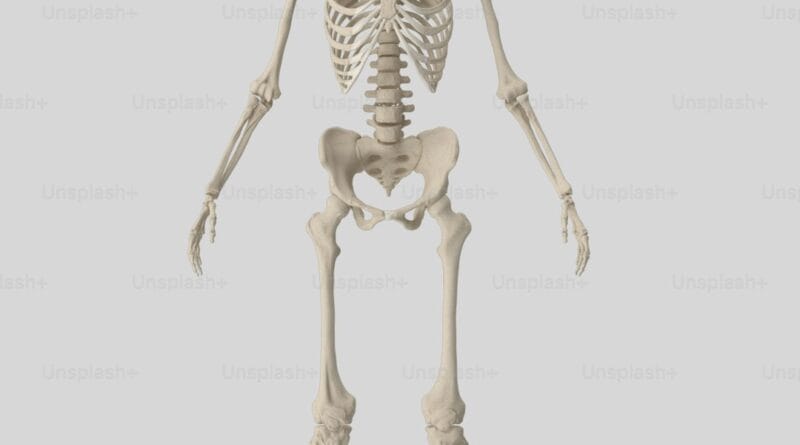
Stone Man Syndrome: The Terrifying Condition That Turns Muscle to Bone
A minor bump on the shoulder or a bruised muscle is a normal part of life, but for individuals with a rare genetic condition, it marks the start of a horrifying process. Their body responds to injury by turning the bruised muscle, tendon, or ligament into solid, permanent bone. This condition, scientifically known as fibrodysplasia ossificans progressiva (FOP) and colloquially called stone man syndrome, slowly encases the patient in a second skeleton. It is a disease that literally locks the body in place, turning soft tissue into stone.
The Second Skeleton
Stone man syndrome is one of the rarest and most disabling genetic conditions known to medicine, affecting roughly one in two million people. Under normal circumstances, when muscle or connective tissue is injured, the body repairs it with scar tissue. But in patients with FOP, the repair mechanism is completely broken. Instead of healing as muscle, the damaged area undergoes heterotopic ossification, a process where the body builds new, fully formed bone outside the normal skeleton.
A flare-up of FOP typically begins with a painful, warm swelling in the soft tissues. These swellings, which are often mistaken for tumors or deep infections, are highly inflammatory. Because FOP is so rare, many doctors initially misdiagnose these swellings as sarcomas and order biopsies. A biopsy is a traumatic surgical procedure that injures the tissue. In FOP patients, this diagnostic mistake is catastrophic, as the body responds to the biopsy needle by rapidly building a mass of new bone that permanently locks the surrounding joints.
The progression of the disease is relentless and predictable. It typically begins in early childhood, often starting in the neck and shoulders before moving down the spine and eventually to the limbs. The new bone grows across joints, fusing them together and eliminating any possibility of movement. A child might lose the ability to raise their arms, then the ability to turn their head, and finally the ability to bend their knees or hips. Over time, the patient is forced into a fixed position, unable to sit, walk, or feed themselves.
What makes the condition particularly cruel is that any medical attempt to help often makes it worse. If a surgeon tries to cut away the extra bone to restore movement, the trauma of the surgery itself triggers a massive flare-up. The body responds to the surgical cuts by building even more bone, fusing the joint even tighter than before. Intramuscular injections, dental work, and even minor falls can trigger these flare-ups. The only option for patients is to avoid injury at all costs, living in a constant state of caution.
Harry Eastlack and the Mütter Museum
The most famous case of stone man syndrome is that of Harry Eastlack, born in Philadelphia in 1933. His symptoms began at age five after he broke his leg in a car accident. The bone healed poorly, and soon his hips and knees began to stiffen. As the years progressed, the heterotopic ossification spread across his entire body. The muscles of his back, chest, and limbs slowly turned to bone, fusing his joints one by one. By his mid-twenties, his spine had become a solid rod of bone, and his jaw had fused shut, forcing him to speak through closed teeth and eat only puréed food.
Before his death in 1973 at age thirty-nine, Eastlack made the decision to donate his body to science. He wanted researchers to study his skeleton to find a cure for future generations. Today, his skeleton is on display at the Mütter Museum of the College of Physicians of Philadelphia. It is a striking and sobering exhibit. The skeleton is covered in bridges, plates, and ribbons of extra bone that lock the arms, legs, and spine into a single, immovable structure. It is a physical reminder of the severity of the disease and remains an invaluable resource for medical researchers.
In recent years, Eastlack’s skeleton has been joined at the museum by another. Carol Orzel, a woman who lived with FOP and passed away in 2018, also donated her skeleton to the museum. She requested that her remains be displayed next to Eastlack’s to help raise awareness and fund research into FOP. Together, their skeletons provide a powerful, visual representation of the disease, showing the variations in how the second skeleton develops and how it affects different individuals over a lifetime.
Eastlack’s skeleton shows how the extra bone does not just grow randomly; it copies the pathways of the muscles and tendons it replaces. The bones form sheets that wrap around the rib cage, locks that bridge the pelvis and thighs, and spurs that protrude from the shoulders. It is a complete second skeleton that sits on top of the original, suffocating the body’s natural movement and eventually making breathing difficult as the rib cage loses its flexibility.
The Switch That Won’t Turn Off
For decades, the cause of stone man syndrome was a mystery. But in 2006, researchers at the University of Pennsylvania discovered the genetic mutation responsible for the disease. They found that FOP is caused by a mutation in the ACVR1 gene, which codes for a receptor protein that regulates bone growth. This receptor, known as Alk2, acts as a molecular switch in the body’s bone morphogenetic protein (BMP) signaling pathway, telling the body when to build bone and when to stop.
In patients with FOP, this switch is mutated and permanently damaged. It is hyper-responsive, reacting to signals that should actually turn it off. When an injury occurs and the immune system triggers inflammation, the damaged tissues release chemicals that interact with the mutated ACVR1 receptor. Instead of triggering a normal healing process, the receptor misinterprets the signal and initiates bone formation. The body’s repair cells are recruited to the site and transformed into bone-forming cells, starting a process that cannot be stopped once it begins.
This discovery was a major breakthrough in FOP research. It allowed scientists to target the specific pathway responsible for the bone growth. By understanding how the ACVR1 receptor behaves, researchers have been able to develop drugs that block the signal, preventing the body from turning muscle into bone during flare-ups. Clinical trials are currently underway for several promising treatments, offering hope for a community that has lived without options for centuries.
Hope on the Horizon
The research into stone man syndrome has implications that go far beyond this rare disease. By studying how the ACVR1 mutation triggers bone growth, scientists are learning how to control bone formation in general. This knowledge could help develop treatments for osteoporosis, where bone density is lost, or for common fractures that heal poorly. It could also help treat heterotopic ossification in military veterans who suffer blast injuries, a population that often develops extra bone in their wounds due to trauma.
Recently, the drug Palovarotene was approved in several countries as the first treatment to reduce new heterotopic ossification in patients with FOP. The drug works by binding to a specific receptor that dampens the BMP pathway, effectively turning down the volume on the mutated ACVR1 signal. While it is not a cure and cannot dissolve existing bone, it can prevent the formation of new bone during flare-ups, preserving mobility and protecting patients from further fusion.
The story of FOP is a story of extreme adversity, but it is also a story of scientific perseverance. From the tragic life of Harry Eastlack to the discovery of the ACVR1 gene, researchers have worked to understand this disease. The hope is that soon, the switch that turns muscle to stone will be turned off for good, releasing patients from the confines of their own skeletons.
Frequently Asked Questions
Can bone be surgically removed in stone man syndrome?
No, bone cannot be surgically removed in stone man syndrome. Any surgical trauma triggers a massive inflammatory response, causing the body to grow even more bone in the surgical site, fusing the joint even tighter than before.
What is the first sign of stone man syndrome?
The first sign of the syndrome is usually a malformation of the big toes, which are often short and turned inward at birth. This characteristic feature is present in almost all patients before the onset of heterotopic ossification in childhood.
Is there a cure for stone man syndrome?
Currently, there is no cure for stone man syndrome. However, recent treatments like the drug Palovarotene have been approved to help reduce the growth of new bone during flare-ups, offering the first real therapy to preserve joint mobility.