
Cotard’s Delusion: The Terrifying Condition That Makes People Believe They’re Dead
A person walks into a psychiatric clinic and calmly explains to the doctors that they died three weeks ago. They are not speaking metaphorically; they genuinely believe their organs have rotted, their blood has stopped flowing, and they are a walking corpse. This rare neuropsychiatric condition is known as Cotard’s delusion, and it represents one of the most extreme disruptions of human consciousness ever documented. It is a state where the brain’s connection to its own body is so severed that the mind rationalizes its existence as a form of living death.
Mademoiselle X and the Delirium of Negation
The history of Cotard’s delusion begins in Paris in 1880. A French neurologist named Jules Cotard was consulted by a middle-aged woman known in medical literature as Mademoiselle X. She presented a symptom that Cotard had never witnessed before. She claimed she had no brain, no nerves, no chest, no stomach, and no intestines. She believed she was a shell of skin and bone, with nothing inside. In addition, she believed she was eternally damned, unable to die a natural death because she was already dead.
Mademoiselle X eventually died of starvation because she refused to eat, arguing that a dead body had no need for food. Jules Cotard published his findings, calling the condition “le délire de négation” (the delirium of negation). He described how patients with this disorder suffer from an extreme form of nihilism. They deny the existence of their own bodies, their souls, and the physical world around them. In some cases, patients believe that the entire universe has ceased to exist, and they are the only remaining, disembodied entity in a void.
The condition is incredibly rare, with only a few hundred documented cases in medical history. It most commonly appears in patients suffering from severe psychotic depression, schizophrenia, or neurological injuries such as brain tumors, strokes, or trauma. It is a disorder that completely breaks a person’s reality, turning their everyday sensory experience into a waking nightmare where they must convince others of their own non-existence.
The Three Stages of Delusion
Psychiatrists have identified a clear progression in how Cotard’s delusion develops, usually dividing the illness into three distinct clinical stages: germination, blooming, and chronic. In the germination stage, patients experience severe hypochondria, a vague feeling of unreality, and deep depression. They might complain of chronic constipation or minor physical ailments, but these complaints are accompanied by an unusual level of dread and anxiety. They feel that something is fundamentally wrong with their physical self, though they cannot yet define it.
The blooming stage is where the delusion becomes fully realized and explicit. This is when the patient makes the transition from feeling sick to believing they are dead. They deny the existence of their organs, their blood, or their entire body. The anxiety reaches a peak, and they may experience auditory hallucinations, hearing voices that tell them they are damned or that they are rotting away. The logical structure of their thinking is completely overtaken by the belief in their own non-existence.
In the chronic stage, the delusion becomes systematized and stable. The initial panic and anxiety fade, replaced by a flat, emotionless acceptance of their state. Patients in this phase may live for years believing they are dead, showing complete apathy toward their physical health and surroundings. They exist in a state of suspended animation, detached from the flow of time and the demands of physical life. It is this chronic phase that is the hardest to treat, as the belief has become deeply embedded in the patient’s cognitive framework.
The Symptoms of Living Death
The clinical presentation of Cotard’s delusion varies, but it typically involves severe self-neglect. Because patients believe they are dead, they stop bathing, grooming, or changing their clothes. One well-documented case involved a woman who insisted her family dress her in a funeral shroud and place her in a coffin. She remained there, refusing to move or speak, waiting for her burial. Another case described a young man who believed he had died of septic shock. He spent his nights in a local graveyard, sleeping on tombstones because he felt that was where he belonged.
The danger of the disorder is not just psychological; it is physical. Like Mademoiselle X, many patients stop eating and drinking. If they are dead, they reason, food is useless. Others try to injure themselves to prove they cannot feel pain or bleed, or they attempt suicide to “release” their spirits from their already-dead bodies. Caring for a patient with Cotard’s delusion requires constant supervision to prevent self-harm and starvation, as their rational mind is completely hijacked by the neurological error.
The Broken Mirror of the Brain
What causes a human brain to make such an error? Modern neuroimaging has provided clues, suggesting that Cotard’s delusion is a disorder of emotional connection. The brain has two main pathways for processing sensory information about faces and bodies. The first is the recognition pathway, which identifies what we are looking at. The second is the emotional pathway, which connects that recognition to an emotional response. When you look at your own face in a mirror, your brain recognizes the physical features, and your amygdala generates a familiar emotional response, confirming that “this is me.”
In patients with Cotard’s delusion, the emotional pathway is completely broken. When they look in the mirror, or when they feel their own pulse, their brain recognizes the stimuli, but they feel absolutely no emotional connection to it. Their body feels empty, cold, and dead. The logical, rational part of the brain attempts to resolve this conflict. It receives physical data that the body is alive, but it receives zero emotional data. To resolve the contradiction, the brain concludes that the body must be dead. It is a rational explanation for an irrational neurological state.
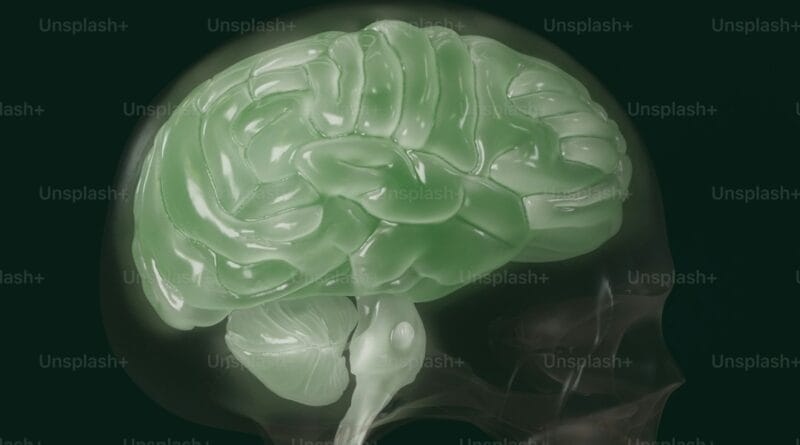
Neurological studies show that patients with this delusion often have damage in the right hemisphere of the brain, particularly in the temporoparietal junction. This region is critical for body ownership, spatial awareness, and self-location. When it is damaged, the brain loses its ability to integrate sensory signals from the body into a unified sense of self. This explanation is supported by the connection between Cotard’s and another disorder called Capgras delusion. In Capgras, the emotional disconnect is limited to other people, leading patients to believe their spouse or family members have been replaced by identical impostors. In Cotard’s, the disconnect is turned inward, affecting the patient’s relationship with their own body.
Reclaiming the Self
Despite its severity, Cotard’s delusion is treatable. Because it is closely linked to depression and psychosis, pharmacological treatments are highly effective. Antidepressants, antipsychotics, and mood stabilizers can help restore the chemical balance in the brain, re-establishing the emotional connection between the mind and the body. In severe cases where medication fails, Electroconvulsive Therapy (ECT) has shown remarkable success, often resolving the delusion in a matter of weeks by resettting the brain’s electrical activity.
The existence of Cotard’s delusion reveals how fragile our sense of self really is. We take for granted the feeling of being alive, assuming it is a permanent part of our consciousness. But this disorder shows that our sense of existence is actively generated by complex, delicate neural networks. If those networks fail, our very reality dissolves, showing that the line between life and death is not just a biological state, but a neurological belief.
Frequently Asked Questions
Can Cotard’s delusion be cured?
Yes, Cotard’s delusion is treatable and can be resolved. Treatment typically involves a combination of antipsychotic and antidepressant medications, and in severe or resistant cases, Electroconvulsive Therapy (ECT) has proven highly effective at restoring normal brain function.
What is the difference between Capgras and Cotard’s delusion?
In Capgras delusion, the emotional disconnect affects the perception of others, leading the patient to believe loved ones are impostors. In Cotard’s delusion, the emotional disconnect is turned inward, causing the patient to believe their own body is dead or does not exist.
How rare is Cotard’s delusion?
Cotard’s delusion is extremely rare, with only a few hundred cases documented in medical history. It typically appears as a secondary symptom in patients with severe neuropsychiatric conditions, such as psychotic depression or traumatic brain injuries.